Skip to content

Chapter 6: Heritage sites and museums

India's World Heritage Sites

Every Indian site on the UNESCO World Heritage List as of October 2026, grouped by type with the year each was added, plus the 16 sites that design entrance exams ask about most.

In one minute

6 facts to know

  1. As of October 2026, India has 45 World Heritage Sites: 37 cultural, 7 natural and 1 mixed.
  2. The first four were added in 1983: Ajanta Caves, Ellora Caves, Agra Fort and the Taj Mahal.
  3. Khangchendzonga National Park in Sikkim (2016) is India's only mixed site, listed for both nature and culture.
  4. Ahmedabad (2017) was the first Indian city listed as a whole historic city. Jaipur followed in 2019.
  5. The three newest sites are the Moidams of Charaideo in Assam (2024), the Maratha Military Landscapes (2025) and the Ancient Buddhist Site of Sarnath (2026).
  6. Ajanta is cut into basalt rock; the Descent of the Ganges at Mahabalipuram is carved in granite.

What the list is

UNESCO, the United Nations body for education, science and culture, keeps a list of places it judges important to all of humanity. A place gets on the list when the World Heritage Committee, which meets once a year, votes it in. Being added is called being inscribed.

Every site is one of three types:

  • Cultural: made by people, such as temples, forts, caves, tombs, railways and whole old cities.
  • Natural: made by nature, such as forests, mountains, wetlands and the animals that live there.
  • Mixed: important for both reasons at once.

India joined the World Heritage Convention, the treaty behind the list, in November 1977. Its first sites were inscribed six years later.

Cultural sites (37)

Sorted by the year each was inscribed. Where a site was later made bigger, the extra years are in brackets.

Year Site State
1983 Agra Fort Uttar Pradesh
1983 Ajanta Caves Maharashtra
1983 Ellora Caves Maharashtra
1983 Taj Mahal Uttar Pradesh
1984 Group of Monuments at Mahabalipuram Tamil Nadu
1984 Sun Temple, Konark Odisha
1986 Churches and Convents of Goa Goa
1986 Fatehpur Sikri Uttar Pradesh
1986 Group of Monuments at Hampi Karnataka
1986 Khajuraho Group of Monuments Madhya Pradesh
1987 Elephanta Caves Maharashtra
1987 Great Living Chola Temples (2004) Tamil Nadu
1987 Group of Monuments at Pattadakal Karnataka
1989 Buddhist Monuments at Sanchi Madhya Pradesh
1993 Humayun's Tomb Delhi
1993 Qutb Minar and its Monuments Delhi
1999 Mountain Railways of India (2005, 2008) West Bengal, Tamil Nadu, Himachal Pradesh
2002 Mahabodhi Temple Complex at Bodh Gaya Bihar
2003 Rock Shelters of Bhimbetka Madhya Pradesh
2004 Champaner-Pavagadh Archaeological Park Gujarat
2004 Chhatrapati Shivaji Terminus (formerly Victoria Terminus) Maharashtra
2007 Red Fort Complex Delhi
2010 The Jantar Mantar, Jaipur Rajasthan
2013 Hill Forts of Rajasthan Rajasthan
2014 Rani-ki-Vav (the Queen's Stepwell) at Patan Gujarat
2016 Archaeological Site of Nalanda Mahavihara Bihar
2016 The Architectural Work of Le Corbusier (Capitol Complex) Chandigarh
2017 Historic City of Ahmadabad Gujarat
2018 Victorian Gothic and Art Deco Ensembles of Mumbai Maharashtra
2019 Jaipur City Rajasthan
2021 Kakatiya Rudreshwara (Ramappa) Temple Telangana
2021 Dholavira: a Harappan City Gujarat
2023 Santiniketan West Bengal
2023 Sacred Ensembles of the Hoysalas Karnataka
2024 Moidams, the Mound-Burial System of the Ahom Dynasty Assam
2025 Maratha Military Landscapes of India Maharashtra, Tamil Nadu
2026 Ancient Buddhist Site of Sarnath Uttar Pradesh

A few of these are groups spread over several places:

  • Mountain Railways of India: the Darjeeling Himalayan Railway (1999), the Nilgiri Mountain Railway (2005) and the Kalka-Shimla Railway (2008).
  • Great Living Chola Temples: the Brihadisvara Temple at Thanjavur (1987), joined in 2004 by the temples at Gangaikondacholapuram and Darasuram.
  • Hill Forts of Rajasthan: Chittorgarh, Kumbhalgarh, Ranthambore, Gagron, Amber and Jaisalmer.
  • Sacred Ensembles of the Hoysalas: temples at Belur, Halebidu and Somanathapura.
  • Maratha Military Landscapes: eleven forts in Maharashtra, including Raigad, Shivneri and Pratapgad, and Gingee Fort in Tamil Nadu.
  • Le Corbusier: India's only transnational site. The Capitol Complex in Chandigarh is listed together with 16 other buildings by the same architect in six other countries.

Natural sites (7)

Year Site State
1985 Kaziranga National Park Assam
1985 Keoladeo National Park Rajasthan
1985 Manas Wildlife Sanctuary Assam
1987 Sundarbans National Park West Bengal
1988 Nanda Devi and Valley of Flowers National Parks (2005) Uttarakhand
2012 Western Ghats Keralam (Kerala until 2026), Karnataka, Tamil Nadu, Maharashtra
2014 Great Himalayan National Park Conservation Area Himachal Pradesh

The one mixed site

Year Site State
2016 Khangchendzonga National Park Sikkim

Firsts and records

Question Answer
First Indian sites (1983) Ajanta Caves, Ellora Caves, Agra Fort, Taj Mahal
First natural sites (1985) Kaziranga, Manas, Keoladeo
Only mixed site Khangchendzonga National Park, Sikkim (2016)
Only site shared with other countries Le Corbusier's Capitol Complex, Chandigarh (2016)
First whole city Historic City of Ahmadabad (2017)
Newest site, as of October 2026 Ancient Buddhist Site of Sarnath (2026)
Sites once on UNESCO's danger list Manas (1992 to 2011) and Hampi (1999 to 2006)

Indian cities on the list

Only two living cities are listed as whole historic cities. Other entries cover one part of a city, or an ancient city that is now a ruin.

City Year What is listed
Ahmedabad 2017 The walled old city founded in 1411, with its pols (gated lanes of wooden houses) and Sultanate mosques
Jaipur 2019 The walled Pink City laid out on a grid in 1727
Mumbai 2018 Two groups of buildings: Victorian Gothic and Art Deco
Chandigarh 2016 The Capitol Complex only, as part of the Le Corbusier site
Dholavira 2021 An ancient Harappan city, now ruins, in Kutch

Sites exams ask about

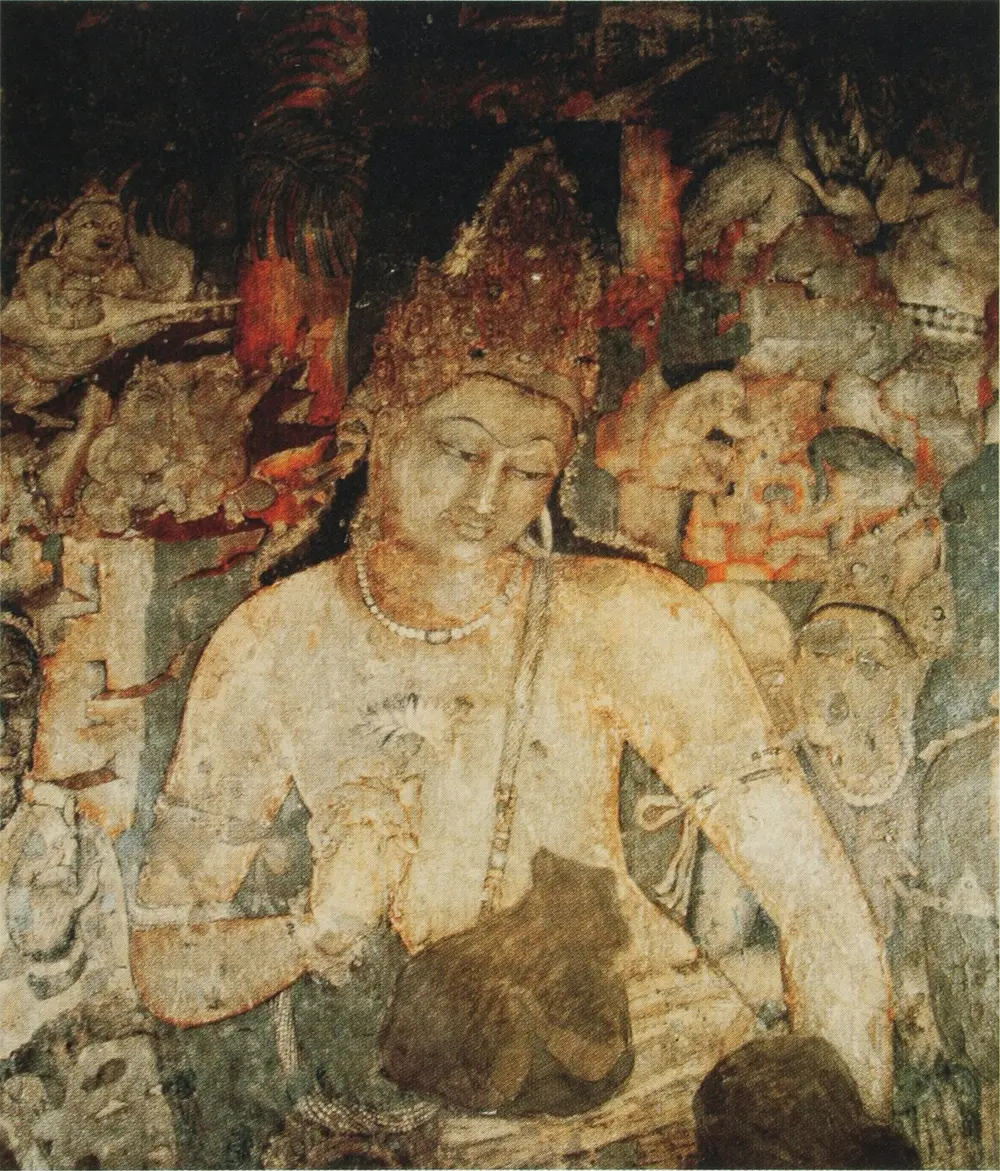
A faded wall painting of a calm, crowned figure holding a lotus flower, surrounded by smaller figures.
Picture: Unknown author. Public domain.

Ajanta Caves

Where
Near Aurangabad (Chhatrapati Sambhajinagar), Maharashtra
When
2nd century BCE to about the 6th century CE
Who
Buddhist monks; the later caves under the Vakataka dynasty
Style
Rock-cut Buddhist caves with wall paintings
Made with
Cut into a basalt cliff above a river gorge

About 30 Buddhist caves cut into a horseshoe-shaped cliff, made in two phases several centuries apart. They hold the finest surviving ancient paintings in India, telling stories from the Buddha's past lives (the Jataka tales). One of the first four Indian sites, inscribed in 1983.

Spot it by

Paintings of graceful figures with heavy-lidded eyes and soft shading, like the Bodhisattva Padmapani with his lotus in Cave 1 (pictured).

Remember

Ajanta means paintings; Ellora means carving.

Don't confuse

Ellora, about 100 km away, is mostly sculpture and has Hindu and Jain caves too. Ajanta is Buddhist only.
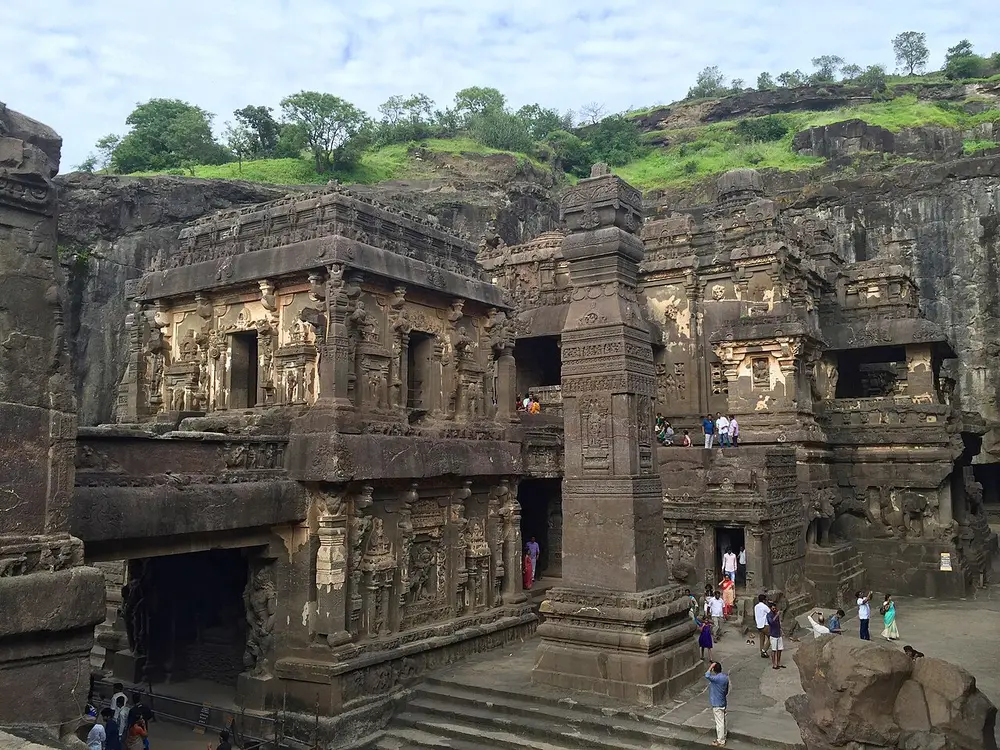
A huge stone temple with carved walls and a tall pillar, standing in a pit cut into a rocky hillside.
Picture: Ms Sarah Welch. CC BY-SA 4.0.

Ellora Caves

Where
Near Aurangabad (Chhatrapati Sambhajinagar), Maharashtra
When
About 600 to 1000 CE
Who
The Kailasa Temple is credited to the Rashtrakuta king Krishna I
Style
Rock-cut Buddhist, Hindu and Jain caves
Made with
Basalt cliff

34 caves of three religions side by side along one cliff, which shows how the faiths lived together. The star is the Kailasa Temple (Cave 16), a whole temple to Shiva cut downward out of a single mass of rock, so nothing was built and everything was carved away. Inscribed in 1983.

Spot it by

A full multi-storey temple standing free inside a deep trench cut in the hillside (pictured).

Remember

Kailasa was carved from the top down, like a sculpture, not built from the ground up.

Don't confuse

Elephanta Caves near Mumbai are also rock-cut and also Shiva-centred, but they are a small group on an island with the giant three-headed Shiva.
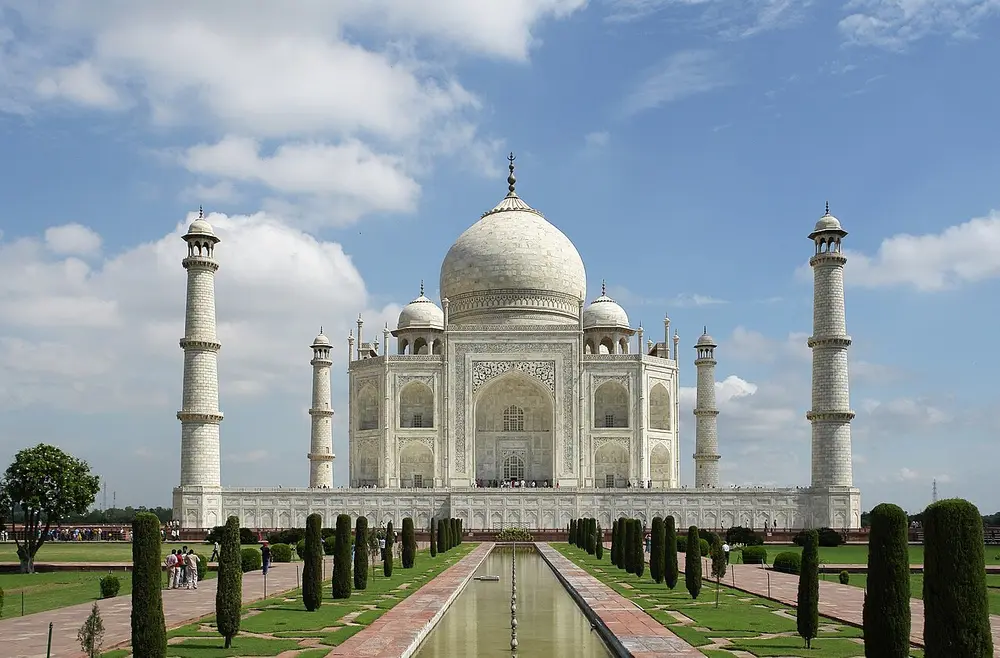
The white marble Taj Mahal with its large dome and four minarets, seen across a long garden pool.
Picture: Yann; edited by Jim Carter. CC BY-SA 4.0.

Taj Mahal

Where
Agra, Uttar Pradesh, on the Yamuna river
When
Built about 1631 to 1648
Who
Mughal emperor Shah Jahan, for his wife Mumtaz Mahal; chief architect usually named as Ustad Ahmad Lahori
Style
Mughal (Indo-Islamic) tomb
Made with
White marble inlaid with coloured stones

A tomb built by a grieving emperor, now the best-known building in India. The tomb sits at the end of a large garden divided into four parts, with a mosque on one side and a matching guest hall on the other. Inscribed in 1983.

Spot it by

White marble, an onion-shaped dome and four free-standing minarets at the corners.

Remember

Taj is in Agra with Agra Fort, and both were listed on the same day in 1983.

Don't confuse

Bibi ka Maqbara in Aurangabad looks like a smaller copy but isn't a World Heritage Site. Humayun's Tomb in Delhi is the red sandstone tomb that came before the Taj.
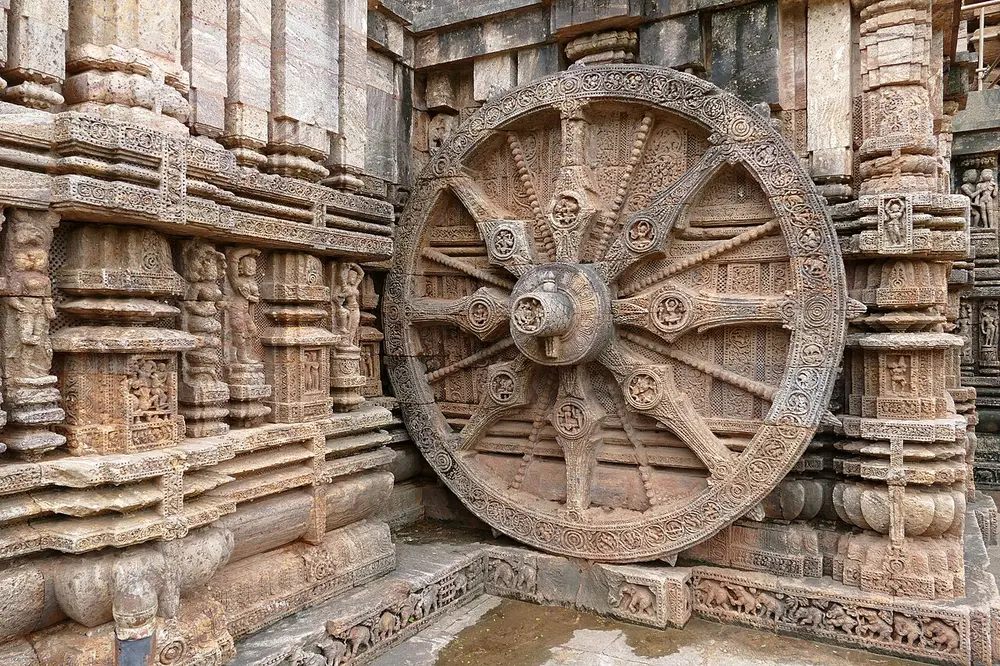
A giant carved stone wheel with spokes, set into the side of a temple wall covered in carvings.
Picture: Ankur Panchbudhe. CC BY 2.0.

Sun Temple, Konark

Also called Black Pagoda

Where
Konark, near Puri, Odisha
When
13th century
Who
King Narasimhadeva I of the Eastern Ganga dynasty
Style
Kalinga (Odisha) temple architecture
Made with
Stone

The whole temple is designed as the chariot of Surya, the Sun god, with 24 carved stone wheels and seven stone horses pulling it. European sailors used its dark tower as a landmark and called it the Black Pagoda. Inscribed in 1984.

Spot it by

The huge spoked stone wheels on the base (pictured). The same temple is on the back of the 10-rupee note.

Remember

Sun god, chariot, 24 wheels, 7 horses.
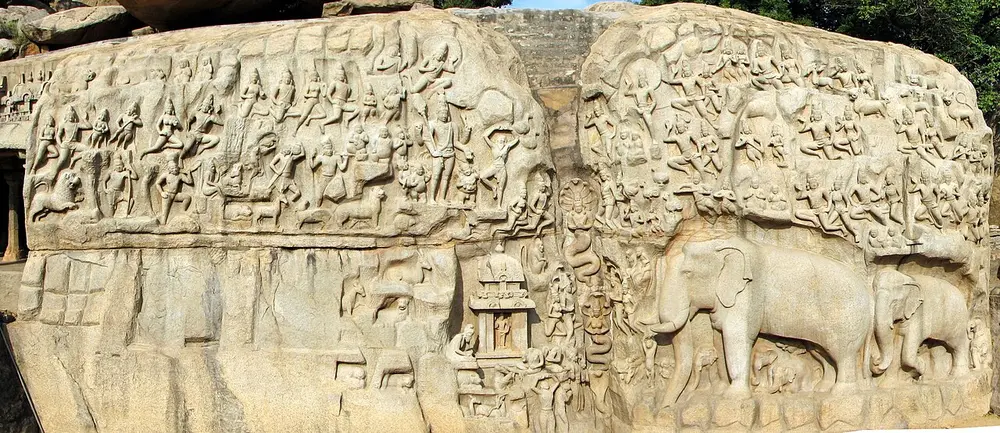
A long rock face carved with hundreds of gods, people and animals, with two life-size elephants on the right.
Picture: Bernard Gagnon. CC BY-SA 3.0.

Group of Monuments at Mahabalipuram

Also called Mamallapuram

Where
Coast of Tamil Nadu, south of Chennai
When
7th and 8th centuries
Who
The Pallava dynasty
Style
Early Dravidian rock-cut and built temples
Made with
Granite

A seaside group of temples from the Pallava kings. It has rathas (temples shaped like chariots, each cut from one rock), cave halls, the Shore Temple by the sea, and the Descent of the Ganges, one of the largest open-air rock carvings in the world. Inscribed in 1984.

Spot it by

The giant relief with life-size elephants and a cleft down the middle where water was meant to flow (pictured).

Remember

The relief has two names: Descent of the Ganges and Arjuna's Penance.
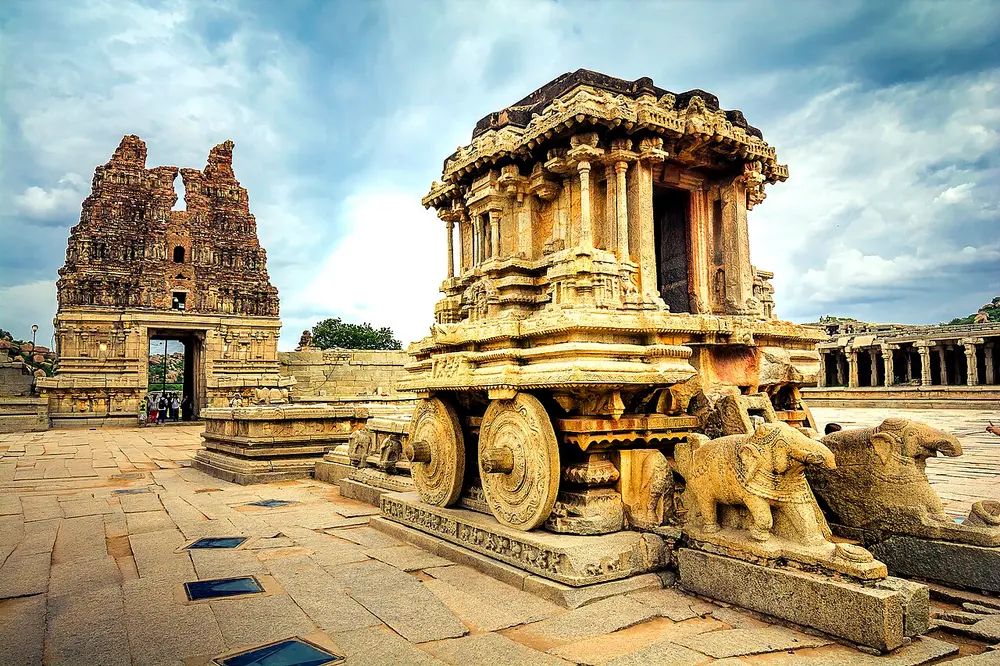
A carved stone shrine shaped like a chariot with stone wheels and stone elephants in front, in a temple courtyard.
Picture: Ram Nagesh Thota. CC BY-SA 4.0.

Group of Monuments at Hampi

Where
On the Tungabhadra river, Karnataka
When
14th to 16th centuries
Who
The Vijayanagara Empire
Style
Dravidian temples, with some Indo-Islamic palace buildings
Made with
Granite

The ruins of Vijayanagara, once one of the richest cities in the world. It was sacked and abandoned after the empire lost a battle to the Deccan Sultanates in 1565. The site was on UNESCO's danger list from 1999 to 2006. Inscribed in 1986.

Spot it by

The stone chariot in the Vittala Temple courtyard (pictured), which is also on the back of the 50-rupee note.

Remember

Hampi was the capital of the Vijayanagara Empire.

Don't confuse

Pattadakal and Badami, also in Karnataka, are older Chalukya temples. Belur and Halebidu are Hoysala.
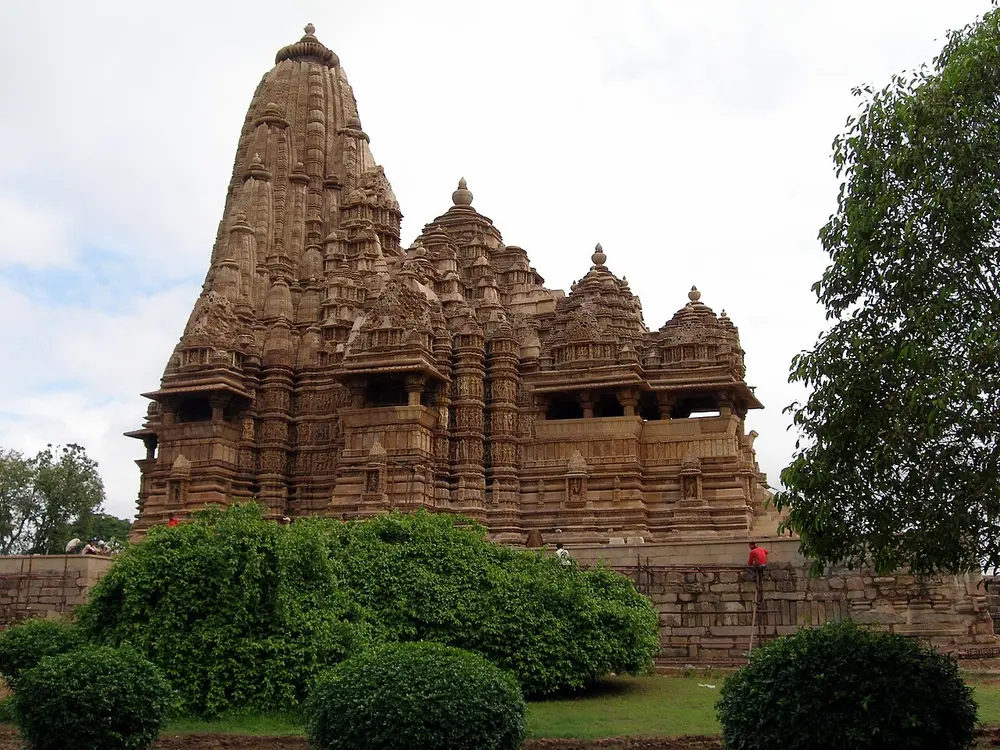
A tall sandstone temple whose roofline rises in a cluster of curved peaks, behind green bushes.
Picture: China Crisis. CC BY-SA 3.0.

Khajuraho Group of Monuments

Where
Chhatarpur district, Madhya Pradesh
When
About 950 to 1050 CE
Who
The Chandela dynasty
Style
Nagara (north Indian) temples, Hindu and Jain
Made with
Sandstone

About two dozen surviving temples, out of many more that once stood. They are famous for walls covered in sculpture: gods, dancers, musicians, warriors and loving couples. The largest is the Kandariya Mahadeva Temple. Inscribed in 1986.

Spot it by

Curved towers (shikharas) that climb in a series of smaller peaks, like a mountain range (pictured).

Remember

Chandelas built Khajuraho; the style is Nagara.
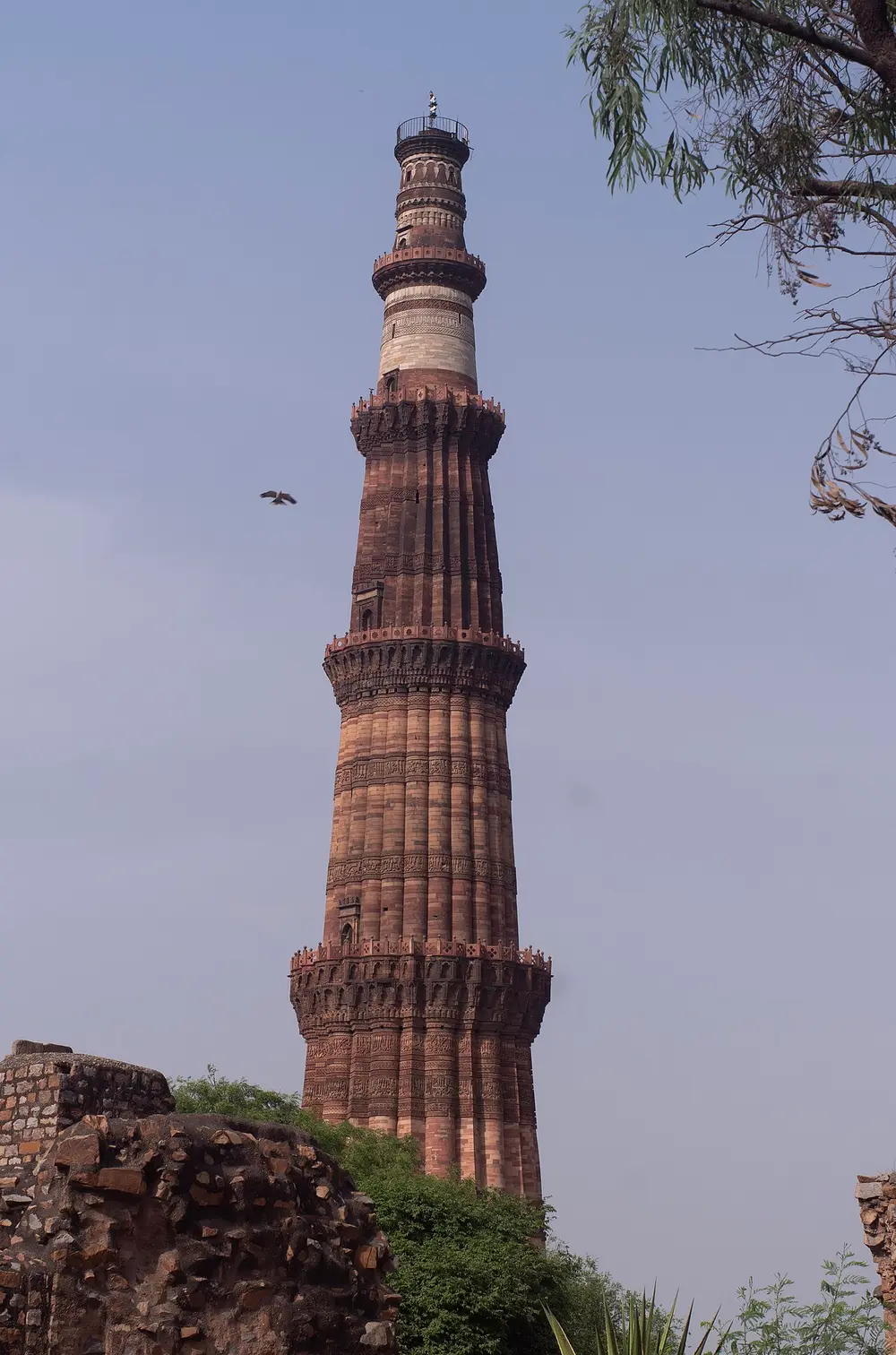
A very tall tapering tower of red and buff sandstone with balconies and bands of carved writing.
Picture: Wasir kasab. CC BY 4.0.

Qutb Minar and its Monuments

Where
Mehrauli, Delhi
When
Begun about 1200 CE
Who
Started by Qutb-ud-din Aibak, the first Delhi Sultan, and continued by Iltutmish
Style
Early Indo-Islamic
Made with
Red and buff sandstone, with marble in the top storeys

A victory tower 72.5 metres tall, among the earliest Islamic buildings in India. The complex around it includes the Quwwat-ul-Islam mosque, the Alai Darwaza gateway and the Iron Pillar, which has stood for about 1,600 years with hardly any rust. Inscribed in 1993.

Spot it by

A fluted tower with five storeys, each ringed by a balcony, and bands of carved Arabic script (pictured).

Remember

Delhi has three sites: Qutb Minar, Humayun's Tomb and the Red Fort.
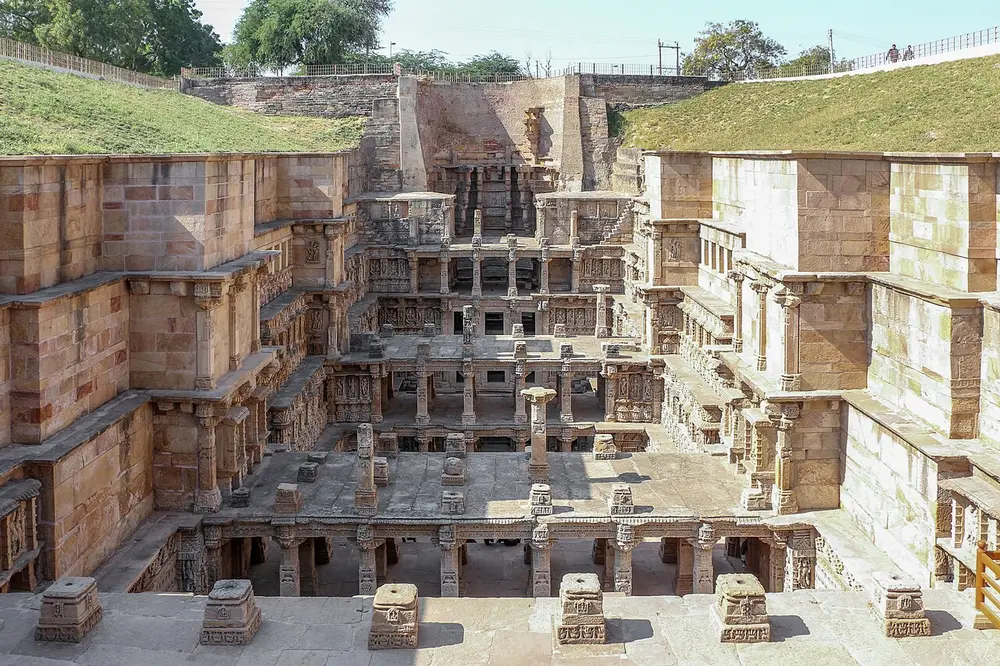
A deep stone stepwell with many levels of pillared galleries going down into the ground.
Picture: Bernard Gagnon. CC BY-SA 3.0.

Rani-ki-Vav

Also called The Queen's Stepwell

Where
Patan, Gujarat
When
11th century
Who
Built in memory of King Bhima I of the Chaulukya (Solanki) dynasty, traditionally credited to his queen Udayamati
Style
Stepwell, designed like an upside-down temple
Made with
Stone

A stepwell is a well you walk down into, by flights of steps, to reach water. This one goes down seven levels and is lined with hundreds of carved gods and figures. Floods buried it in silt for centuries, which kept the carvings safe until it was dug out. Inscribed in 2014.

Spot it by

Rows of pillared galleries stepping down into the earth (pictured). It is on the back of the lavender 100-rupee note.

Remember

Rani-ki-Vav means the queen's stepwell.
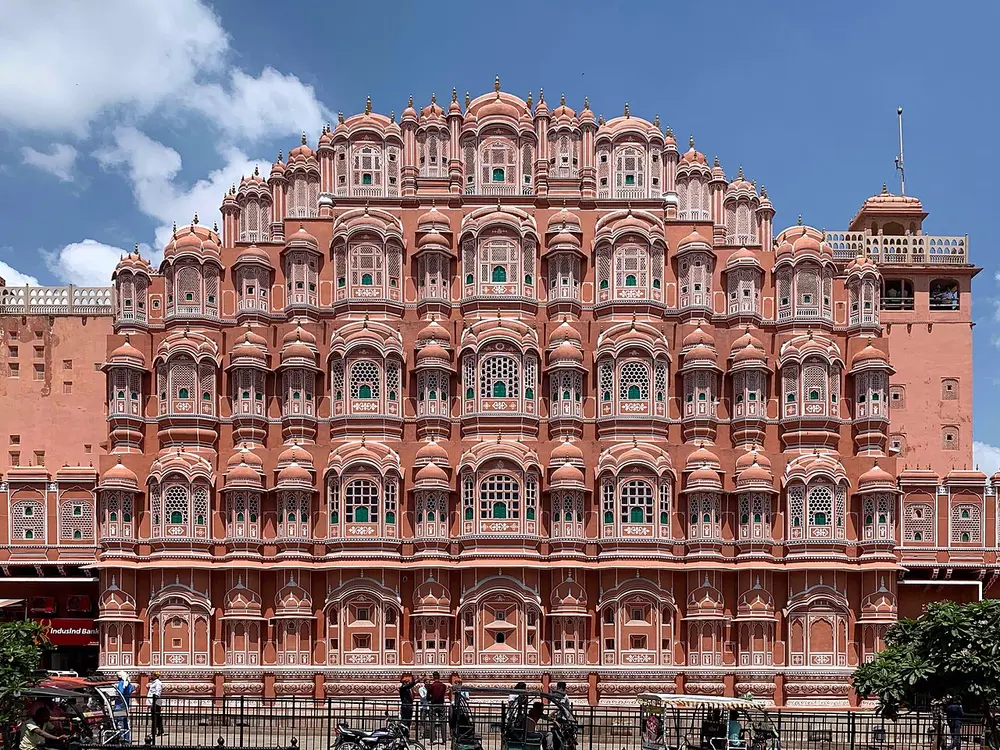
The pink, many-windowed front of the Hawa Mahal in Jaipur, rising in a honeycomb of small balconies.
Picture: Chainwit. CC BY-SA 4.0.

Jaipur City

Also called The Pink City

Where
Rajasthan
When
Founded in 1727
Who
Maharaja Sawai Jai Singh II
Style
Planned city on a grid of wide streets
Made with
Lime-plastered buildings painted pink

A walled city planned from scratch, with straight streets, market rows and city squares, unlike the winding lanes of older towns. It was listed in 2019, the second Indian city after Ahmedabad. The Jantar Mantar observatory, built by the same king, is a separate site listed in 2010.

Spot it by

The Hawa Mahal (pictured), a pink screen of small windows that let palace women watch the street unseen.

Remember

Jaipur has two sites: the walled city (2019) and the Jantar Mantar (2010). Amber Fort is part of a third, the Hill Forts of Rajasthan.
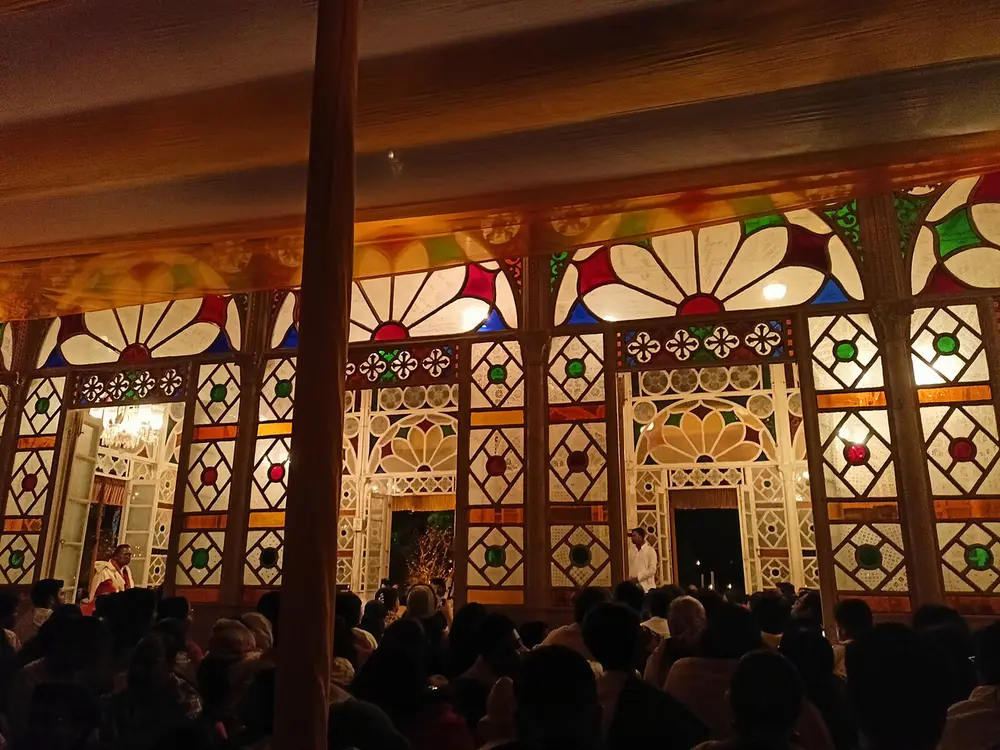
A prayer hall at night with walls of coloured glass in flower patterns, and people seated in front.
Picture: Jitu-saswata mondal. CC BY-SA 4.0.

Santiniketan

Where
Birbhum district, West Bengal
When
Ashram from 1863; school from 1901; Visva-Bharati University from 1921
Who
Debendranath Tagore and his son Rabindranath Tagore
Style
University town of open-air classes and buildings of many styles

A quiet ashram that Rabindranath Tagore turned into a school and then a university where students learnt under trees, close to nature. Its art school, Kala Bhavana, trained artists such as Ramkinkar Baij and was led by Nandalal Bose. Inscribed in 2023.

Spot it by

The Upasana Griha, a prayer hall with walls of coloured glass (pictured).

Remember

Santiniketan and the Hoysala temples were both listed in 2023.

Don't confuse

Shantiniketan, Santiniketan: the same place, spelt two ways.
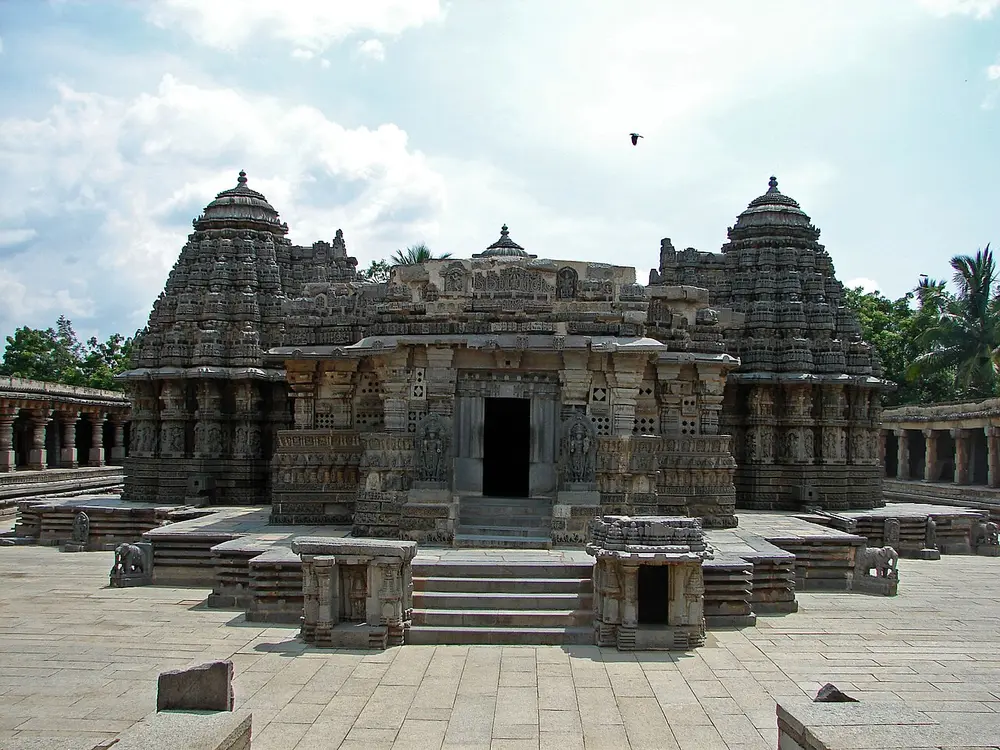
A low, richly carved stone temple with three short towers on a raised stone platform.
Picture: Dineshkannambadi at English Wikipedia. CC BY-SA 3.0.

Sacred Ensembles of the Hoysalas

Where
Belur, Halebidu and Somanathapura, Karnataka
When
12th and 13th centuries
Who
The Hoysala kings
Style
Hoysala temples, mixing southern and northern ideas
Made with
Soapstone, which is soft enough for very fine carving

Three temples famous for carving so fine it looks like jewellery: the Chennakeshava Temple at Belur, the Hoysaleswara Temple at Halebidu and the Keshava Temple at Somanathapura (pictured). They usually stand on star-shaped platforms. Inscribed in 2023.

Spot it by

Low, spreading temples on a raised star-shaped base, with bands of tiny carved elephants, horses and scenes running round the walls.

Remember

Hoysala temples: Belur, Halebidu, Somanathapura, all in Karnataka.
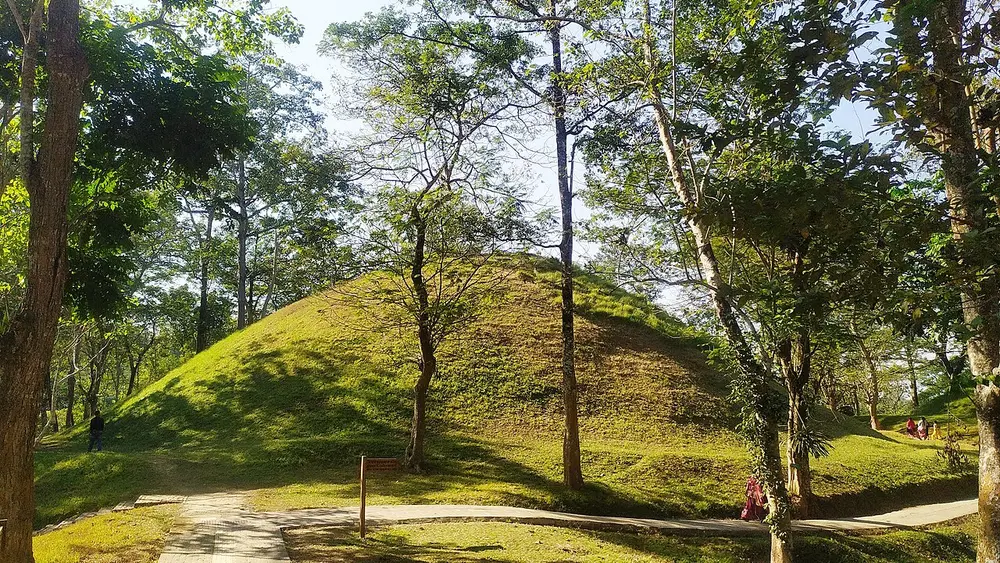
A large grassy mound shaped like a small hill, among tall trees, with a paved path in front.
Picture: BhuyanBhaskar. CC BY 4.0.

Moidams of Charaideo

Also called Moidams, the Mound-Burial System of the Ahom Dynasty

Where
Charaideo district, Assam
When
Over the six centuries of Ahom rule, 1228 to 1826
Who
The Ahom kings and nobles
Style
Royal burial mounds
Made with
A vault topped by a mound of earth, now grassed over

Charaideo was the first capital of the Ahom kingdom, and its royals were buried here under earth mounds that rise like small hills. Inscribed in 2024 at the World Heritage Committee meeting held in New Delhi.

Spot it by

Rows of grassy, dome-shaped mounds in woodland (pictured). They are sometimes called the pyramids of Assam.

Remember

Moidams: Ahom, Assam, 2024.
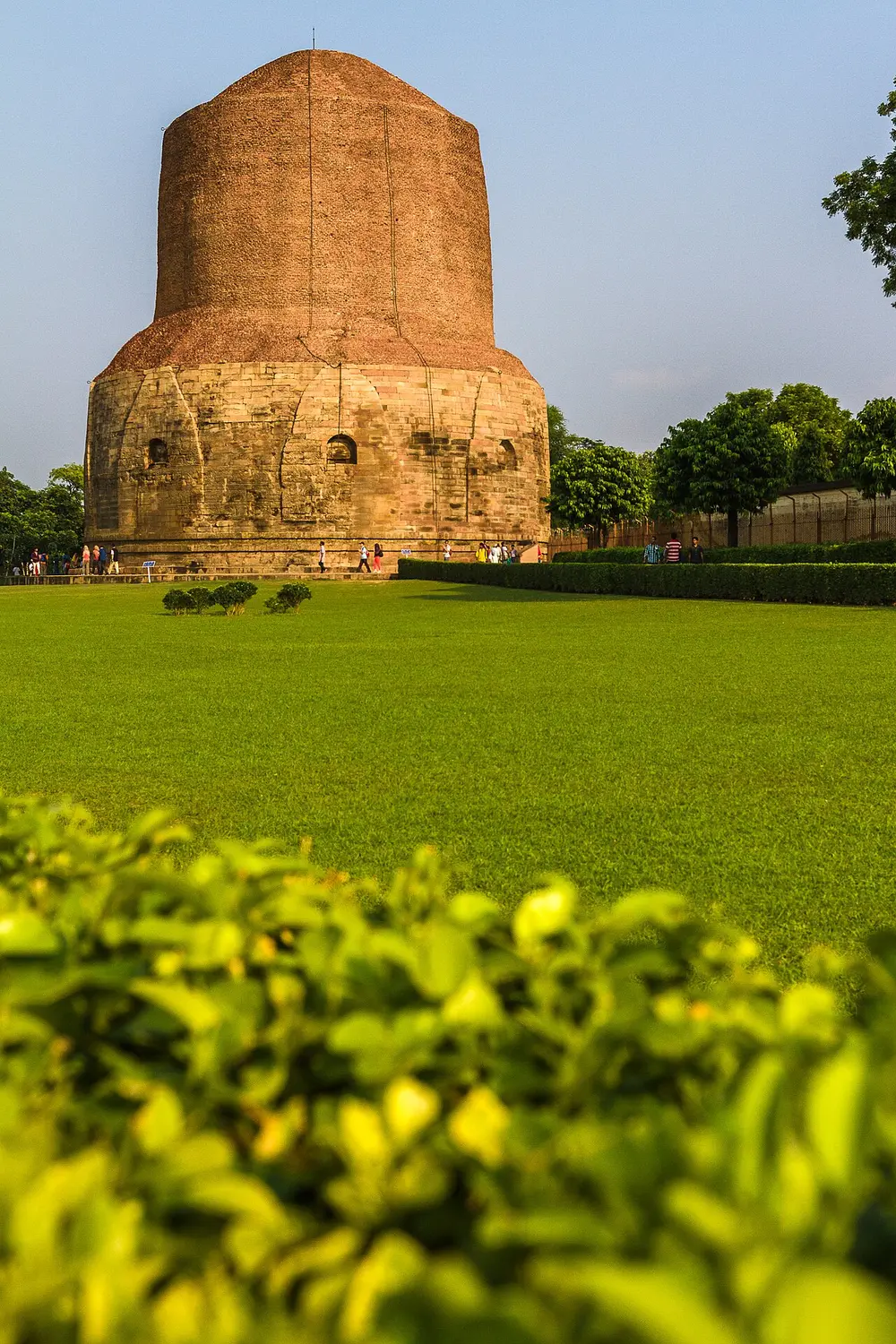
A massive round brick and stone stupa, like a short thick tower, standing in a wide green lawn.
Picture: GONG JIE. CC BY-SA 3.0.

Ancient Buddhist Site of Sarnath

Where
Near Varanasi, Uttar Pradesh
When
3rd century BCE to the 12th century CE, plus the Chaukhandi Stupa
Who
Buddhist communities over many centuries, starting under Emperor Ashoka
Style
Stupas, monasteries and temple ruins

The place where the Buddha gave his first sermon after his enlightenment. The site includes the Dhamek Stupa, monastery ruins, the remains of an Ashokan pillar and the Chaukhandi Stupa. The Lion Capital found here, now in the Sarnath museum, is India's national emblem. Inscribed in July 2026, it is India's newest site as of October 2026.

Spot it by

The Dhamek Stupa, a huge round tower of stone below and brick above (pictured).

Remember

Bodh Gaya is where the Buddha was enlightened (listed 2002); Sarnath is where he first taught (2026).
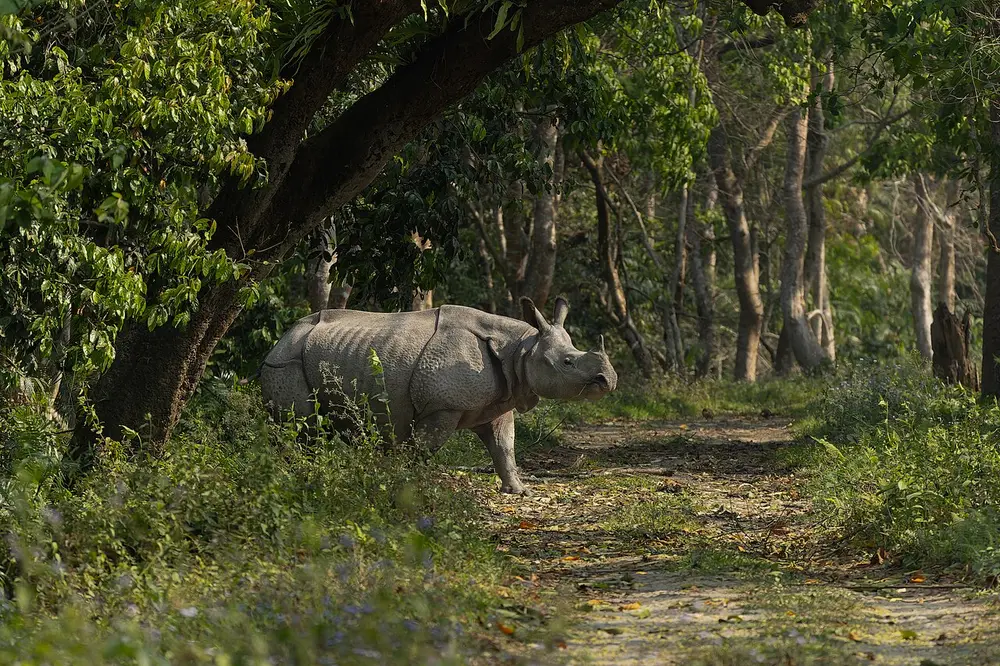
A one-horned rhinoceros standing on a forest track among trees.
Picture: Tisha Mukherjee. CC BY-SA 4.0.

Kaziranga National Park

Where
Assam, on the floodplain of the Brahmaputra
Style
Natural site: grassland, wetland and forest

Home to the largest population of the Indian one-horned rhinoceros in the world, along with tigers, elephants and wild water buffalo. The Brahmaputra floods it every year, which keeps its tall grasslands alive. Inscribed in 1985, among India's first natural sites.

Spot it by

The one-horned rhino with its armour-like folds of skin (pictured).

Remember

Kaziranga is in Assam, like Manas, India's other 1985 natural site in the state.

Don't confuse

Jim Corbett is in Uttarakhand and Kanha is in Madhya Pradesh. Neither is a World Heritage Site.
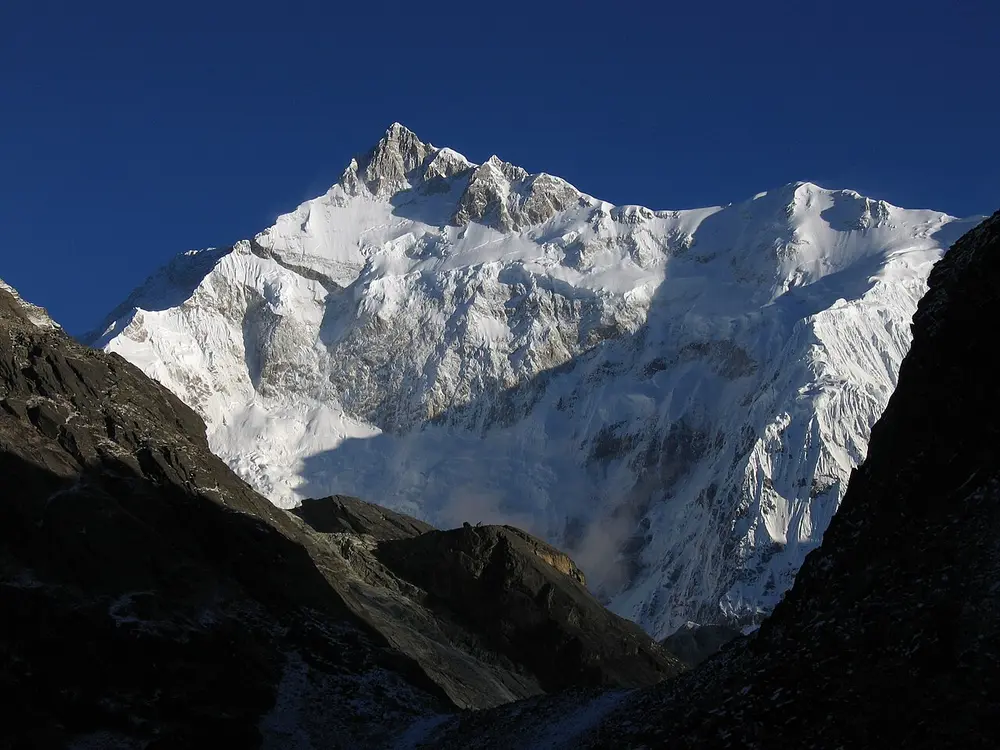
A huge snow-covered mountain face lit by sun, framed by dark rocky slopes.
Picture: Ashinpt at enwiki. CC BY-SA 3.0.

Khangchendzonga National Park

Where
Sikkim
Style
Mixed site: natural and cultural

A park built around Kangchenjunga, at 8,586 metres the third-highest mountain in the world. It is listed for its glaciers, forests and wildlife, and also because local communities hold the mountain and its valleys sacred. Inscribed in 2016.

Spot it by

Snow peaks of the eastern Himalaya seen from Sikkim (pictured).

Remember

India's one and only mixed site.

Worth one line each

Site Remember it for
Elephanta Caves Shiva caves on an island near Mumbai, with the giant three-headed Shiva
Great Living Chola Temples The Brihadisvara Temple at Thanjavur and its tall pyramid tower
Group of Monuments at Pattadakal Chalukya temples where northern and southern styles stand side by side
Buddhist Monuments at Sanchi The Great Stupa and its carved gateways, on the back of the 200-rupee note
Rock Shelters of Bhimbetka Prehistoric rock paintings of animals and hunters
Red Fort Complex Shah Jahan's red sandstone palace-fort in Delhi, on the back of the 500-rupee note
Dholavira A Harappan city in Kutch with clever water tanks and reservoirs
Ramappa Temple A 13th-century Kakatiya Shiva temple in Telangana, named after its sculptor
Sundarbans The largest mangrove forest in the world, home of the Bengal tiger
Western Ghats A mountain chain along the west coast, one of the world's richest places for wildlife
Maratha Military Landscapes Twelve forts linked to Chhatrapati Shivaji, listed in 2025

On your banknotes

The banknotes issued since 2016 (the Mahatma Gandhi New Series) show World Heritage Sites on the back. It's an easy way to remember them.

Note Site on the back
10 rupees Sun Temple, Konark
20 rupees Ellora Caves
50 rupees Hampi (the stone chariot)
100 rupees Rani-ki-Vav
200 rupees Sanchi Stupa
500 rupees Red Fort

Test yourself

Question 1 of 8

Which World Heritage Site is this?

Question 2 of 8

Which of these is Rani-ki-Vav?

Question 3 of 8

This stone chariot stands in the old capital of which empire?

Question 4 of 8

Which of these was among the first Indian sites inscribed, in 1983?

Question 5 of 8

Which is India's only mixed World Heritage Site?

Question 6 of 8

These grassy mounds in Assam are the royal burials of which dynasty?

Question 7 of 8

Which Indian city was the first to be listed as a whole historic city?

Question 8 of 8

Which of these belongs to the site added to the list in 2026?

From past papers

Real exam questions on this topic, each with a full solution.

Finished this note?

Mark it as studied to track your progress through the course.

Was this note useful?

Each picture is credited underneath it. Pictures of works still in copyright are shown small, for teaching only. If you hold the rights to a picture and want it removed, tell us through the contact page and we will take it down.