Pala manuscript painting
Also called Eastern Indian palm-leaf painting
- Where
- Buddhist monasteries of Bihar and Bengal, such as Nalanda and Vikramashila
- When
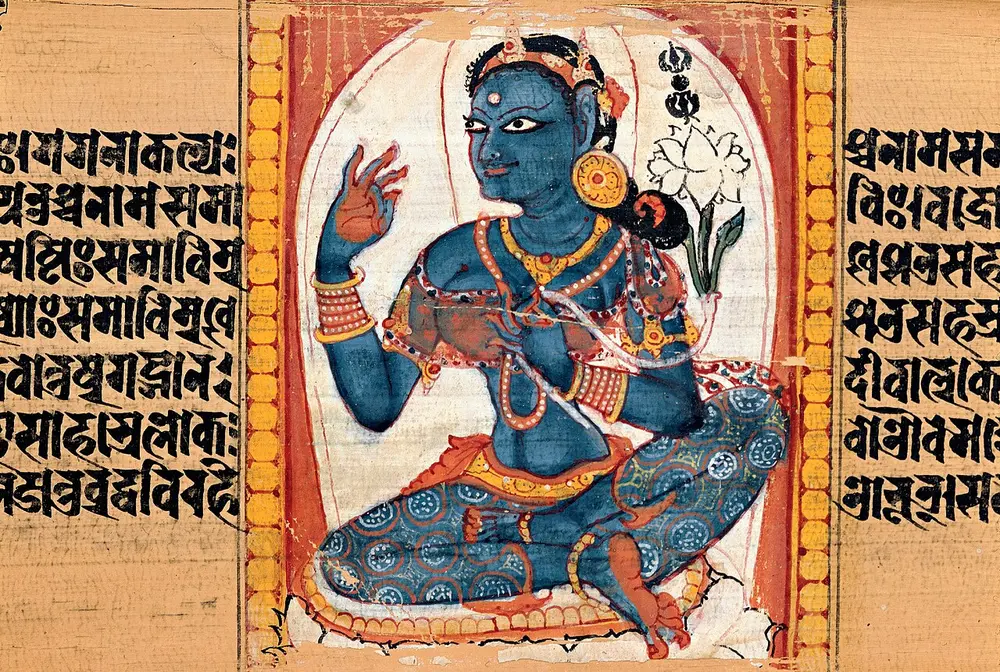
- 11th and 12th centuries; the page shown is from the late 11th century
- Who
- Mostly Buddhist monks
- Made with
- Ink and colour on narrow strips of palm leaf
- Key works
- The Ashtasahasrika Prajnaparamita (the Perfection of Wisdom in 8,000 lines)
Under the Pala kings of eastern India, monks copied Buddhist texts on long, narrow strips of palm leaf and painted small pictures between the lines of writing. The pictures show the Buddha, bodhisattvas and goddesses in smooth, flowing lines and rich colours. Before paper, Indian books were written on palm leaves, or on birch bark in the far north, and the long shape of the leaf decided the shape of the page.
Spot it by
A long thin page, script on both sides, and a small square or arched panel with a calm Buddhist figure.Remember
Pala, palm leaf, Prajnaparamita: three Ps.Don't confuse
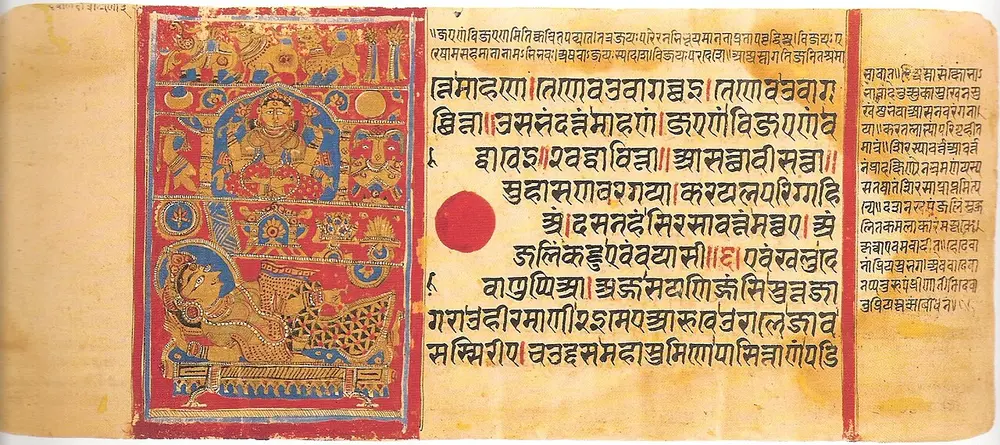
Jain manuscripts from western India use the same long shape, but show Jain stories with angular faces and a far eye that sticks out, often on red.