Skip to content

Chapter 6: Heritage sites and museums

Museums and galleries

India's oldest and best-known museums, the world's famous ones and the masterpieces they hold, and the big art events from the Kochi-Muziris Biennale to Venice and documenta.

In one minute

5 facts to know

  1. The Indian Museum in Kolkata, founded by the Asiatic Society in 1814, is India's oldest museum. The Government Museum in Chennai (1851) is the second oldest.
  2. The National Museum in New Delhi (1949) holds the bronze Dancing Girl of Mohenjo-daro. The NGMA collects modern Indian art in Delhi (1954), Mumbai (1996) and Bengaluru (2009).
  3. Mumbai has CSMVS, once the Prince of Wales Museum (opened 1922), and the Dr. Bhau Daji Lad Museum, the city's oldest (1855). Hyderabad's Salar Jung Museum (1951) is famous for the marble Veiled Rebecca.
  4. The Mona Lisa is in the Louvre (Paris), The Starry Night in MoMA (New York), Las Meninas in the Prado (Madrid), The Night Watch in the Rijksmuseum (Amsterdam) and The Birth of Venus in the Uffizi (Florence).
  5. The Venice Biennale (since 1895) is the oldest biennale. India's Kochi-Muziris Biennale began in 2012; as of October 2026 its next edition opens in December 2027.

Museums, galleries and biennales

A museum keeps a collection of objects, looks after them and shows them to the public. A gallery usually means a place that shows art; a commercial gallery also sells it. The curator is the person in charge of a collection, who decides what goes into an exhibition (NIFT 2024 asked for this word), and a conservator repairs and protects the objects. A biennale (Italian for "every two years") is a huge show of new art held every other year, and an art fair is a market where galleries rent booths to sell art.

India's oldest museums

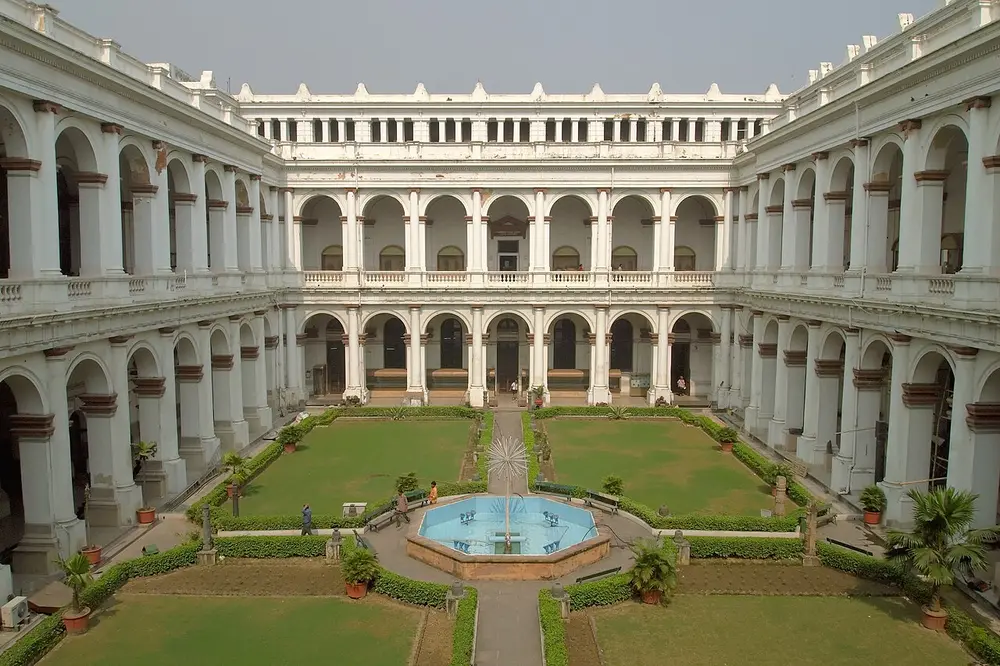
A large white building with two storeys of arched verandahs on all four sides of a green courtyard garden with a round fountain in the middle.
Picture: Vyacheslav Argenberg. CC BY 4.0.

Indian Museum

Also called Once the Imperial Museum, Calcutta

Where
Chowringhee (now Jawaharlal Nehru Road), Kolkata
When
Founded 1814; present building from the 1870s
Who
Founded by the Asiatic Society of Bengal; first curator Nathaniel Wallich, a Danish botanist

India's oldest museum, and one of the oldest in the world, began in 1814 in the rooms of the Asiatic Society in Calcutta. It later moved into this grand building of arches around a courtyard, and it is now run by the Ministry of Culture. Its galleries cover art, archaeology, anthropology, geology, zoology and plants. Two treasures to know: the carved stone railings and gateway of the Buddhist stupa at Bharhut in Madhya Pradesh (2nd century BCE), which tell stories of the Buddha's past lives, and an ancient Egyptian mummy.

Spot it by

A huge white building with arched verandahs on every side of a garden courtyard with a fountain.

Remember

1814, Kolkata: India's first museum.

Don't confuse

The Victoria Memorial, also a museum in Kolkata, is the white marble building with a big dome. The Indian Museum is older and is built around a courtyard of arches.
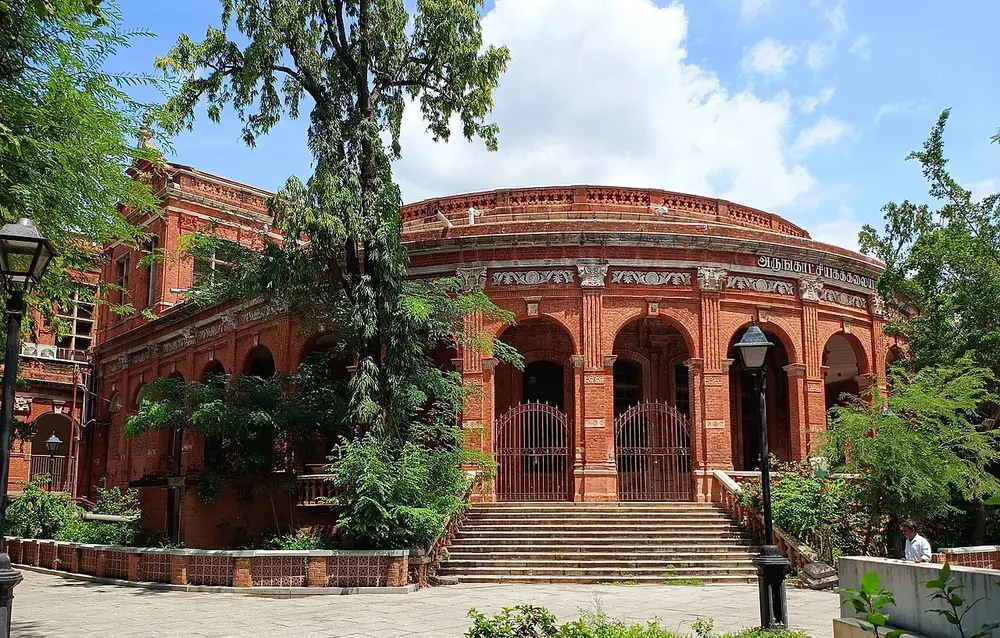
A round red-brick building with tall arched windows, cream trim and a wide flight of steps, half hidden by trees, in the museum complex at Egmore.
Picture: N. Vivekananthamoorthy. CC BY-SA 4.0.

Government Museum, Chennai

Also called Madras Museum, or Egmore Museum

Where
Pantheon Road, Egmore, Chennai
When
Founded 1851
Who
Started with geological specimens given by the Madras Literary Society; Edward Balfour was its first officer in charge
Style
Indo-Saracenic buildings in red brick

India's second-oldest museum opened in 1851 with a gift of rocks and minerals from the Madras Literary Society. It moved to the Pantheon complex in Egmore, where red Indo-Saracenic buildings now hold many galleries, beside the Connemara Public Library. Its Bronze Gallery is one of the best places in the world to see South Indian bronzes, including Chola figures of Nataraja, Shiva as the lord of dance. It also has carved marble panels from the Buddhist stupa at Amaravati in Andhra Pradesh.

Spot it by

Round and arched red-brick buildings among old trees at Egmore.

Remember

Kolkata 1814 first, Chennai 1851 second.

National collections in Delhi

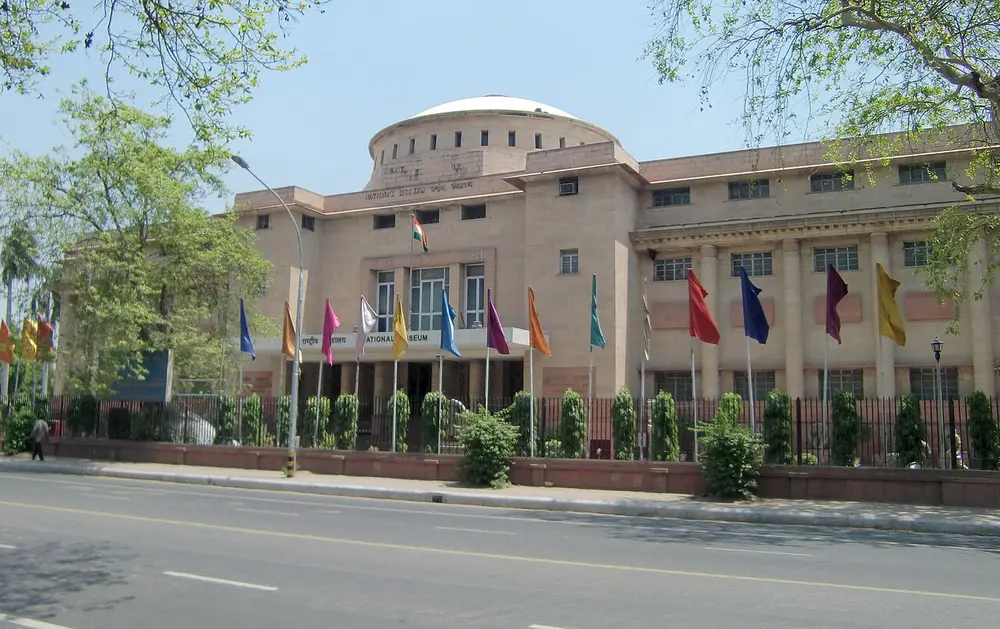
A long, low sandstone-coloured building with a round drum-shaped tower at the corner and a row of colourful flags in front, beside a wide road.
Picture: Miya.m. CC BY-SA 3.0.

National Museum

Where
Janpath, New Delhi
When
Opened 15 August 1949; present building opened 1960
Who
Building designed by G.B. Deolalikar; run by the Ministry of Culture

In the winter of 1947 to 1948 the Royal Academy in London showed a great exhibition of Indian art. When the objects came home, they were put on show in the state rooms of Rashtrapati Bhavan on 15 August 1949, and this became the National Museum. Its own building on Janpath opened in 1960. Its collection covers 5,000 years. The most famous is the small bronze Dancing Girl from Mohenjo-daro, more than 4,000 years old. It also keeps relics of the Buddha found at Piprahwa in Uttar Pradesh. A much larger national museum, Yuge Yugeen Bharat, is planned in the North and South Block buildings nearby.

Spot it by

A curved sandstone front with a round drum on top, at a corner of Janpath.

Remember

The Dancing Girl dances in the National Museum.

Don't confuse

The National Museum covers 5,000 years of Indian history. The NGMA, near India Gate, covers modern art from the mid-1800s.
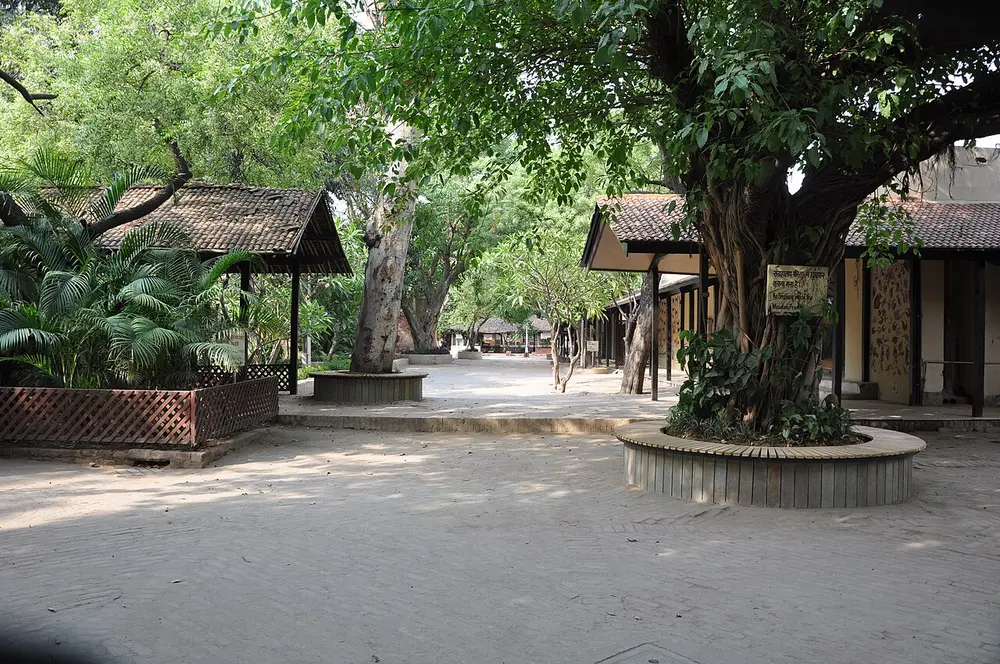
A shady paved courtyard with large old trees, a raised round planter and low buildings with sloping tiled roofs and verandahs.
Picture: Anilbhardwajnoida. CC BY-SA 3.0.

National Crafts Museum

Also called The Crafts Museum; officially the National Crafts Museum and Hastkala Academy

Where
Pragati Maidan, New Delhi, facing the Purana Qila
When
Set up 1956; buildings designed from 1975 to about 1990
Who
Kamaladevi Chattopadhyay; architect Charles Correa; run by the Ministry of Textiles

Kamaladevi Chattopadhyay, the freedom fighter who led the revival of Indian crafts after independence, was the driving force behind this museum, set up by the All India Handicrafts Board in 1956. The architect Charles Correa designed its low buildings as a walk through courtyards, verandahs and lanes, like a village street. Its open-air Village Complex, left from an exhibition on rural India held in 1972, has houses from different regions. Inside are more than 30,000 objects: tribal and folk art, textiles, metalwork, wood carving and the large wooden Bhuta figures of Karnataka.

Spot it by

Low tiled-roof buildings, courtyards and big trees, with village houses in the open air.

Remember

Kamaladevi gave crafts a home; Correa gave it a village.

Mumbai's two great museums

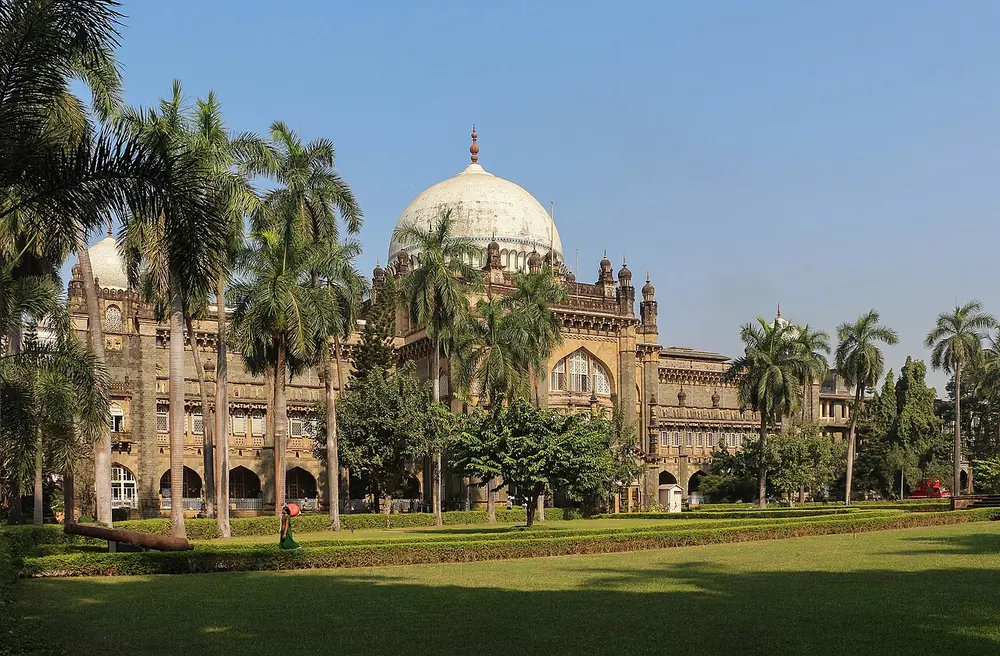
A grey stone building with a large white dome and smaller domed turrets, behind tall palm trees and a wide green lawn.
Picture: Bernard Gagnon. CC BY-SA 4.0.

Chhatrapati Shivaji Maharaj Vastu Sangrahalaya (CSMVS)

Also called Prince of Wales Museum of Western India, until 1998

Where
Fort, south Mumbai, near the Gateway of India
When
Foundation stone 1905; opened 10 January 1922
Who
George Wittet, architect
Style
Indo-Saracenic

Leading citizens of Bombay built this museum to mark the 1905 visit of the Prince of Wales, the future King George V, who laid its foundation stone. George Wittet, who also designed the Gateway of India, won an open competition for the design in 1909. The building was finished in 1914 but was used as a military hospital during the First World War, so it opened only in 1922. In 1998 it was renamed after Shivaji, founder of the Maratha kingdom; vastu sangrahalaya means museum. Its galleries run from Indus Valley finds and Buddhist sculpture from Gandhara to miniature paintings and the European paintings given by Sir Ratan Tata and Sir Dorab Tata.

Spot it by

A grey basalt building with a big white dome, palm trees and lawns, in south Mumbai.

Remember

Prince visits 1905, museum opens 1922, Shivaji's name 1998.

Don't confuse

CSMT is the railway terminus and CSMVS is the museum. Both carry Shivaji's name.
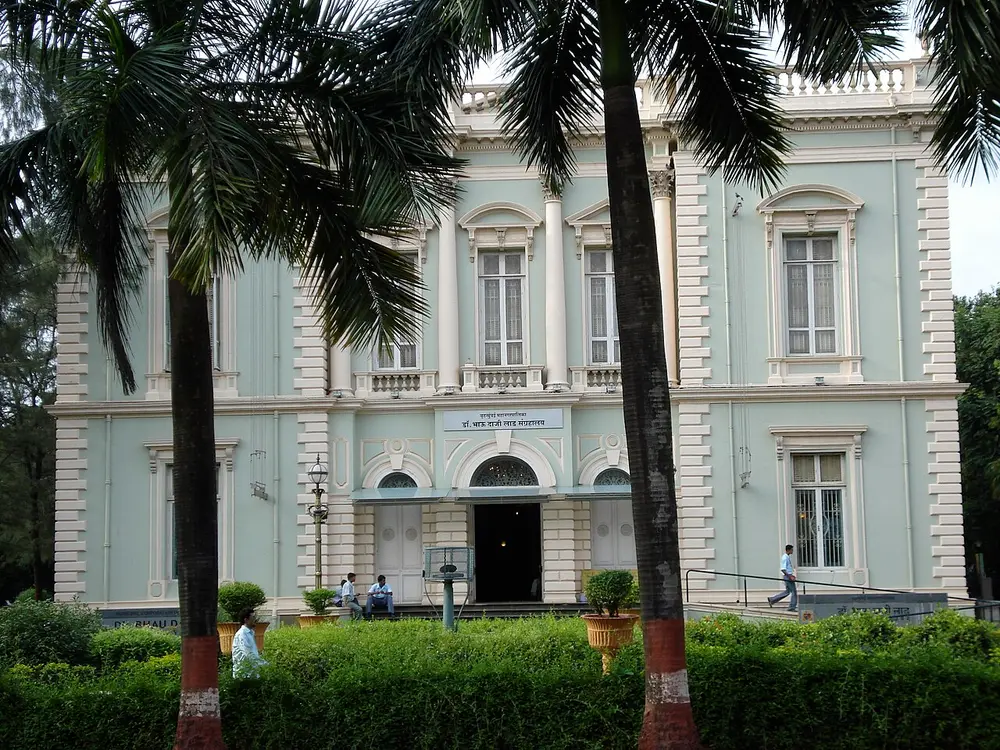
A pale green and white building with tall arched windows, columns and a balustrade along the roof, seen between palm trees across a garden.
Picture: Qiw007. CC BY 4.0.

Dr. Bhau Daji Lad Museum

Also called Victoria and Albert Museum, Bombay, until 1975

Where
Jijamata Udyan, Byculla, Mumbai
When
Founded 1855; present building opened 1872

Mumbai's oldest museum began in 1855 as a showcase of the decorative and industrial arts of the region, an idea that grew out of the Great Exhibition held in London in 1851. Its present building in the Byculla gardens opened in 1872 as the Victoria and Albert Museum. In 1975 it was renamed after Bhau Daji Lad, a Mumbai doctor and scholar who had worked to create it. Today it is a museum of the city's own history, art and culture. Its careful restoration won a UNESCO Asia-Pacific Award of Excellence for cultural heritage conservation in 2005.

Spot it by

A pale green and white building with arched windows, in the gardens beside Byculla zoo.

Remember

Byculla, 1855: Mumbai's first museum.

Don't confuse

CSMVS (1922) is the bigger museum in south Mumbai. Bhau Daji Lad is older and is about Mumbai itself.

One family's treasure: the Salar Jung Museum

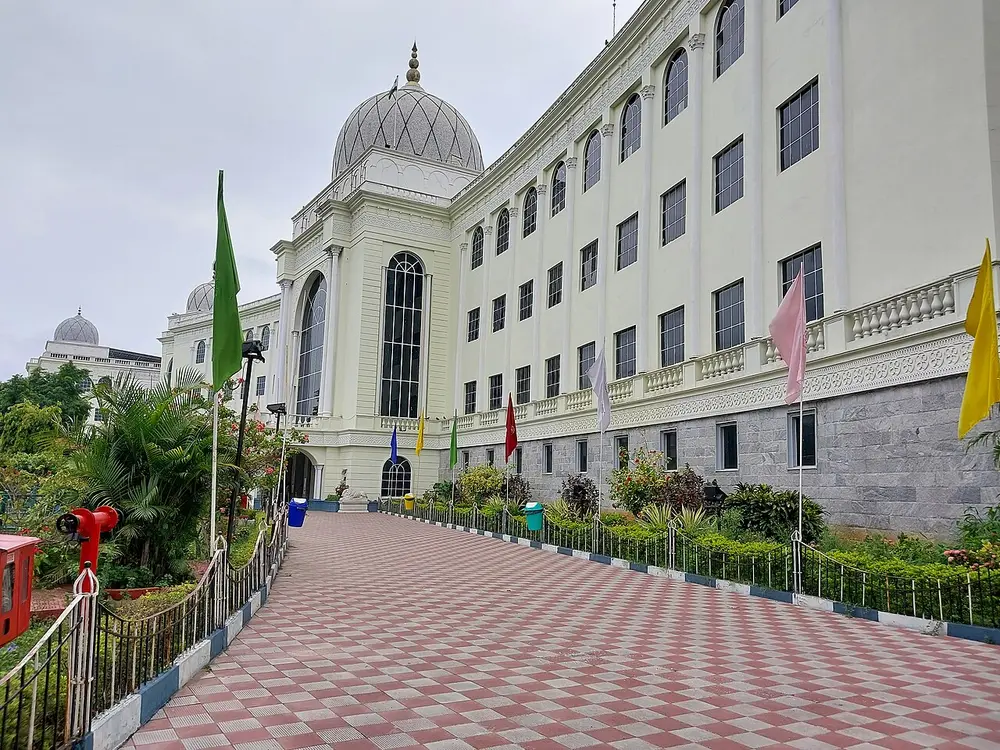
A long white museum building with rows of windows and a large white dome at one end, approached by a paved path lined with flags and plants.
Picture: Pinakpani. CC BY-SA 4.0.

Salar Jung Museum

Where
Dar-ul-Shifa, on the south bank of the Musi river, Hyderabad
When
Opened 16 December 1951
Who
Collected mainly by Mir Yousuf Ali Khan, Salar Jung III (1889 to 1949)

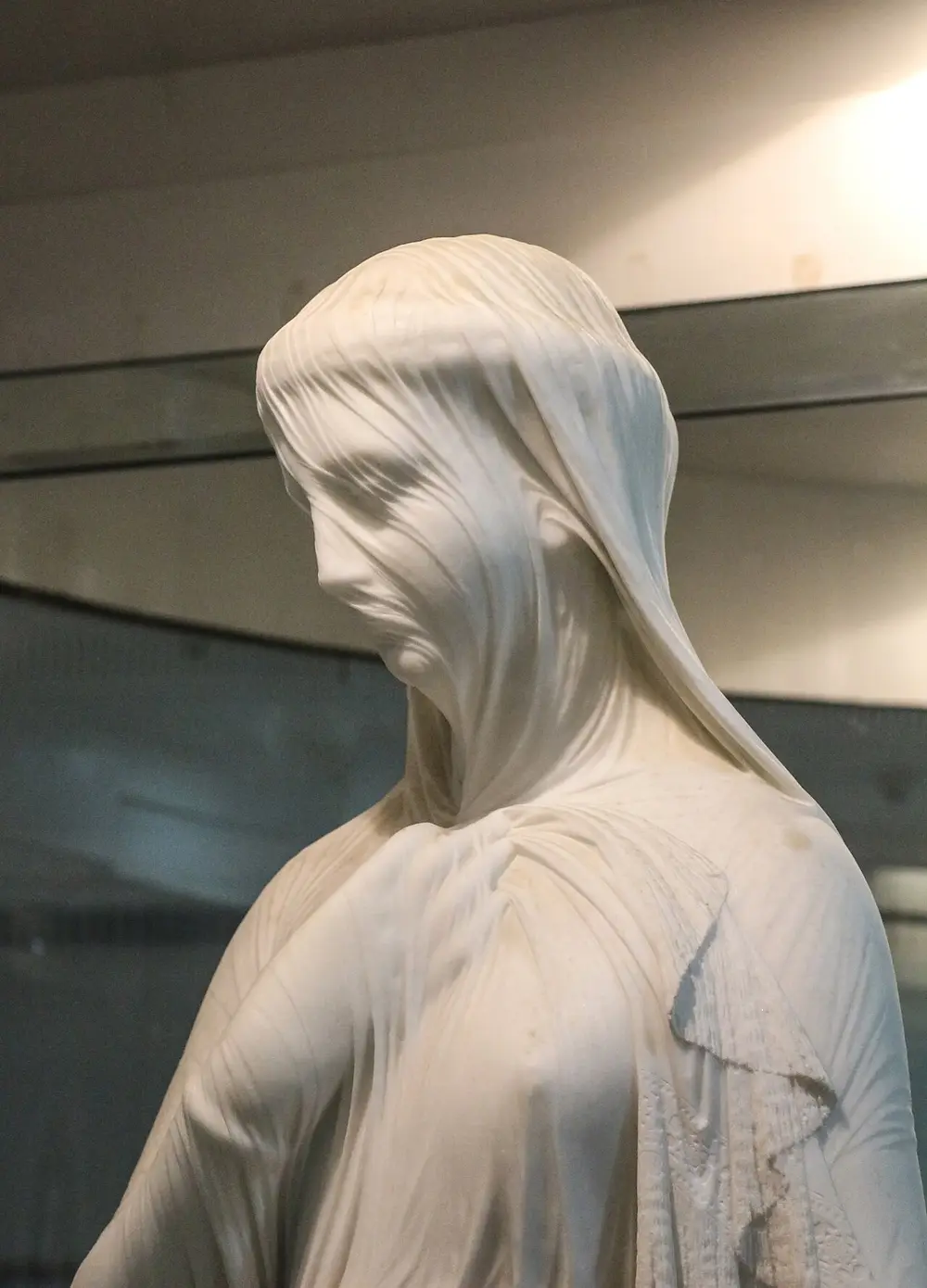
Salar Jung III, a nobleman who became Prime Minister of Hyderabad State under the Nizam in 1912, spent about 35 years buying art from all over the world. After his death the family's collection, which also held pieces bought by earlier Salar Jungs, was given to the nation, and Jawaharlal Nehru opened the museum in 1951. The Salar Jung Museum Act of 1961 made it a national museum run by a board. Its huge collection includes paintings, jade, carpets, manuscripts, furniture and clocks from India, Persia, China, Japan, Egypt and Europe. Its most famous piece is the marble Veiled Rebecca.

Spot it by

A long white building with a big white dome beside the Musi in old Hyderabad.

Remember

Salar Jung: one family's treasure, and Rebecca's marble veil.
A close view of a white marble statue of a young woman whose head and face are covered by a thin veil, carved so finely that her features show through it.

The Veiled Rebecca, by the Italian sculptor Giovanni Maria Benzoni. Salar Jung I bought it in Rome in 1876. Benzoni carved several versions of the statue; the see-through veil is solid marble.

Picture: Bernard Gagnon. CC BY-SA 3.0.

New private museums

Most big Indian museums are run by the government. Two private ones are worth knowing. The Kiran Nadar Museum of Art (KNMA), opened in 2010 by the collector Kiran Nadar, was India's first private museum of modern and contemporary art. It began in Noida and moved to Saket in New Delhi, and its collection runs from Raja Ravi Varma and M.F. Husain to Anish Kapoor. A very large new building for it, designed by the architect David Adjaye, is planned near Delhi's airport.

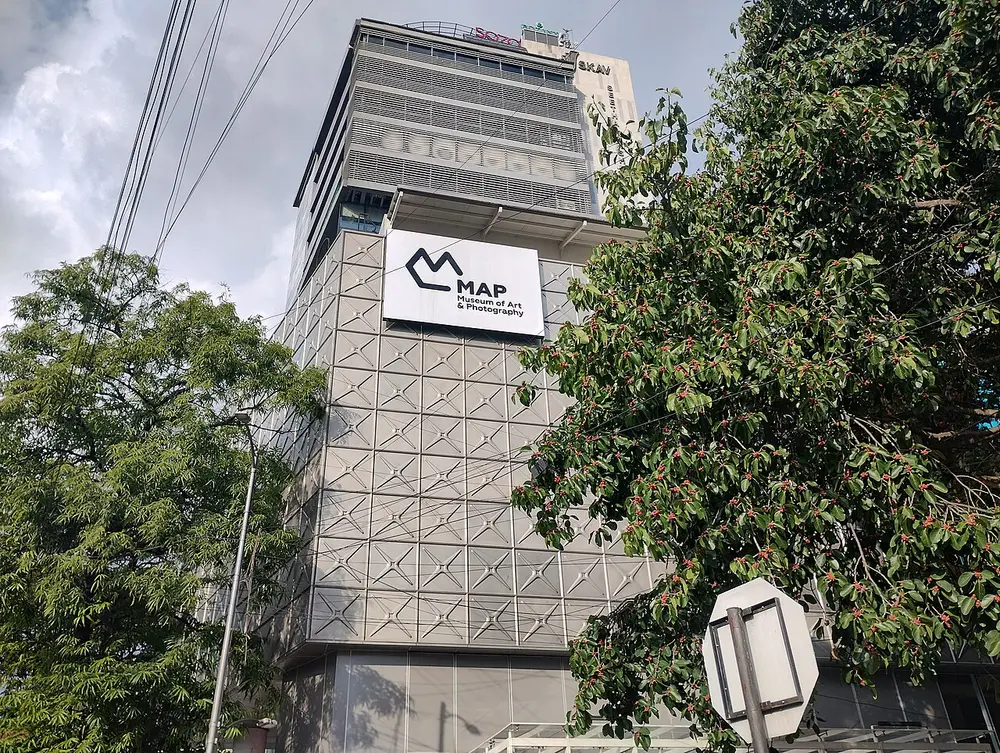
A tall grey building covered in a lattice of square panels, with a white sign showing the MAP logo, partly framed by green trees.
Picture: Gpkp. CC BY-SA 4.0.

Museum of Art & Photography (MAP)

Where
Kasturba Road, Bengaluru
When
Online from 2020; building opened 18 February 2023
Who
Founded by the collector Abhishek Poddar

MAP began as an online museum in 2020, during the pandemic, and opened its building in central Bengaluru in February 2023. Its collection of more than 20,000 works, started with Poddar's own gift, runs from the 12th century to today. It mixes modern and contemporary art, photography, textiles, crafts and design with popular culture such as film posters and advertising.

Spot it by

A grey lattice-covered building with the MAP sign on Kasturba Road.

Remember

MAP is Bengaluru's museum of art and photography, open since 2023.

Famous museums of the world

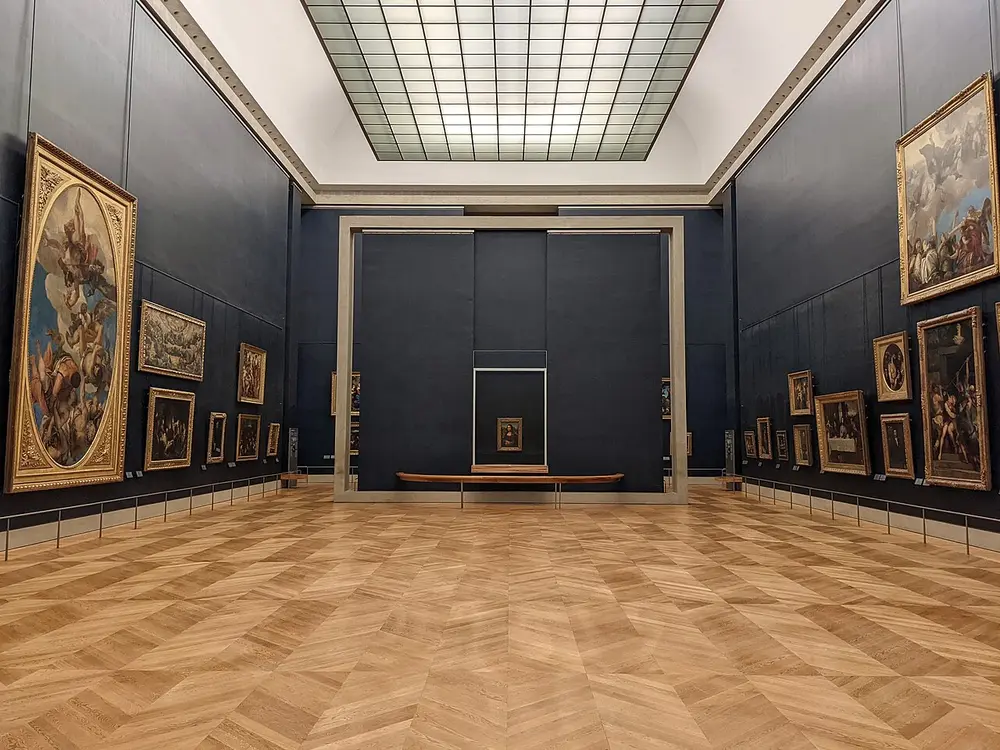
A large, empty gallery with a glass ceiling and a wooden floor. Big framed paintings hang on dark blue walls, and the small Mona Lisa hangs alone in the middle of the far wall.
Picture: Shonagon. CC0.

The Louvre

Also called Musée du Louvre

Where
Paris, France, on the right bank of the Seine
When
Opened as a public museum on 10 August 1793

The Louvre was a royal palace for centuries. During the French Revolution it was opened as a public museum, in 1793, to show the nation's treasures. Its three most famous works are Leonardo da Vinci's Mona Lisa and two ancient Greek statues, the Venus de Milo and the Winged Victory of Samothrace. The Mona Lisa hangs alone behind glass in the Salle des États, shown here. UCEED 2016 asked students to pick out Leonardo's paintings, including the Mona Lisa, and UCEED 2025 asked about Marcel Duchamp's L.H.O.O.Q. (1919), a postcard of the Mona Lisa with a moustache drawn on, which belongs to Dada. I.M. Pei's glass pyramid entrance is in Iconic buildings of the world.

Spot it by

In this room, a small painting alone on a dark wall, behind glass, facing huge canvases.

Remember

Leonardo was Italian, but his Mona Lisa lives in Paris.
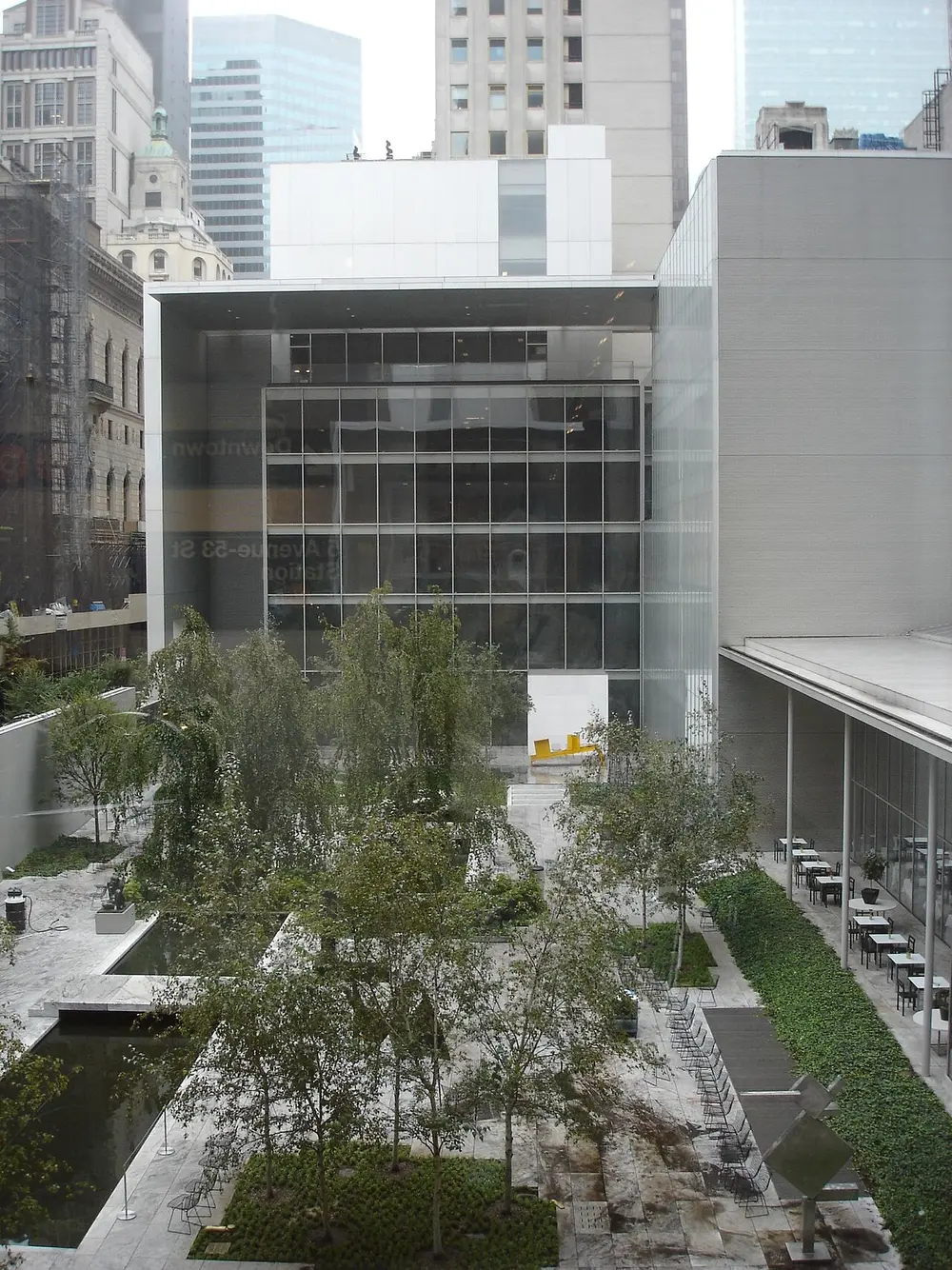
Looking down into a garden of slim trees and paving between tall glass and grey stone museum buildings, with skyscrapers behind.
Picture: hibino. CC BY 2.0.

Museum of Modern Art (MoMA)

Where
53rd Street, Midtown Manhattan, New York
When
Founded 1929
Who
Founded by Abby Aldrich Rockefeller, Lillie P. Bliss and Mary Quinn Sullivan; first director Alfred H. Barr Jr.

Three women art patrons founded MoMA in 1929 to show the new modern art of Europe and America. Its collection runs from the late 1800s to today and includes architecture, design, photography and film as well as painting and sculpture. Its best-known painting is Van Gogh's The Starry Night (1889), here since 1941. It also holds Picasso's Les Demoiselles d'Avignon, Dalí's The Persistence of Memory and Warhol's Campbell's Soup Cans. The photo shows its sculpture garden.

Spot it by

A walled garden of trees and sculpture between glass galleries in Midtown Manhattan.

Remember

The Starry Night shines in New York.

Don't confuse

The Van Gogh Museum in Amsterdam has many of his paintings, but The Starry Night is at MoMA in New York.
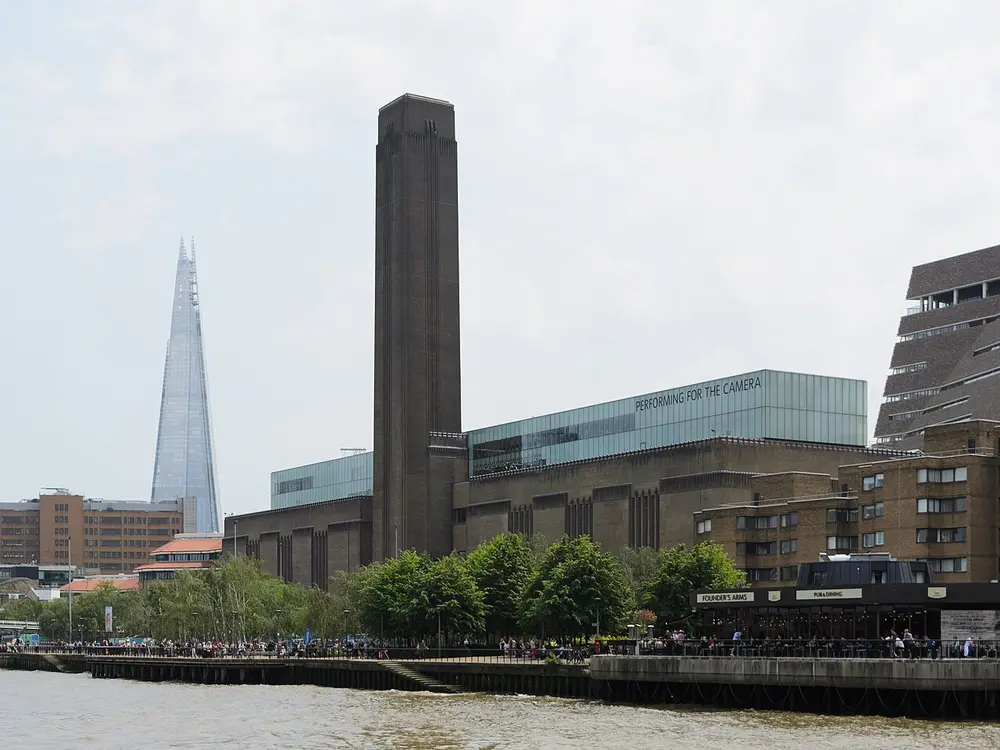
A long brown-brick former power station with one tall square chimney in the middle and a modern brick extension beside it, seen across the River Thames, with the pointed Shard skyscraper behind.
Picture: King of Hearts. CC BY-SA 4.0.

Tate Modern

Where
Bankside, on the south bank of the Thames, London
When
Opened 11 May 2000
Who
Converted by Herzog & de Meuron from Giles Gilbert Scott's Bankside Power Station

Tate Modern is Britain's national gallery of international modern and contemporary art, from 1900 to now. It lives in a power station built between 1947 and 1963 and closed in 1981. The Swiss architects Herzog & de Meuron turned it into a gallery, keeping the tall central chimney. The vast Turbine Hall, where the generators once stood, is now used for giant artworks. Entry to the collection is free. It is one of four Tate galleries, with Tate Britain, Tate Liverpool and Tate St Ives.

Spot it by

A long brick power station with a single tall chimney, beside the Thames.

Remember

An old power station now powers modern art.

Don't confuse

Tate Britain, at Millbank, shows British art. Tate Modern, at Bankside, shows modern art from all over the world.
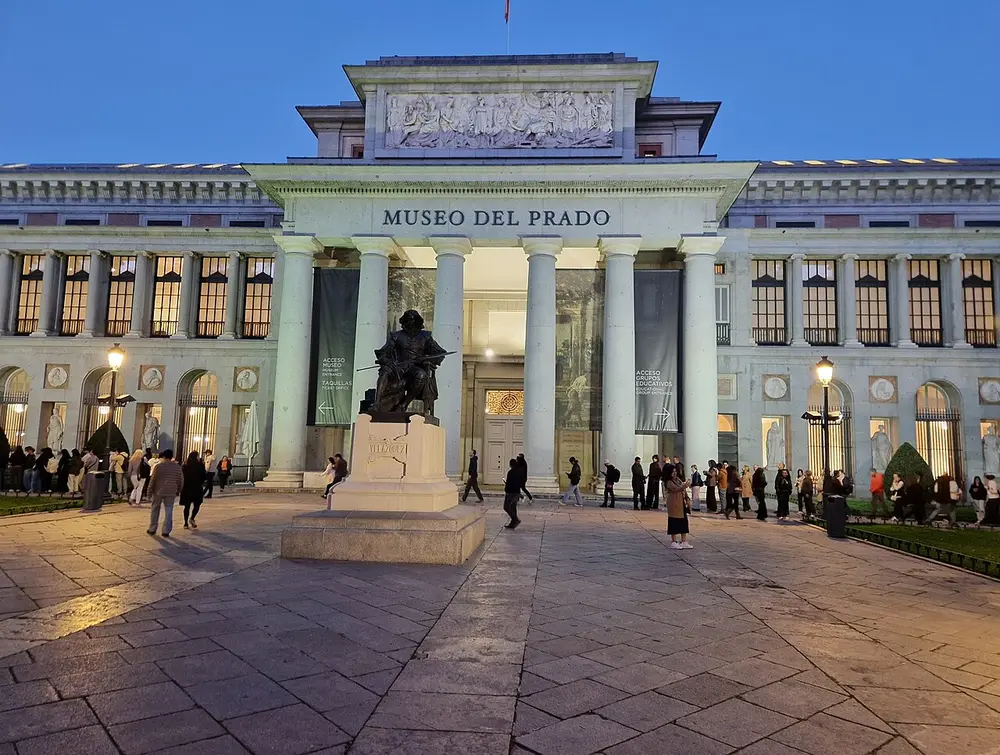
The columned entrance of a long stone museum with the words MUSEO DEL PRADO above the door, a bronze statue of a seated man on a tall base in front, and visitors in the square at dusk.
Picture: Gerda Arendt. CC0.

Museo del Prado

Where
Paseo del Prado, Madrid, Spain
When
Opened 1819

Spain's national art museum opened in 1819 to show paintings collected by the Spanish kings. It has the best collection of Spanish painting in the world, and Goya is the artist with the most works there. Its masterpieces include Velázquez's Las Meninas (1656), Goya's The Third of May 1808 and Hieronymus Bosch's The Garden of Earthly Delights. With the Reina Sofía and Thyssen-Bornemisza museums close by, it forms Madrid's "Golden Triangle of Art". The statue in front of this entrance is Velázquez himself.

Spot it by

A long classical stone building with columns, and a statue of Velázquez at the gate named after him.

Remember

Velázquez's ladies-in-waiting wait in Madrid.

Don't confuse

Picasso's Guernica (1937) is also in Madrid, but at the Museo Reina Sofía, not the Prado.
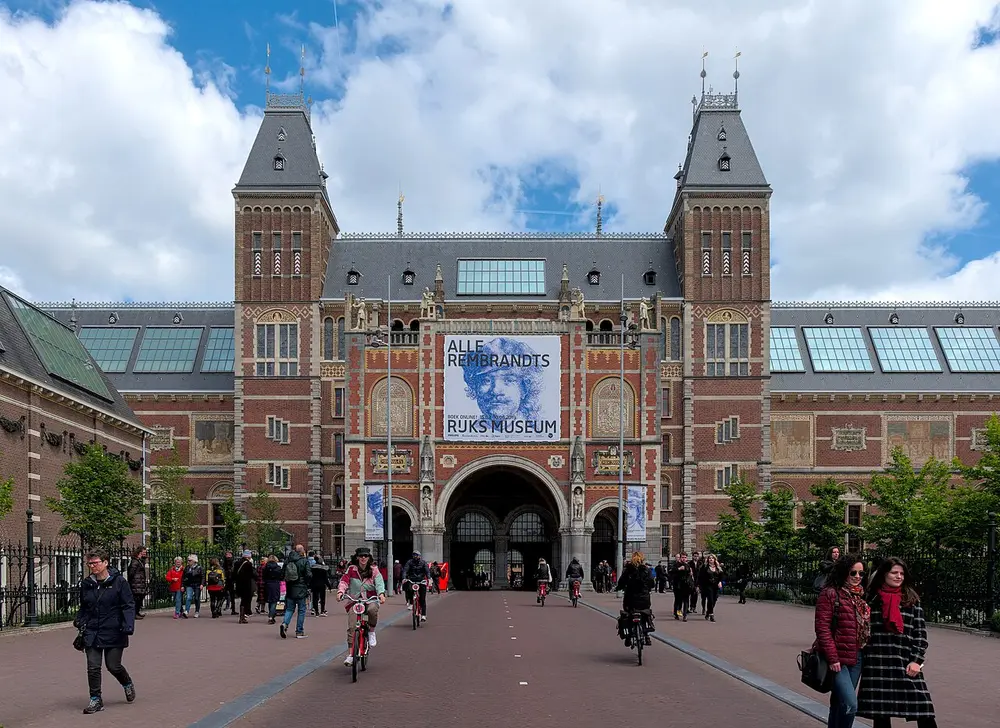
A large red-brick building with two pointed towers, many windows and a tall arched passage in the middle, with people walking and cycling towards it.
Picture: Trougnouf (Benoit Brummer). CC BY 4.0.

Rijksmuseum

Where
Museumplein, Amsterdam, Netherlands
When
Founded 1798 in The Hague; moved to Amsterdam 1808; present building 1885
Who
Building by Pierre Cuypers

The Rijksmuseum is the national museum of the Netherlands. It was founded in The Hague in 1798 and moved to Amsterdam in 1808. Pierre Cuypers designed its red-brick building with towers, which opened in 1885. Its stars come from the Dutch Golden Age of the 1600s: Rembrandt's huge group portrait The Night Watch (1642) and Vermeer's The Milkmaid (about 1658). The Van Gogh Museum is on the same square.

Spot it by

A red-brick palace with two pointed towers and an arched passage through the middle.

Remember

Rembrandt's Night Watch keeps watch in Amsterdam.

Don't confuse

Vermeer's Girl with a Pearl Earring is not here but in the Mauritshuis in The Hague. UCEED 2015 showed a spoof of it.

Four more you should be able to place:

  • The Uffizi, Florence, Italy, fills a building designed by Giorgio Vasari from 1560 as offices (uffizi) for the Medici rulers. It officially opened to the public in 1769 and holds the great Italian Renaissance paintings, above all Botticelli's The Birth of Venus and Primavera.
  • The Metropolitan Museum of Art (the Met), New York, was founded in 1870. It stands beside Central Park and is the largest art museum in the Americas. It even holds a whole ancient Egyptian building, the Temple of Dendur, shown there since 1978.
  • The State Hermitage, Saint Petersburg, Russia, was founded in 1764 when Empress Catherine the Great bought a collection of paintings. It fills a group of historic buildings, including the Winter Palace of the Russian emperors.
  • The Guggenheim Museum Bilbao, Spain, opened in 1997. It is famous above all for Frank Gehry's curving metal building, which is in Iconic buildings of the world.

Which museum holds what

Work Artist Museum City
Mona Lisa Leonardo da Vinci Louvre Paris
Venus de Milo; Winged Victory Ancient Greek sculptors Louvre Paris
The Starry Night (1889) Vincent van Gogh MoMA New York
Les Demoiselles d'Avignon (1907) Pablo Picasso MoMA New York
Temple of Dendur Ancient Egypt The Met New York
Las Meninas (1656) Diego Velázquez Prado Madrid
Guernica (1937) Pablo Picasso Reina Sofía Madrid
The Night Watch (1642); The Milkmaid Rembrandt; Vermeer Rijksmuseum Amsterdam
Girl with a Pearl Earring Johannes Vermeer Mauritshuis The Hague
The Birth of Venus; Primavera Sandro Botticelli Uffizi Florence
Dancing Girl Harappan (Indus Valley) National Museum New Delhi
Bharhut stupa railings and gateway Unknown carvers, 2nd century BCE Indian Museum Kolkata
Chola bronzes of Nataraja South Indian bronze casters Government Museum Chennai
Veiled Rebecca Giovanni Maria Benzoni Salar Jung Museum Hyderabad

Art events: biennales and fairs

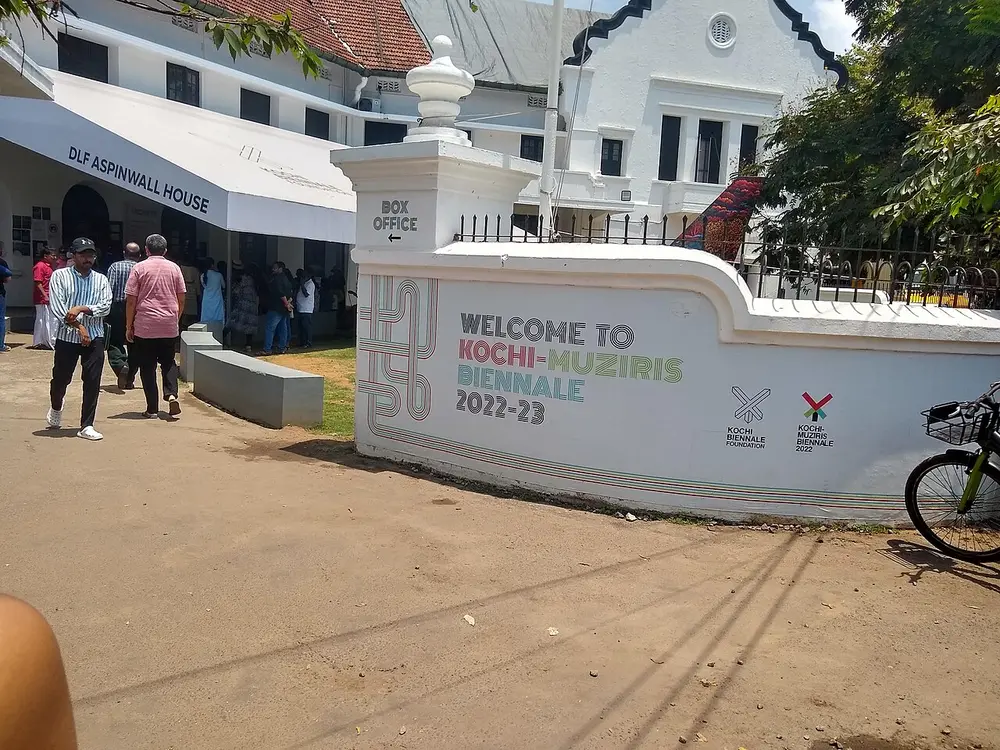
A white boundary wall painted with the words Welcome to Kochi-Muziris Biennale 2022-23, beside the gate of an old white bungalow where visitors queue under a canopy.
Picture: N. Vivekananthamoorthy. CC BY 4.0.

Kochi-Muziris Biennale

Where
Fort Kochi, Mattancherry and other venues in Kochi, Keralam (Kerala until 2026); main venue Aspinwall House
When
First edition 2012; held about every two years
Who
Kochi Biennale Foundation, started by the artists Bose Krishnamachari and Riyas Komu

India's biggest exhibition of contemporary art began on 12 December 2012. Two Mumbai-based artists from Keralam, Bose Krishnamachari and Riyas Komu, started it with support from the Kerala government. Artworks fill old spice warehouses, heritage houses and halls around the port; Aspinwall House, an old trading company's sea-facing godowns, is the main venue. The name also remembers Muziris, an ancient port nearby. Each edition has a new curator, and the fifth, delayed by the pandemic, ran in 2022 and 2023. The sixth, For the Time Being, curated by the artist Nikhil Chopra with HH Art Spaces, ran from 12 December 2025 to 31 March 2026. As of October 2026 the seventh is due to open in December 2027, curated by Kader Attia.

Spot it by

Art in old warehouses and colonial houses by the sea in Fort Kochi.

Remember

Kochi 2012: India's biennale by the sea.
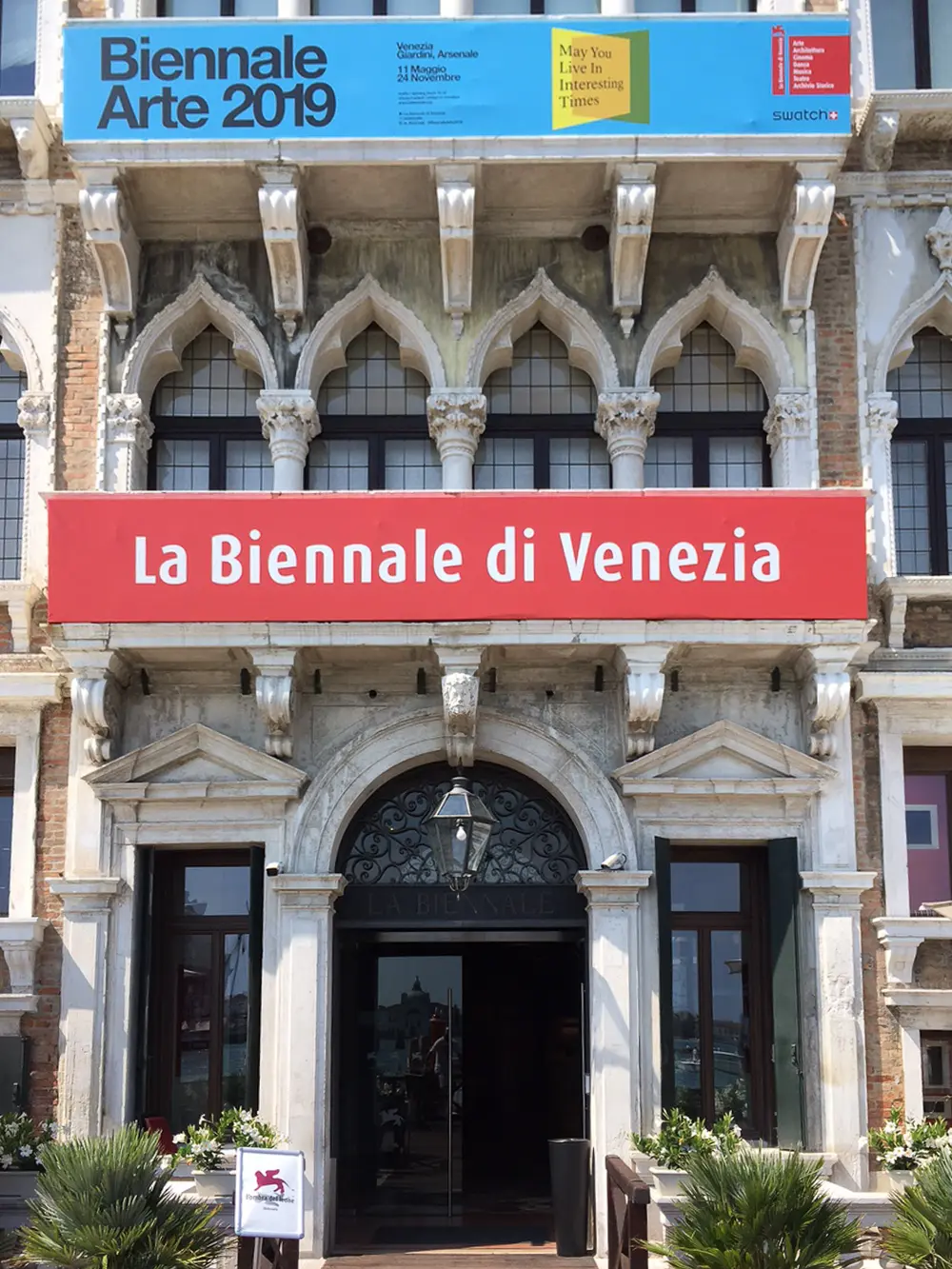
The arched Gothic entrance of an old Venetian palace, with a red banner reading La Biennale di Venezia and a blue and yellow sign for Biennale Arte 2019 above it.
Picture: Naturpuur. CC BY 4.0.

Venice Biennale

Also called La Biennale di Venezia

Where
The Giardini gardens and the Arsenale shipyards, Venice, Italy
When
First held in 1895; the art exhibition is now held in even years

The oldest and most famous biennale opened on 30 April 1895. Countries show work in their own national pavilions, and the top prizes are called Golden Lions. Since 2021 the art exhibition has been held in even years and an architecture exhibition in odd years. The Biennale also runs the Venice Film Festival, where Satyajit Ray's Aparajito won the Golden Lion in 1957. As of October 2026, the 61st art exhibition, In Minor Keys, is running from 9 May to 22 November 2026. It was planned by the curator Koyo Kouoh, who died in May 2025, and was completed by the team she chose.

Spot it by

National pavilions in a garden, and art in old shipyard halls, in Venice.

Remember

Venice 1895: the grandmother of all biennales.

documenta (always written with a small d) is held every five years in Kassel, Germany. The artist and teacher Arnold Bode started it in 1955 to show Germans the modern art the Nazis had banned. India Art Fair, held every year at the NSIC Grounds in Okhla, New Delhi, is a fair where galleries sell art. It began in 2008 as the India Art Summit.

Event Where and how often Latest edition Next, as of October 2026
Venice Biennale Venice, Italy; every two years since 1895 61st, In Minor Keys, 9 May to 22 November 2026 Architecture in 2027; art in 2028
documenta Kassel, Germany; every five years since 1955 documenta fifteen, 2022 documenta 16, 12 June to 19 September 2027, led by Naomi Beckwith
Kochi-Muziris Biennale Kochi, Keralam; about every two years since 2012 6th, For the Time Being, 12 December 2025 to 31 March 2026 7th, December 2027, curated by Kader Attia
India Art Fair New Delhi; every year since 2008 5 to 8 February 2026 2027; dates not yet announced

Timeline

  1. 1764

    Catherine the Great founds the Hermitage in Saint Petersburg

  2. 1769

    The Uffizi in Florence officially opens to the public

  3. 1793

    The Louvre opens as a public museum during the French Revolution

  4. 1814

    The Asiatic Society founds the Indian Museum in Calcutta, India's first museum

  5. 1819

    The Prado opens in Madrid

  6. 1851

    The Government Museum opens in Madras (Chennai)

  7. 1855

    Bombay's first museum is founded; it becomes the Dr. Bhau Daji Lad Museum

  8. 1870

    The Metropolitan Museum of Art is founded in New York

  9. 1885

    The Rijksmuseum's building by Pierre Cuypers opens in Amsterdam

  10. 1895

    The first Venice Biennale

  11. 1922

    The Prince of Wales Museum (now CSMVS) opens in Bombay

  12. 1929

    MoMA is founded in New York

  13. 1949

    The National Museum opens in Rashtrapati Bhavan on 15 August

  14. 1951

    Nehru opens the Salar Jung Museum in Hyderabad

  15. 1954

    The NGMA opens in Jaipur House, New Delhi

  16. 1955

    The first documenta in Kassel

  17. 1956

    The Crafts Museum is set up in Delhi

  18. 1960

    The National Museum moves into its building on Janpath

  19. 1997

    The Guggenheim Museum Bilbao opens

  20. 2000

    Tate Modern opens in London

  21. 2008

    The India Art Summit, later India Art Fair, begins in New Delhi

  22. 2010

    The Kiran Nadar Museum of Art opens

  23. 2012

    The first Kochi-Muziris Biennale

  24. 2023

    MAP opens its building in Bengaluru

  25. 2027

    documenta 16 and the seventh Kochi-Muziris Biennale are due

Test yourself

Question 1 of 8

Which museum is this?

Question 2 of 8

This marble statue is the best-known treasure of which museum?

Question 3 of 8

Which of these is Tate Modern?

Question 4 of 8

Which of these museums is in Mumbai?

Question 5 of 8

The small painting alone on the far wall of this room is the Mona Lisa. Which museum is this?

Question 6 of 8

Van Gogh's The Starry Night hangs in which museum?

Question 7 of 8

What is the person in charge of a museum's collection called?

Question 8 of 8

Which art event is held every five years in Kassel, Germany?

From past papers

Real exam questions on this topic, each with a full solution.

Finished this note?

Mark it as studied to track your progress through the course.

Was this note useful?

Each picture is credited underneath it. Pictures of works still in copyright are shown small, for teaching only. If you hold the rights to a picture and want it removed, tell us through the contact page and we will take it down.