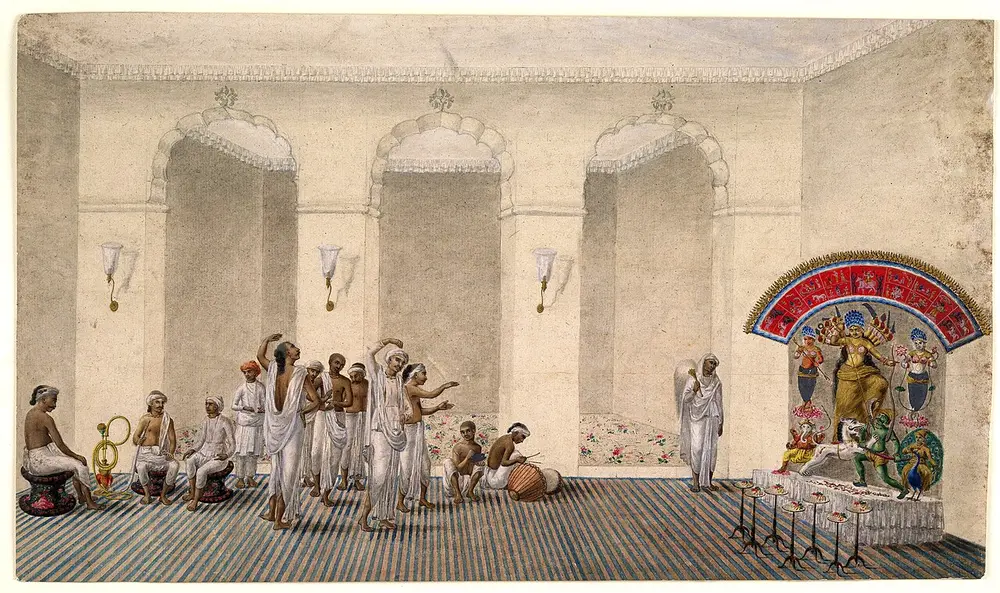
Company painting
Also called Company School
- Where
- Murshidabad first, then Patna, Calcutta, Lucknow, Delhi, Banaras, Madras, Tiruchirappalli and Thanjavur
- When
- Late 18th century to the late 19th century; this painting is dated 1809
- Who
- Indian painters, many from old Mughal and regional courts; at Patna, artists such as Sevak Ram
- Style
- Indian miniature skills mixed with European observation
- Made with
- Mostly watercolour on paper, sometimes on ivory or mica
When the East India Company ruled large parts of India, its officers wanted pictures of the people, festivals, buildings, plants and animals around them. Indian painters who had lost their royal patrons began working for them, and changed their style to suit: softer watercolours, shading and perspective, and close observation instead of fixed rules. They made sets of pictures of trades, castes and festivals for albums that the British took home. Photography, which arrived in the middle of the 19th century, slowly put them out of work.
Spot it by
Soft watercolour on paper, everyday scenes or craftsmen at work, a plain background, and a careful, almost documentary look.Remember
Company paintings were India's picture postcards before the camera.Don't confuse
Mughal miniatures were painted for Indian emperors in rich, opaque colours; Company paintings were painted for British buyers in pale watercolour.