Skip to content

Chapter 6: Heritage sites and museums

Who built it

Who built India's great monuments, and when: lookup tables by period, the records exams love, and cards from the Golden Temple to the Statue of Unity.

In one minute

6 facts to know

  1. Three Mughal tombs beyond the Taj: Itimad-ud-Daulah in Agra (Nur Jahan, 1622 to 1628), Akbar's Tomb at Sikandra (finished by Jahangir in 1613) and Bibi Ka Maqbara (Prince Azam Shah, around 1660), the "Taj of the Deccan".
  2. Rajasthan's builders: Rana Kumbha raised the Vijay Stambha at Chittorgarh (1448), Raja Man Singh I began Amber Fort (1592), and Sawai Jai Singh II founded Jaipur (1727) and built its Jantar Mantar.
  3. The Golden Temple at Amritsar was built by Guru Arjan; Maharaja Ranjit Singh covered it in gold in the early 1800s.
  4. Temples to know: Vimal Shah's Dilwara temples at Mount Abu (1031), the Eastern Ganga kings' Jagannath Temple at Puri (12th century) and the Kakatiya Thousand Pillar Temple in Telangana.
  5. After 1947: the Vidhana Soudha in Bengaluru (Kengal Hanumanthaiah, 1956), the Statue of Unity (Ram V. Sutar, 2018) and the Ram Mandir at Ayodhya (Chandrakant Sompura, 2024).
  6. Many monuments took decades and several rulers. Learn who began it and who finished it, because exams ask either.

This note is for quick lookup. The cards cover monuments that the neighbouring notes don't card; the tables further down list builders and dates for all the big names, including those covered in Indo-Islamic architecture, Colonial and Indo-Saracenic buildings, Temple styles of India and India's World Heritage Sites.

Temples and shrines

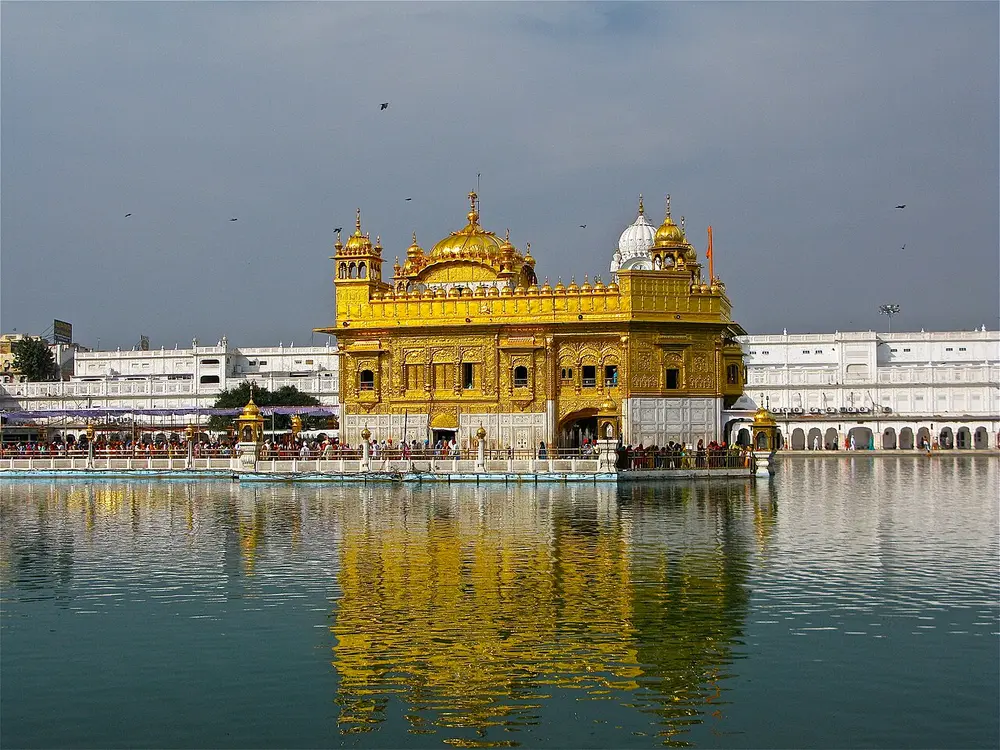
A two-storey shrine covered in gold, with a gold dome, standing in a large still pool that reflects it, with long white buildings around the edge of the pool.
Picture: Ken Wieland. CC BY-SA 2.0.

Golden Temple

Also called Harmandir Sahib, Sri Darbar Sahib

Where
Amritsar, Punjab
When
Pool finished 1577; temple built from 1588 to about 1604; covered in gold by 1830
Who
Guru Ram Das (the pool), Guru Arjan (the temple), Maharaja Ranjit Singh (the marble and gold)
Style
Sikh gurdwara
Made with
Marble below, gold leaf over copper on the upper floors

The holiest gurdwara of the Sikhs stands in the middle of a sacred pool, the Amrit Sarovar, which the fourth Guru, Guru Ram Das, completed in 1577. The fifth Guru, Guru Arjan, built the temple itself, and in 1604 he placed the first copy of the Sikh scripture, the Adi Granth, inside it. Some later accounts say he invited the Sufi saint Mian Mir of Lahore to lay the foundation stone. Mughal and Afghan armies destroyed it several times, and the Sikhs rebuilt it each time. Maharaja Ranjit Singh, founder of the Sikh Empire, rebuilt it in marble and copper in 1809 and had the upper floors covered in gold leaf by 1830, which gave it its popular name.

Spot it by

A gold-covered shrine with a gold dome in the middle of a square pool, reached by a causeway, with white buildings all round.

Remember

Ram Das dug the pool, Arjan built the temple, Ranjit Singh added the gold.

Don't confuse

The Akal Takht, in the same complex, is a separate building: the chief seat of Sikh religious authority.
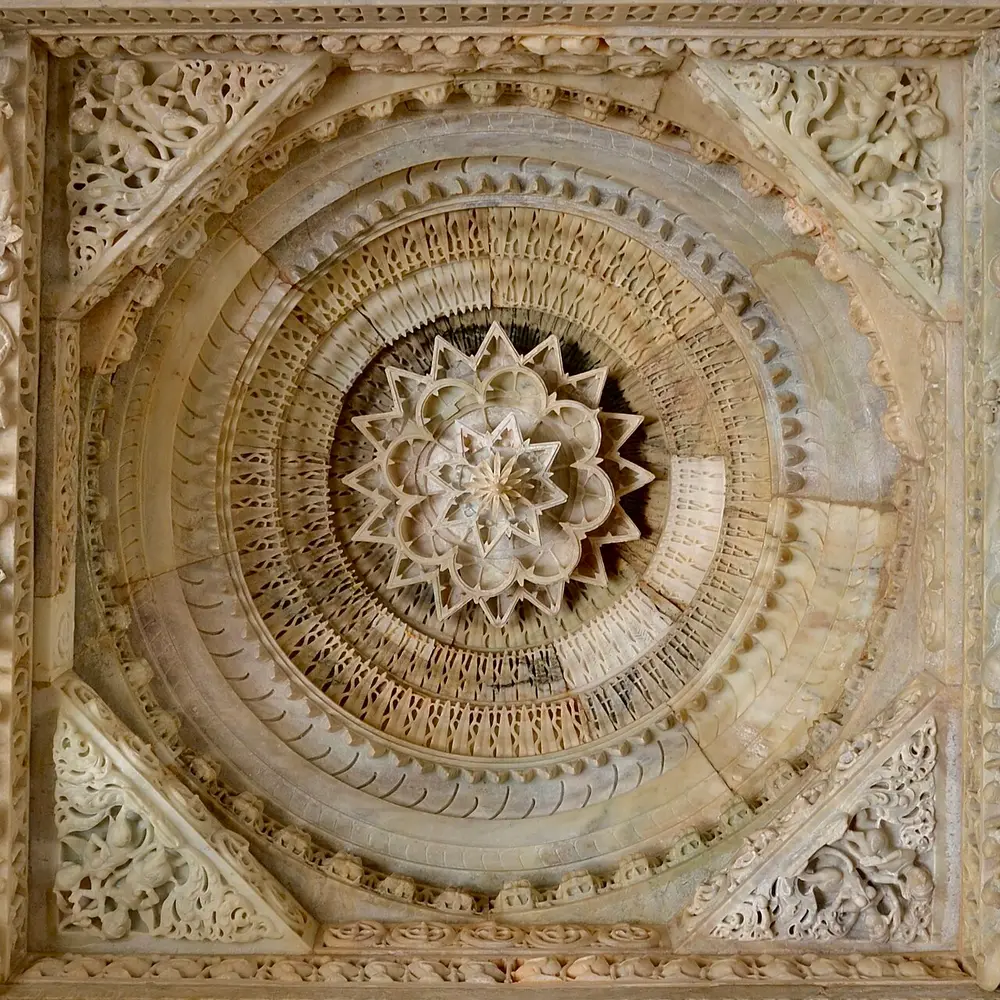
A round white marble ceiling carved in rings of fine lace-like patterns around a hanging lotus at the centre, inside a square frame with carved corners.
Picture: Brihaspati. CC BY-SA 4.0.

Dilwara Temples

Also called Delwara Temples

Where
Mount Abu, Sirohi district, Rajasthan
When
11th to 16th centuries; the Vimal Vasahi in 1031 and the Luna Vasahi in 1230
Who
Vimal Shah, minister of the Chaulukya king Bhima I; the brothers Vastupala and Tejapala, ministers of the Vaghela rulers
Style
Jain temples, Solanki style
Made with
White marble

Five Jain temples stand near Mount Abu, Rajasthan's only hill station. Inside, the white marble ceilings, pillars and doorways are carved so finely that the stone looks like lace. The oldest, the Vimal Vasahi, was built in 1031 by Vimal Shah, a minister of the Chaulukya (Solanki) king Bhima I of Gujarat, for the first Tirthankara, Rishabhanatha. The Luna Vasahi was added in 1230 by two brothers, Vastupala and Tejapala, ministers of the Vaghela rulers, for the 22nd Tirthankara, Neminatha. Its carving is often called the finest of all. This ceiling is in one of its small side shrines.

Spot it by

White marble domes and ceilings carved in rings of lace-like patterns, with a carved lotus hanging from the centre.

Remember

Dilwara is marble lace on Mount Abu, paid for by ministers.

Don't confuse

The Sun Temple at Modhera was built under the same king, Bhima I, but it is a Hindu temple in sandstone, in Gujarat.
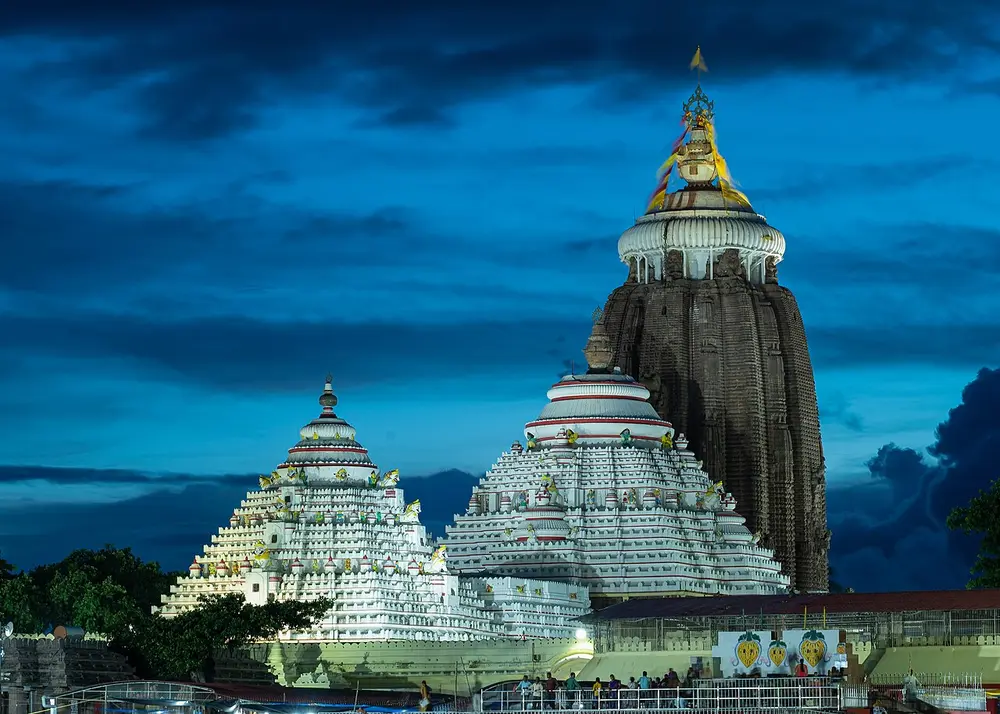
The tall curved stone tower of the Jagannath Temple rising above smaller white halls with stepped pyramid roofs, lit up against a dark blue evening sky.
Picture: Kalyanpuranand. CC BY-SA 4.0.

Jagannath Temple, Puri

Where
Puri, Odisha
When
Begun in the 12th century, finished in the early 13th century
Who
Anantavarman Chodaganga of the Eastern Ganga dynasty, finished by later kings of the same dynasty
Style
Kalinga style (the Odisha form of Nagara)
Made with
Stone; the images of the gods are carved from wood

This temple is dedicated to Jagannath, a form of Vishnu, who is worshipped with his brother Balabhadra and his sister Subhadra. It is one of the four Char Dham pilgrimage sites. The present temple was begun by Anantavarman Chodaganga, a king of the Eastern Ganga dynasty, and finished under his successors. Its tall curved tower, the deul, is in the Kalinga style of Odisha. Unlike most temple images, Jagannath's is carved from wood. Every summer the three gods are pulled through the town on huge wooden chariots in the Rath Yatra.

Spot it by

A tall, curved stone tower topped with a flag, rising over smaller halls with stepped pyramid roofs.

Remember

Puri's Jagannath rides out on a chariot once a year.

Don't confuse

The Sun Temple at Konark, about 35 km away, was also built by an Eastern Ganga king, Narasimhadeva I, about a century later (around 1250), and is shaped like a giant stone chariot.
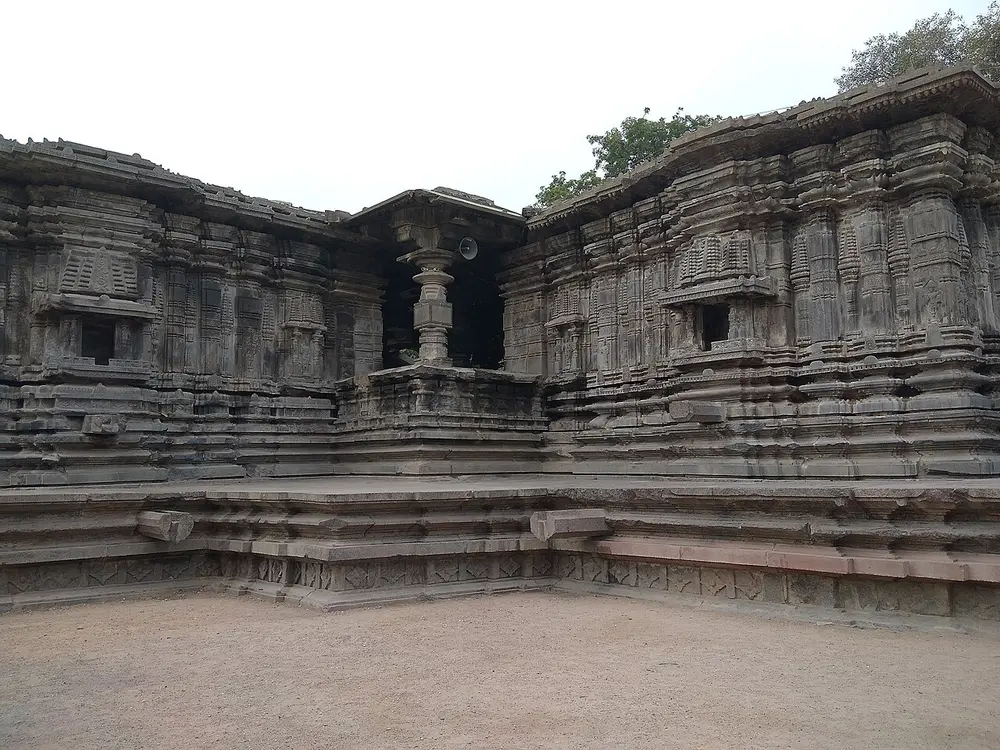
A low, dark grey stone temple with flat roofs and bands of fine carving, built in wings around an open stone platform.
Picture: Adbh266. CC BY-SA 4.0.

Thousand Pillar Temple

Also called Rudreshwara Swamy Temple

Where
Hanamkonda, next to Warangal, Telangana
When
12th century (Telangana Tourism gives 1163)
Who
The Kakatiya king Rudra Deva
Style
Kakatiya, close to the later Chalukya style
Made with
Stone

The Kakatiya kings ruled much of today's Telangana from Warangal. Their king Rudra Deva built this temple at Hanamkonda. It has three shrines, for Shiva, Vishnu and Surya, the sun god, so it is a trikutalaya, a "three-shrine temple". It is known for its many richly carved stone pillars, which give it its name. NIFT 2026 asked which state it is in: Telangana.

Spot it by

A low, flat-roofed temple of dark stone on a raised platform, with crowded rows of carved pillars and three shrines around a central hall.

Remember

Thousand pillars, three shrines, one Kakatiya king.

Don't confuse

The Ramappa Temple at Palampet, also Kakatiya, was begun in 1213 by the general Recherla Rudra and became a UNESCO World Heritage Site in 2021.
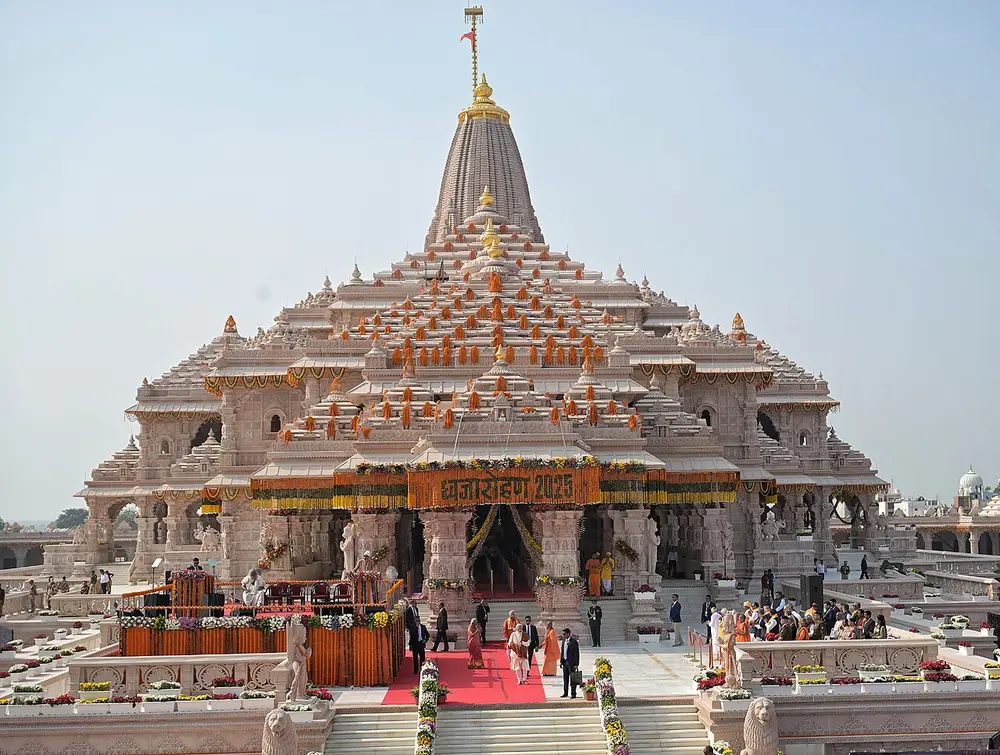
A large pale sandstone temple with a tall curved central spire and many smaller spires, hung with orange marigold garlands, with people on the steps in front.
Picture: Prime Minister's Office. GODL-India.

Ram Mandir, Ayodhya

Where
Ayodhya, Uttar Pradesh
When
Construction began 2020; consecrated 22 January 2024
Who
Designed by Chandrakant Sompura of Ahmedabad, with his son Ashish; built by Larsen & Toubro for the Shri Ram Janmabhoomi Teerth Kshetra trust
Style
Nagara
Made with
Sandstone from Bansi Paharpur, Rajasthan

This temple to Rama was designed by the temple architect Chandrakant Sompura with his son Ashish. It follows the Nagara style of north India, with a tall curved tower over the sanctum. The main building has three floors and is 161 feet (about 49 metres) high. The engineering firm Larsen & Toubro built it for the trust that runs the temple. Prime Minister Narendra Modi performed the consecration on 22 January 2024. NIFT 2026 asked which style it is built in: Nagara.

Spot it by

Pale sandstone, a tall curved central tower with smaller towers clustered round it, and rows of carved pillars and halls.

Remember

Ram Mandir: Nagara style, Sompura design, 2024.

Rajasthan: forts, towers and an observatory

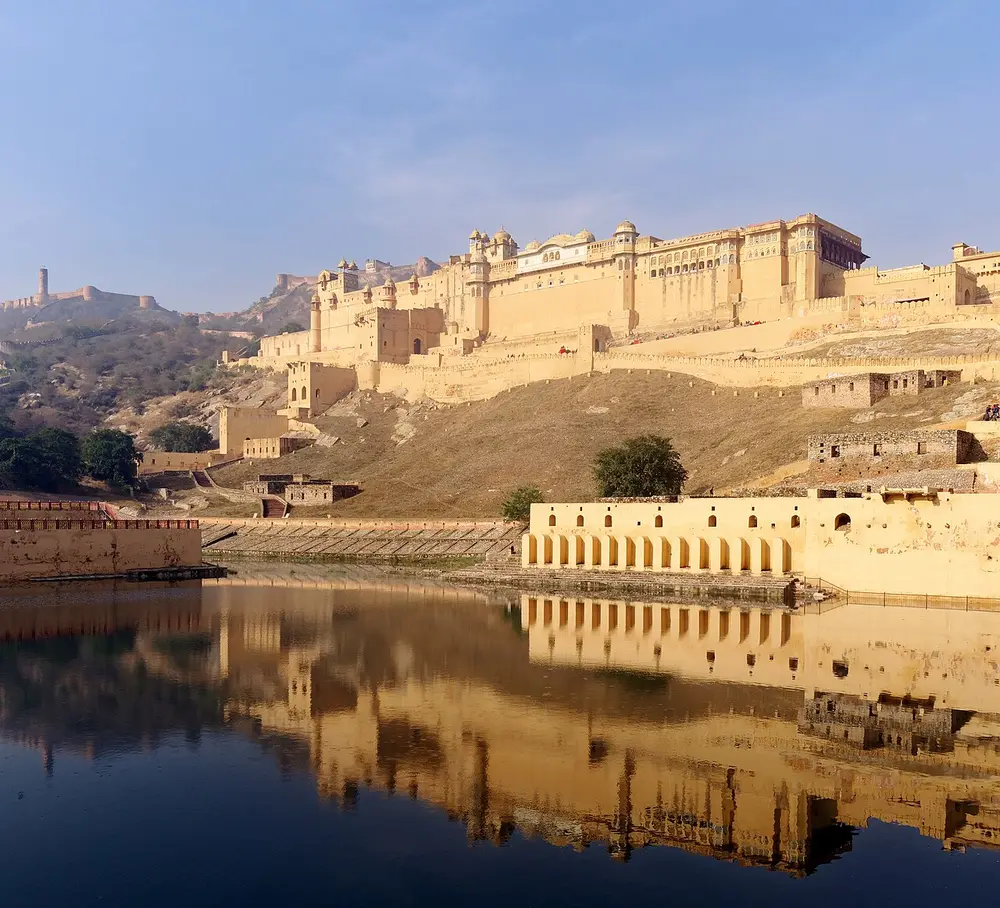
A long cream and yellow palace-fort climbing a hillside in many levels, with walls along the ridges, reflected in a still lake below.
Picture: Jakub Hałun. CC BY-SA 4.0.

Amber Fort

Also called Amer Fort, Amer Palace

Where
Amer, about 11 km from Jaipur, Rajasthan
When
Begun 1592; added to for about 150 years
Who
Raja Man Singh I of the Kachwaha dynasty; expanded by Mirza Raja Jai Singh I and later kings
Style
Rajput, with Mughal influence
Made with
Red sandstone and marble

Amer was the capital of the Kachwaha kings until 1727, when Sawai Jai Singh II moved his court to his new city of Jaipur. Raja Man Singh I, one of Emperor Akbar's leading generals, began the present palace-fort in 1592, and later kings kept adding to it. It rises in four levels above Maota Lake, each with its own courtyard. Inside are the Diwan-i-Aam (hall of public audience), the Sheesh Mahal (mirror palace), whose walls and ceilings glitter with small mirrors, and the Sukh Niwas, cooled by breezes blowing over flowing water. Since 2013 it has been part of the Hill Forts of Rajasthan World Heritage Site.

Spot it by

A long, cream-coloured palace of many levels and courtyards on a hillside, walls snaking over the ridges, and a lake below.

Remember

Man Singh began Amer in 1592; Jai Singh II left it for Jaipur in 1727.

Don't confuse

Jaigarh Fort, on the ridge just above, is a separate fort that guarded Amer.
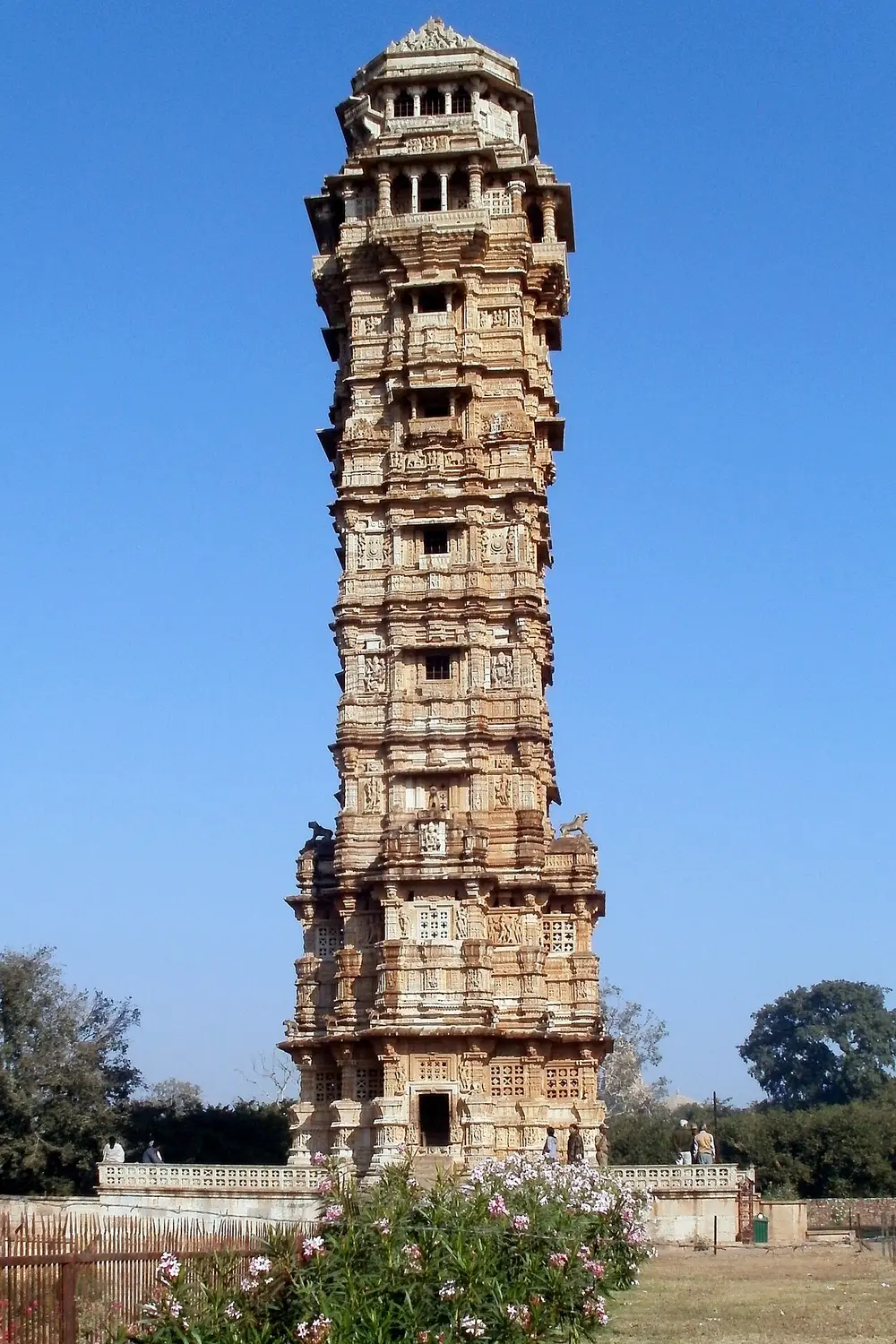
A tall, slim stone tower of nine storeys covered in carved figures, with small balconies and a domed top, against a clear blue sky.
Picture: Ratnesh1948. CC BY-SA 4.0.

Vijay Stambha

Also called Victory Tower, Vijaya Stambha

Where
Chittor Fort, Chittorgarh, Rajasthan
When
1440 to 1448
Who
Rana Kumbha, ruler of Mewar
Made with
Stone, carved with Hindu gods and goddesses

Rana Kumbha, ruler of Mewar, built this nine-storey tower inside Chittor Fort to celebrate his victory over Sultan Mahmud Khalji of Malwa. Vijay means victory and stambha means pillar. The tower is dedicated to Vishnu, and its walls are covered with carved Hindu gods and goddesses. Rana Kumbha also built the huge hill fort of Kumbhalgarh. Chittorgarh and Kumbhalgarh are both part of the Hill Forts of Rajasthan World Heritage Site.

Spot it by

A tall, slim tower of nine storeys, carved all over with figures, with small balconies and a domed top.

Remember

Kumbha's tower marks a victory: Vijay means victory.

Don't confuse

The Qutb Minar in Delhi is a fluted minaret begun by the Delhi Sultans; the Vijay Stambha is a carved Hindu tower in a Rajput fort.
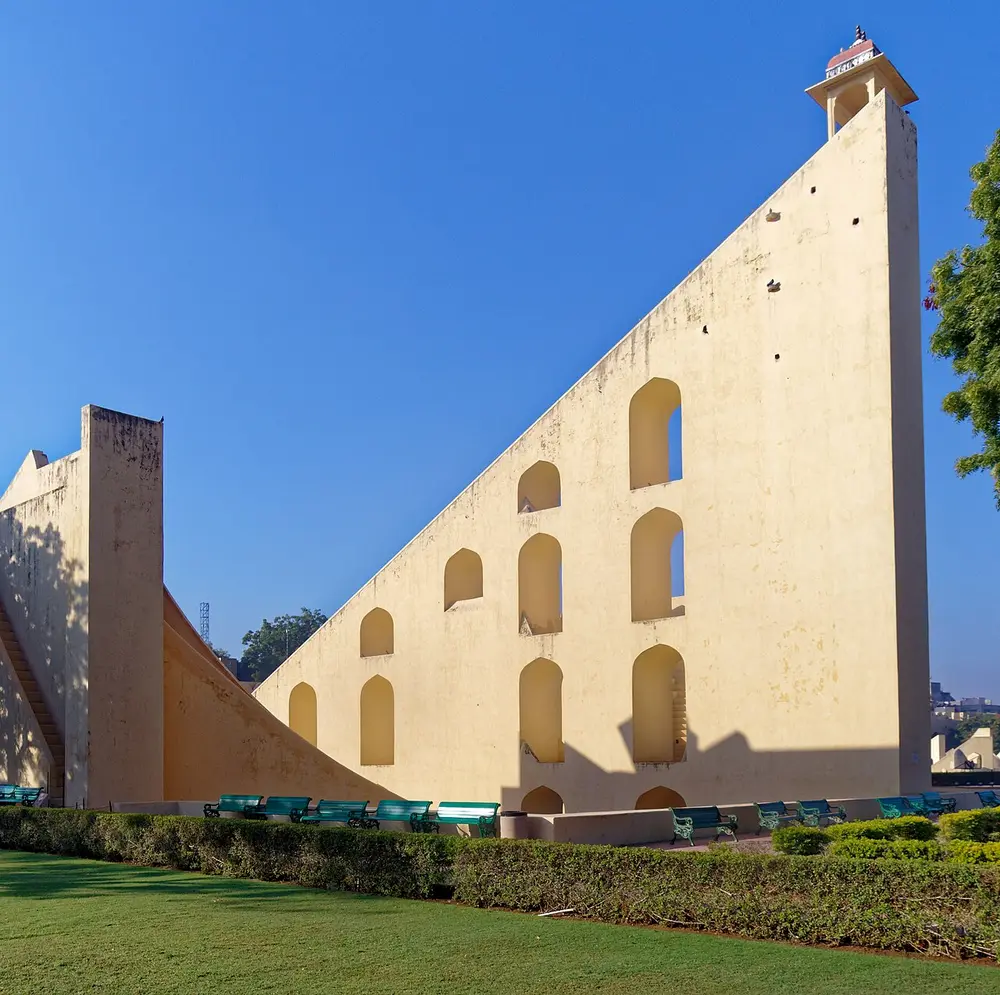
A huge cream-coloured stone triangle with arched openings in its side and a stair along its sloping edge, beside a curved stone scale, on a green lawn.
Picture: Jakub Hałun. CC BY-SA 4.0.

Jantar Mantar, Jaipur

Where
Jaipur, Rajasthan
When
About 1728 to 1734, with work going on until 1738
Who
Maharaja Sawai Jai Singh II, founder of Jaipur
Made with
Local stone and marble

Sawai Jai Singh II was a keen astronomer. He built five observatories, called Jantar Mantars, in north India; the ones in Delhi and Jaipur are the best known. Their instruments are buildings, used to track the sun, moon and stars with the naked eye. The biggest in Jaipur, the Vrihat Samrat Yantra shown here, is a sundial 27 metres high, the largest stone sundial in the world, and is said to tell the time to within about two seconds. UNESCO calls the Jaipur observatory the most significant and best preserved of India's historic observatories, and listed it as a World Heritage Site in 2010.

Spot it by

Giant geometric stone instruments: triangles with stairs, curved scales, hollow bowls and rings, in cream and pink-red.

Remember

Jai Singh's sundial is a building you can climb.

Don't confuse

Delhi's Jantar Mantar was built by the same king, a few years earlier; only Jaipur's is a World Heritage Site.

Mughal tombs and a Nawab's hall

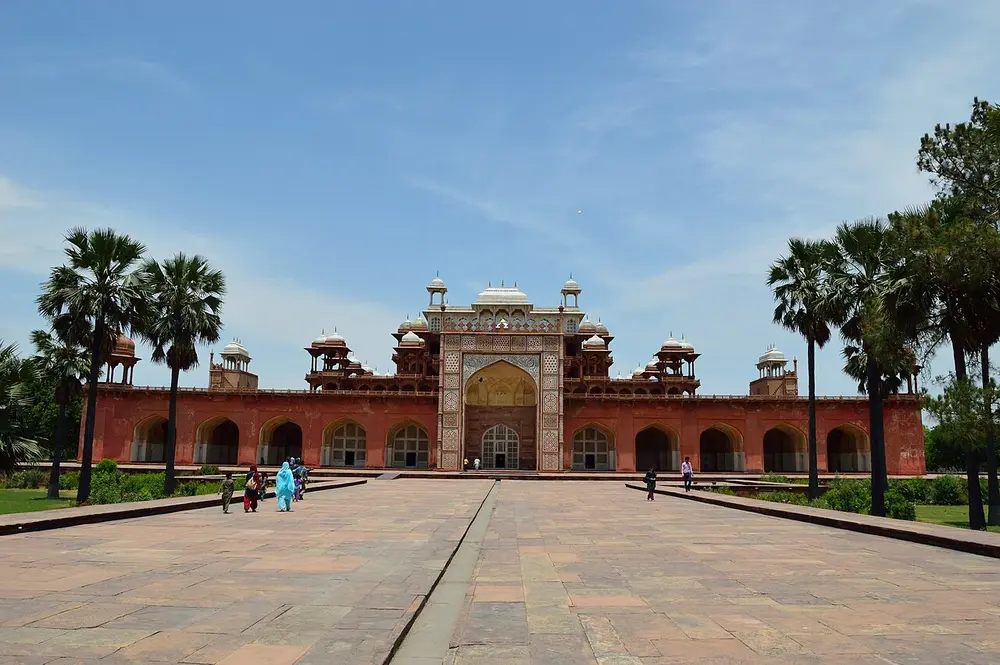
A long red sandstone building with a row of arches and a tall central arched doorway, topped by a small white marble pavilion, seen across a wide paved courtyard with palm trees.
Picture: Biswarup Ganguly. CC BY 3.0.

Akbar's Tomb

Where
Sikandra, on the edge of Agra, Uttar Pradesh
When
1605 to 1613
Who
Begun under Akbar, finished by his son Jahangir
Style
Mughal
Made with
Red sandstone with white marble

Akbar, the third Mughal emperor, is said to have begun his own tomb, and his son Jahangir finished it in 1613. It rises in tiers of red sandstone with white marble at the top. It stands in a large walled garden, entered through a great south gateway with four white marble minarets, built two decades before the Taj Mahal's.

Spot it by

Stacked storeys of red sandstone with small kiosks, white marble at the top, and a huge gateway with four white minarets.

Remember

Akbar planned it; Jahangir finished it.

Don't confuse

The Buland Darwaza at Fatehpur Sikri is Akbar's victory gate; the gateway at Sikandra leads to his tomb.
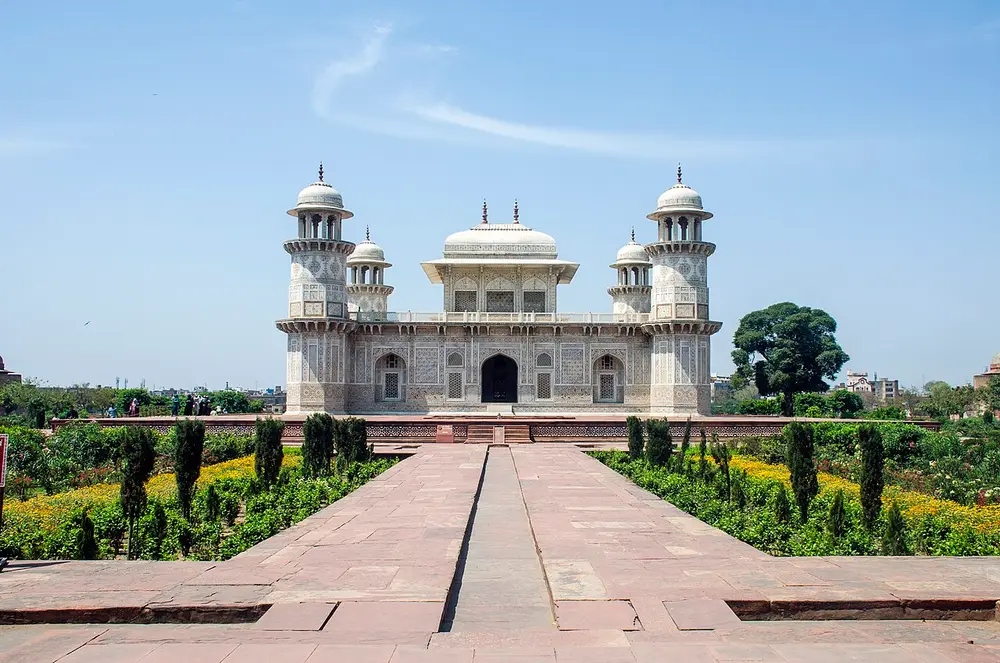
A square white marble tomb with an octagonal tower at each corner and a small canopied pavilion on its flat roof, at the end of a long garden path with a water channel.
Picture: Rangan Datta Wiki. CC BY-SA 4.0.

Tomb of Itimad-ud-Daulah

Also called Baby Taj

Where
Agra, Uttar Pradesh, on the bank of the Yamuna
When
1622 to 1628
Who
Empress Nur Jahan, wife of Jahangir, for her father
Style
Mughal
Made with
White marble with pietra dura inlay

Nur Jahan built this tomb for her father, Mirza Ghiyas Beg, whom Jahangir had given the title Itimad-ud-Daulah, "pillar of the state". It is the first Mughal tomb faced entirely in white marble and the first to use pietra dura on a large scale: coloured stones cut and fitted into the marble to make flowers, vases and patterns. Ghiyas Beg's granddaughter was Mumtaz Mahal, for whom Shah Jahan later built the Taj Mahal, and because this tomb looks forward to the Taj it is nicknamed the Baby Taj.

Spot it by

A small, square white marble tomb with four corner towers, a canopied pavilion on a flat roof and no big dome, its walls covered in coloured inlay.

Remember

Nur Jahan's marble jewel box for her father came before the Taj.

Don't confuse

Bibi Ka Maqbara copies the Taj's big dome and minarets; Itimad-ud-Daulah has no big dome at all.
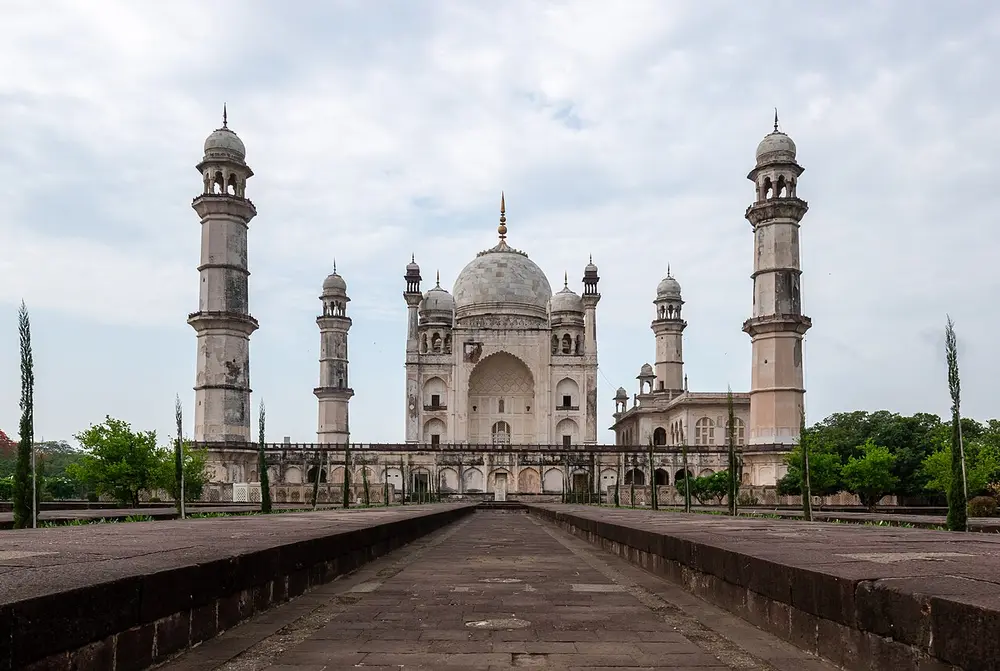
A white domed tomb with four tall minarets at the corners of its platform, seen at the end of a long raised walkway with a water channel.
Picture: Rohit Sharma. CC BY-SA 4.0.

Bibi Ka Maqbara

Also called Taj of the Deccan

Where
Chhatrapati Sambhajinagar (Aurangabad), Maharashtra
When
Around 1660
Who
Prince Azam Shah, son of Aurangzeb, for his mother; designed by Ata-ullah
Style
Mughal

This tomb is for Dilras Banu Begum, the wife of Emperor Aurangzeb. It was built by their son, Prince Azam Shah, and an inscription names its architect as Ata-ullah. It was deliberately modelled on the Taj Mahal, which Aurangzeb's father Shah Jahan had built for his own wife, so it is called the Taj of the Deccan. It is much smaller than the Taj. CEED 2021 showed it and asked which state it is in: Maharashtra.

Spot it by

A white dome on a square tomb, four minarets at the corners of the platform, and a long garden with water channels, like a smaller Taj.

Remember

Aurangzeb's son copied his grandfather's Taj for his mother.

Don't confuse

The Taj Mahal is in Agra, Uttar Pradesh, and is far bigger; Bibi Ka Maqbara is in Maharashtra.
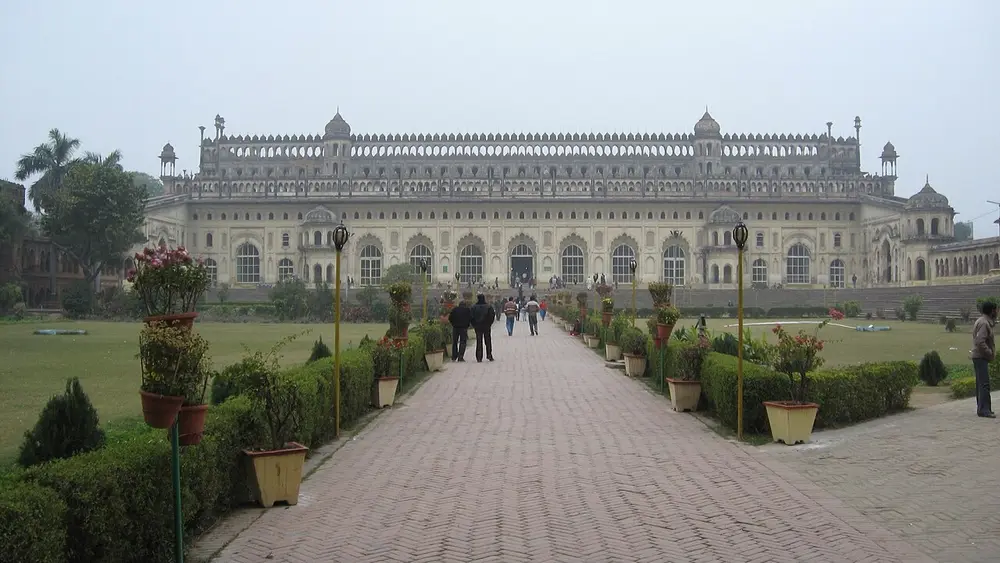
A long, pale two-storey hall with rows of arches and small domed turrets along its roof, at the end of a paved garden path lined with plants.
Picture: Slyronit. CC BY-SA 4.0.

Bara Imambara

Also called Asafi Imambara

Where
Lucknow, Uttar Pradesh
When
Begun 1784
Who
Asaf-ud-Daula, Nawab of Awadh; architect Kifayatullah
Style
Nawabi (Awadhi)

An imambara is a hall where Shia Muslims gather to mourn Imam Husain during Muharram. Asaf-ud-Daula, the Nawab of Awadh, began this one in 1784, during a terrible famine, partly to give people paid work. His architect, Kifayatullah, roofed its great central hall with arches and no beams, one of the largest halls of its kind in the world. Above it is the Bhul Bhulaiya, a maze of narrow passages. The Rumi Darwaza, the tall gateway beside it, was built by the same Nawab in the same year.

Spot it by

A long, low, pale hall with rows of arches and small domed turrets along the roof line.

Remember

Asaf-ud-Daula's famine project: work for the hungry, and a maze for the curious.

Built after independence

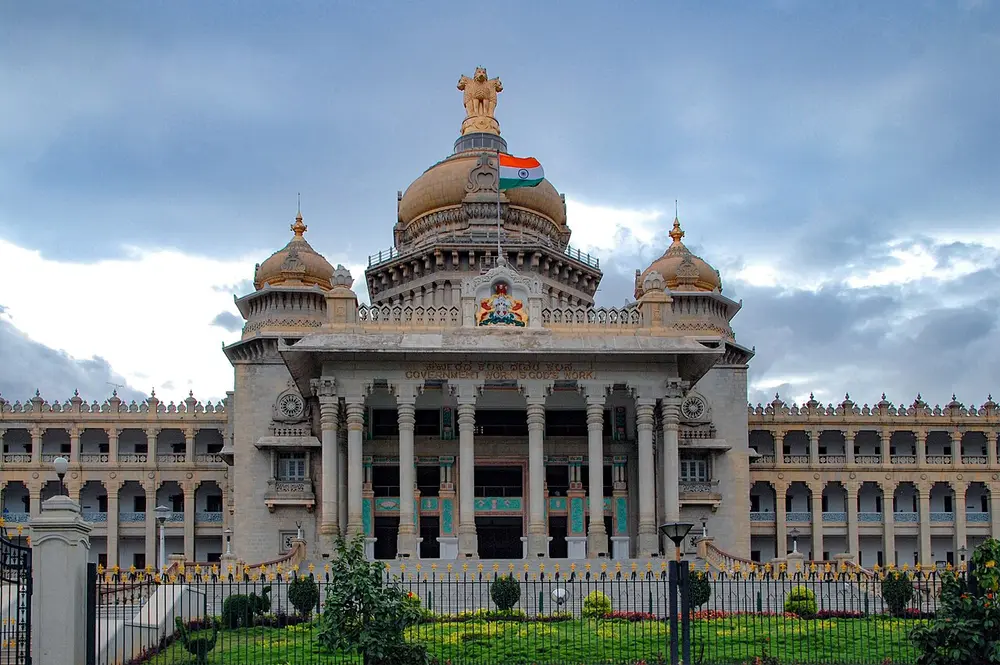
A huge grey stone government building with a broad flight of steps, a row of tall columns, a large central dome topped by the four-lion capital, and smaller domes, under a cloudy sky.
Picture: Moheen Reeyad. CC BY-SA 4.0.

Vidhana Soudha

Where
Bengaluru, Karnataka
When
Foundation stone 1951; built 1952 to 1956
Who
The project of Chief Minister Kengal Hanumanthaiah; foundation stone laid by Jawaharlal Nehru
Style
Neo-Dravidian

The Vidhana Soudha is the seat of Karnataka's legislature, with both the Legislative Assembly and the Legislative Council. Jawaharlal Nehru laid the foundation stone on 13 July 1951 for a smaller building. Kengal Hanumanthaiah, Chief Minister of Mysore State from 1952, then made the plan far grander: he wanted it to look Indian, not European. Built from 1952 to 1956, it mixes Dravidian temple details with domes, and the Lion Capital of Ashoka crowns its central dome. It is often called the largest legislature building in India.

Spot it by

A vast grey stone building with a wide stair, tall columns, a central dome carrying the Ashoka lions, and temple-style carved details.

Remember

Hanumanthaiah's idea, Nehru's foundation stone, finished in 1956.

Don't confuse

Mysore Palace (1912) is a royal palace in the Indo-Saracenic style; the Vidhana Soudha (1956) is a government building in the Neo-Dravidian style.
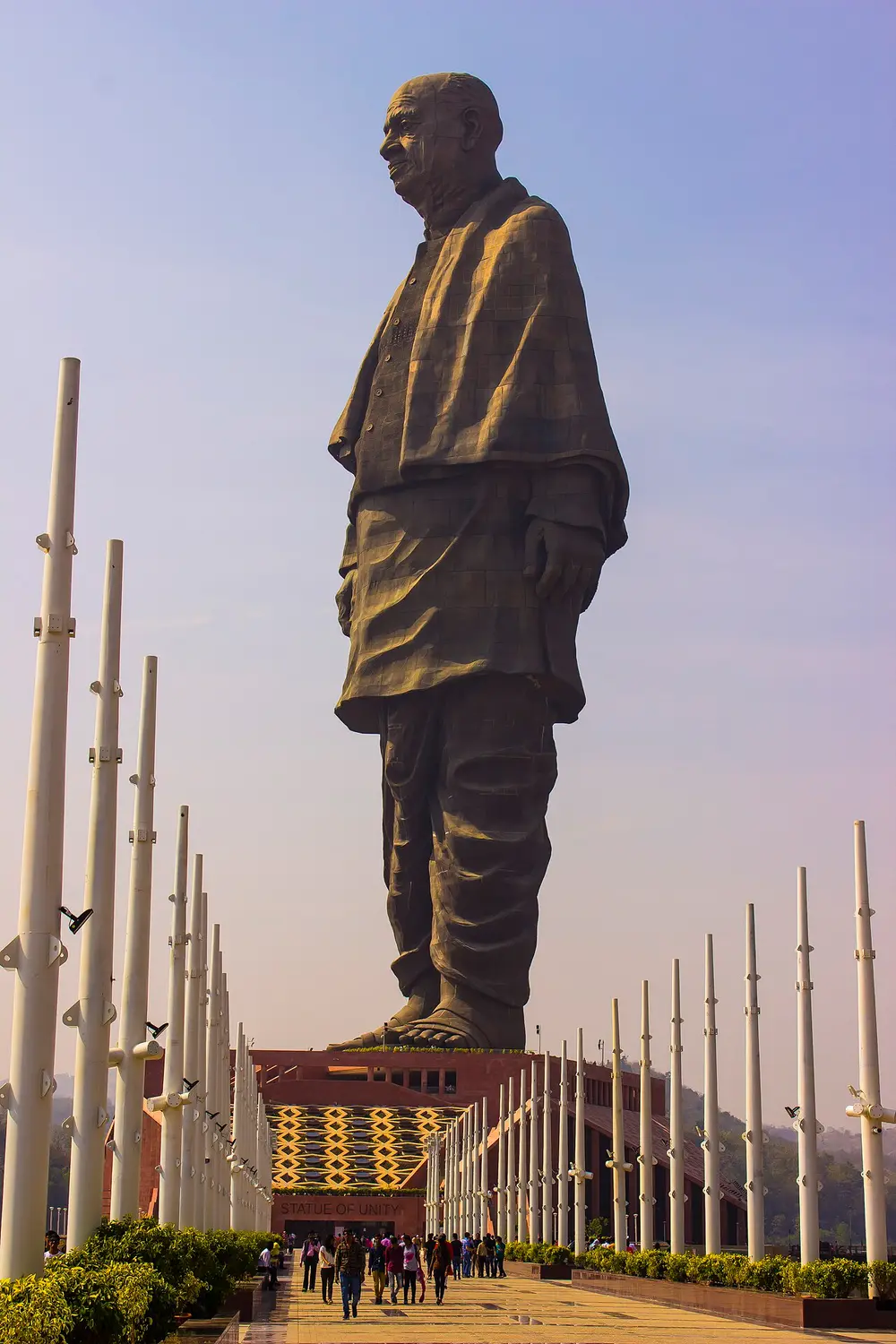
A colossal dark bronze statue of Sardar Patel in a long shawl, standing on a tall base at the end of an avenue of tall white poles.
Picture: Snehrashmi. CC BY-SA 4.0.

Statue of Unity

Where
Near Kevadia, Narmada district, Gujarat
When
Built 2013 to 2018; opened 31 October 2018
Who
Designed by the sculptor Ram V. Sutar; built by Larsen & Toubro

The statue shows Sardar Vallabhbhai Patel, independent India's first home minister and deputy prime minister, who brought the princely states into the Indian Union. At 182 metres, it is the tallest statue in the world as of October 2026. It stands on a river island in the Narmada, facing the Sardar Sarovar Dam. It was designed by the sculptor Ram V. Sutar, built by the engineering firm Larsen & Toubro, and opened on 31 October 2018, Patel's 143rd birth anniversary.

Spot it by

A giant standing figure in a long shawl, arms at its sides, on a tall base beside a river and a dam.

Remember

Sardar Patel stands 182 metres tall, opened on his birthday in 2018.

Lookup: temples, stupas and caves

Dynasties are in brackets. "About" means sources give a range.

Before 1000 CE

Monument Built by When Where
Great Stupa Emperor Ashoka (Maurya) 3rd century BCE Sanchi, Madhya Pradesh
Ajanta Caves Buddhist monks; the later caves under the Vakataka kings 2nd century BCE to about 6th century CE Near Chhatrapati Sambhajinagar, Maharashtra
Shore Temple Narasimhavarman II, also called Rajasimha (Pallava) About 700 to 728 Mahabalipuram, Tamil Nadu
Kailasanathar Temple Narasimhavarman II (Pallava) About 700 Kanchipuram, Tamil Nadu
Virupaksha Temple Queen Lokamahadevi (Chalukya) About 740 Pattadakal, Karnataka
Kailasa Temple, Ellora Krishna I (Rashtrakuta) 8th century Ellora, Maharashtra

1000 to 1700

Monument Built by When Where
Brihadeeswara Temple Rajaraja I (Chola) 1003 to 1010 Thanjavur, Tamil Nadu
Sun Temple Bhima I (Chaulukya, or Solanki) Early 11th century Modhera, Gujarat
Rani-ki-Vav stepwell Traditionally Queen Udayamati, in memory of Bhima I (Chaulukya) 11th century Patan, Gujarat
Kandariya Mahadeva Temple The Chandela kings Early 11th century Khajuraho, Madhya Pradesh
Vimal Vasahi, Dilwara Vimal Shah, minister of Bhima I (Chaulukya) 1031 Mount Abu, Rajasthan
Chennakeshava Temple Vishnuvardhana (Hoysala) Begun 1117 Belur, Karnataka
Airavatesvara Temple Rajaraja II (Chola) 12th century Darasuram, Tamil Nadu
Jagannath Temple Anantavarman Chodaganga (Eastern Ganga) 12th century Puri, Odisha
Thousand Pillar Temple Rudra Deva (Kakatiya) 12th century Hanamkonda, Telangana
Ramappa Temple Recherla Rudra, general of Ganapati Deva (Kakatiya) Begun 1213 Palampet, Telangana
Luna Vasahi, Dilwara Vastupala and Tejapala, ministers of the Vaghela rulers 1230 Mount Abu, Rajasthan
Sun Temple Narasimhadeva I (Eastern Ganga) About 1250 Konark, Odisha
Temples and palaces of Hampi The Vijayanagara kings 14th to 16th centuries Hampi, Karnataka
Meenakshi Temple, present form Mostly the Nayaka rulers of Madurai 16th and 17th centuries Madurai, Tamil Nadu

Lookup: Sultans and Mughals

Delhi and Deccan Sultans

Monument Built by When Where
Qutb Minar Begun by Qutb-ud-din Aibak, continued by Iltutmish (Delhi Sultanate) Begun about 1199 Delhi
Alai Darwaza Alauddin Khalji (Khalji) 1311 Delhi
Tomb of Sher Shah Suri Sher Shah Suri (Sur) Finished 1545 Sasaram, Bihar
Charminar Muhammad Quli Qutb Shah (Qutb Shahi) 1591 Hyderabad, Telangana
Gol Gumbaz The tomb of Muhammad Adil Shah (Adil Shahi) Left unfinished at his death in 1656 Vijayapura (Bijapur), Karnataka

Mughals

Monument Built by When Where
Humayun's Tomb Bega Begum, Humayun's widow, in Akbar's reign; architect Mirak Mirza Ghiyas 1560s, finished about 1570 Delhi
Agra Fort Akbar; Shah Jahan added marble palaces 1565 to 1573 Agra
Fatehpur Sikri and the Buland Darwaza Akbar City founded 1571; gate in the 1570s Near Agra
Akbar's Tomb Begun under Akbar, finished by Jahangir 1605 to 1613 Sikandra, Agra
Tomb of Itimad-ud-Daulah Nur Jahan 1622 to 1628 Agra
Taj Mahal Shah Jahan; chief architect Ustad Ahmad Lahori Tomb 1632 to 1648; whole complex 1653 Agra
Red Fort Shah Jahan 1639 to 1648 Delhi
Jama Masjid Shah Jahan Finished 1656 Delhi
Bibi Ka Maqbara Prince Azam Shah, son of Aurangzeb Around 1660 Chhatrapati Sambhajinagar, Maharashtra

Lookup: Rajput, Sikh and Nawabi builders

Monument Built by When Where
Jaisalmer Fort Rawal Jaisal Founded 1156 Jaisalmer, Rajasthan
Vijay Stambha Rana Kumbha (Mewar) 1440 to 1448 Chittorgarh, Rajasthan
Kumbhalgarh Fort Rana Kumbha (Mewar) 15th century Rajsamand district, Rajasthan
Mehrangarh Fort Rao Jodha (Rathore), who founded Jodhpur; most of today's fort by later kings Begun 1459 Jodhpur, Rajasthan
Amber Fort Raja Man Singh I (Kachwaha), then later kings Begun 1592 Amer, near Jaipur
Golden Temple Guru Arjan; gold under Maharaja Ranjit Singh 1588 to 1604; gilded by 1830 Amritsar, Punjab
Jantar Mantar Sawai Jai Singh II (Kachwaha) 1720s Delhi
City Palace Sawai Jai Singh II, then later kings From 1727 Jaipur, Rajasthan
Jantar Mantar Sawai Jai Singh II (Kachwaha) About 1728 to 1734 Jaipur, Rajasthan
Bara Imambara and Rumi Darwaza Asaf-ud-Daula, Nawab of Awadh 1784 Lucknow, Uttar Pradesh
Hawa Mahal Sawai Pratap Singh; designed by Lal Chand Ustad 1799 Jaipur, Rajasthan
Mysore Palace The Wadiyar kings; designed by Henry Irwin 1897 to 1912 Mysuru, Karnataka

Lookup: colonial and modern

Under European rule

Monument Built by When Where
Basilica of Bom Jesus The Jesuits Finished 1605 Old Goa
Fort St George The English East India Company Founded 1639 Chennai
Writers' Building Thomas Lyon, for the East India Company 1777 Kolkata
Chhatrapati Shivaji Maharaj Terminus Frederick William Stevens 1878 to 1888 Mumbai
Victoria Memorial William Emerson 1906 to 1921 Kolkata
Rashtrapati Bhavan Edwin Lutyens 1912 to 1929 New Delhi
Old Parliament House Edwin Lutyens and Herbert Baker 1921 to 1927 New Delhi
India Gate Edwin Lutyens 1921 to 1931 New Delhi
Gateway of India George Wittet Finished 1924 Mumbai
Howrah Bridge Designed by the British firm Rendel, Palmer and Tritton Opened 1943 Kolkata and Howrah

After independence

Monument Built by When Where
Palace of Assembly Le Corbusier 1951 to 1962 Chandigarh
Vidhana Soudha Chief Minister Kengal Hanumanthaiah's project 1952 to 1956 Bengaluru
IIM Ahmedabad Louis Kahn, with B.V. Doshi and Anant Raje 1962 to 1974 Ahmedabad
Lotus Temple Fariborz Sahba Finished 1986 New Delhi
Statue of Unity Sculptor Ram V. Sutar; built by Larsen & Toubro 2013 to 2018 Kevadia, Gujarat
New Parliament building Bimal Patel 2021 to 2023 New Delhi
Ram Mandir Chandrakant Sompura Consecrated 2024 Ayodhya, Uttar Pradesh

Firsts, largest, tallest

Records change, so these are as of October 2026. "One of the largest" means sources won't commit to "the largest".

Record Monument Built by Where
Tallest statue in the world, 182 metres Statue of Unity (2018) Ram V. Sutar Kevadia, Gujarat
Highest railway arch bridge in the world, 359 metres above the river Chenab Rail Bridge (opened 2025) Indian Railways Reasi, Jammu and Kashmir
Largest stone sundial in the world, 27 metres high Vrihat Samrat Yantra, Jantar Mantar (1730s) Sawai Jai Singh II Jaipur
One of the oldest stone structures in India Great Stupa (3rd century BCE) Ashoka Sanchi
Largest rock-cut temple at Ellora, carved from a single rock Kailasa Temple (8th century) Krishna I Ellora
First building in India made fully with Islamic methods: true arches and a true dome Alai Darwaza (1311) Alauddin Khalji Delhi
First garden tomb in the Indian subcontinent Humayun's Tomb (about 1570) Bega Begum Delhi
One of the highest gateways in the world Buland Darwaza (1570s) Akbar Fatehpur Sikri
First Mughal tomb faced entirely in white marble Tomb of Itimad-ud-Daulah (1622 to 1628) Nur Jahan Agra
One of the largest domes of its time in the world Gol Gumbaz (1656) Built for Muhammad Adil Shah Vijayapura
First English fortress in India Fort St George (1639) East India Company Chennai
One of the largest arched halls built with no beams Bara Imambara (1784) Asaf-ud-Daula Lucknow
953 small windows, called jharokhas Hawa Mahal (1799) Sawai Pratap Singh Jaipur
Often called the largest legislature building in India Vidhana Soudha (1956) Kengal Hanumanthaiah Bengaluru

Test yourself

Question 1 of 8

Who built this tower?

Question 2 of 8

Which of these was built by Sawai Jai Singh II?

Question 3 of 8

Which tomb did Nur Jahan build for her father?

Question 4 of 8

This tomb is called the Taj of the Deccan. Which state is it in?

Question 5 of 8

Who had the upper floors of this shrine covered in gold?

Question 6 of 8

Which of these was built by Asaf-ud-Daula, Nawab of Awadh?

Question 7 of 8

The Thousand Pillar Temple at Hanamkonda was built by a king of which dynasty?

Question 8 of 8

Who designed the Statue of Unity?

From past papers

Real exam questions on this topic, each with a full solution.

Finished this note?

Mark it as studied to track your progress through the course.

Was this note useful?

Each picture is credited underneath it. Pictures of works still in copyright are shown small, for teaching only. If you hold the rights to a picture and want it removed, tell us through the contact page and we will take it down.