Chapter 10: Environment, climate and sustainable design
Movements, laws and climate agreements
India's green movements from Khejarli to the Narmada, the laws that guard its air, water, forests and wildlife, and the world's environment deals from Stockholm 1972 to COP31.
1In 1730 Amrita Devi and 363 Bishnois of Khejarli, near Jodhpur, died hugging khejri trees. Chipko (1973, Uttarakhand) and Appiko (1983, Karnataka) used the same tree-hugging idea.
2Silent Valley in Keralam (Kerala until 2026) was saved from a dam and became a national park in 1984. The Narmada Bachao Andolan (Medha Patkar, Baba Amte) fought the Sardar Sarovar Dam. Vandana Shiva's Navdanya saves native seeds.
3India's main green laws: Wild Life (Protection) 1972, Water 1974, Forest (Conservation) 1980, Air 1981, Environment (Protection) 1986 after the Bhopal gas leak, Biological Diversity 2002, and the National Green Tribunal 2010.
4Stockholm 1972 created UNEP and World Environment Day (5 June). The Montreal Protocol (1987) protects the ozone layer. The Kyoto Protocol (1997) set the first binding cuts in greenhouse gases. The Paris Agreement (2015) aims to keep warming well below 2 degrees Celsius.
5India aims for net zero by 2070. Its 2035 pledge, approved in March 2026, is a 47 per cent cut in emissions intensity from 2005 and 60 per cent of power capacity from non-fossil sources.
6COP30 was held in Belém, Brazil, in November 2025. As of October 2026, COP31 is coming up in Antalya, Turkey, from 9 to 20 November 2026.
Hugging the trees: India's green movements
Long before there were environment laws, ordinary villagers in India stood up for their forests and rivers. Most of these movements were non-violent, in the spirit of Gandhi, and women often led them, because they were the ones who gathered firewood, fodder and water every day.
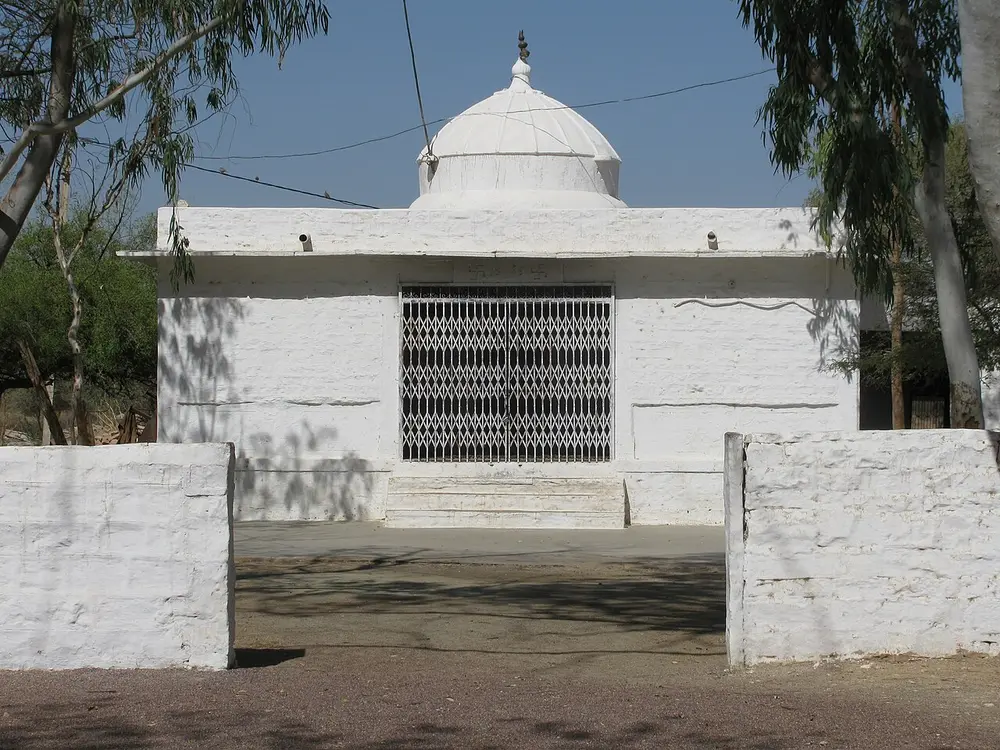
The Bishnois are a community of the Thar Desert who follow 29 rules taught by Guru Jambheshwar in the late 15th century; the name is said to come from bis (twenty) and nau (nine). Two of those rules are not to cut green trees and not to harm animals. In 1730 the ruler of Marwar, Maharaja Abhay Singh, sent men to cut the village's khejri trees for wood for a new palace. Amrita Devi hugged a tree and refused to let it go, and she and her three daughters were killed. Bishnois from 83 villages then came forward one by one to hug the trees, and 363 died before the shocked king stopped the felling and apologised. A temple and a memorial now stand at the site.
Remember
1730, 363 lives, khejri trees: the first tree huggers.
Don't confuse
Chipko, two centuries later, used the same idea of hugging trees, but in the Himalayas and without the killing.
Chamoli district, Garhwal Himalayas, in today's Uttarakhand (then Uttar Pradesh)
When
From 1973
Who
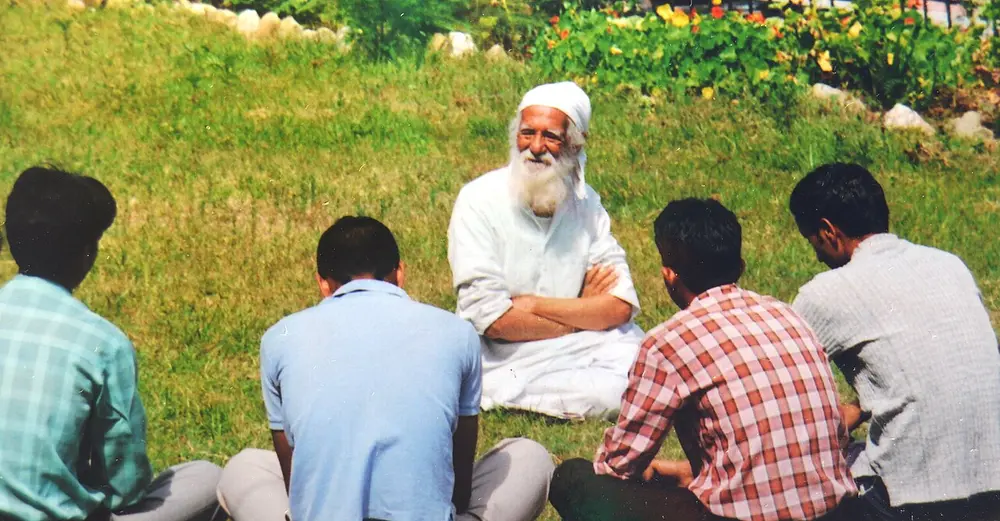
Chandi Prasad Bhatt, Gaura Devi, Sunderlal Bahuguna (shown here in 2008)
Chipko means "to stick" or "to cling" in Hindi. In April 1973, at Mandal village, villagers from Chandi Prasad Bhatt's group, the Dasholi Gram Swarajya Sangh, drove away loggers who had come to cut ash trees for a sports goods company. In March 1974, at Reni, Gaura Devi led 27 women into the forest to face the loggers while the men were away, and the trees were saved. Sunderlal Bahuguna carried the message across the hills on long walks and later fought the Tehri Dam. In 1980 Prime Minister Indira Gandhi banned the felling of trees in the Himalayan forests of Uttar Pradesh for 15 years. Chandi Prasad Bhatt won the Ramon Magsaysay Award in 1982, the movement won the Right Livelihood Award in 1987, and Bahuguna received the Padma Vibhushan in 2009.
Remember
Chipko means cling: Mandal 1973, Reni 1974, Gaura Devi.
Don't confuse
Appiko (1983) is the same idea in Karnataka's Western Ghats; Chipko is in the Himalayas.
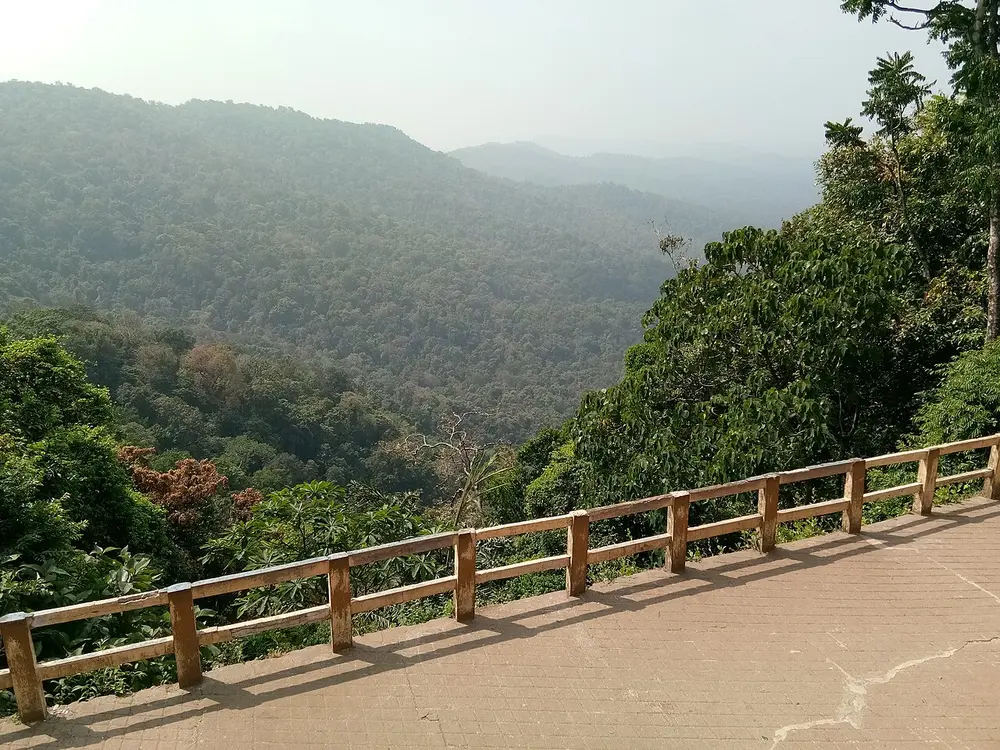
Appiko, Kannada for "hug", carried Chipko south. In September 1983 villagers from Salkani, near Sirsi in Uttara Kannada district of Karnataka, walked to the Kalase forest and hugged the trees to stop them being felled. The movement was led by Panduranga Hegde and spread through the Western Ghats.
Forested hills of the Western Ghats in Uttara Kannada, seen from the Devimane ghat between Kumta and Sirsi. Appiko began in forests like these.
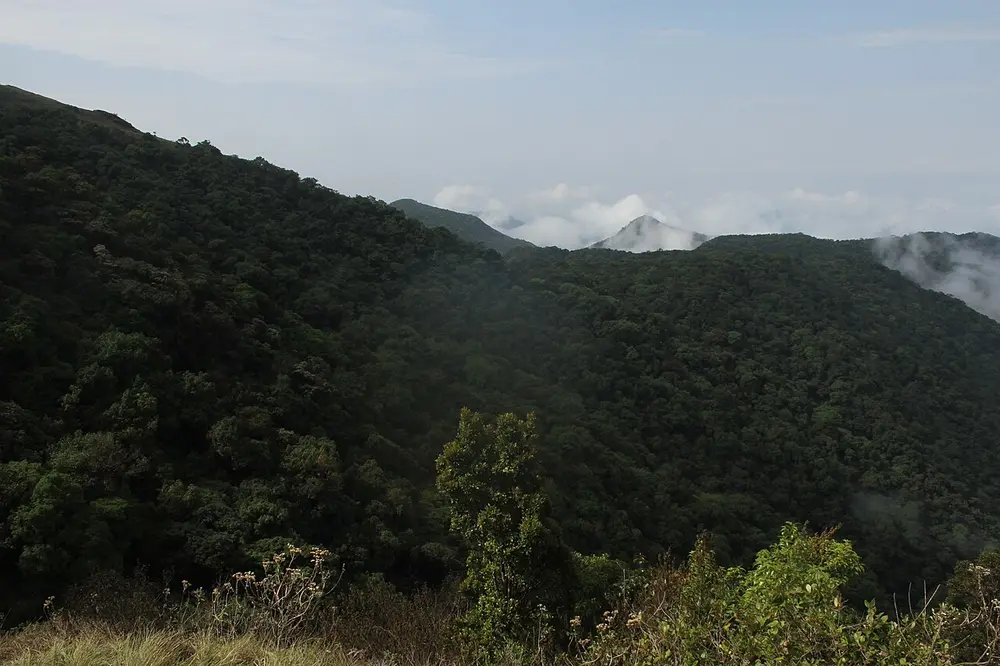
Palakkad district, Keralam, in the Nilgiri hills of the Western Ghats
When
Campaign from 1973; national park from 1984
Who
The Kerala Sastra Sahitya Parishad (a people's science group), the poet Sugathakumari, scientists and students
Silent Valley is one of the last stretches of untouched tropical evergreen rainforest in India. The Kerala State Electricity Board planned a hydroelectric dam on the Kunthipuzha river that would have drowned about 8 square kilometres of it, along with the home of the endangered lion-tailed macaque. The "Save Silent Valley" campaign grew into one of India's fiercest environmental debates of the 1970s. Prime Minister Indira Gandhi stepped in, the dam was dropped in 1983, and the valley was declared a national park in 1984. Prime Minister Rajiv Gandhi formally opened it in 1985.
Remember
Silent Valley chose the monkey over the megawatts.
Don't confuse
The Narmada Bachao Andolan also fought a dam, but on the Narmada in Gujarat, and that dam was built.
The Narmada valley in Gujarat, Madhya Pradesh and Maharashtra
When
From 1985
Who
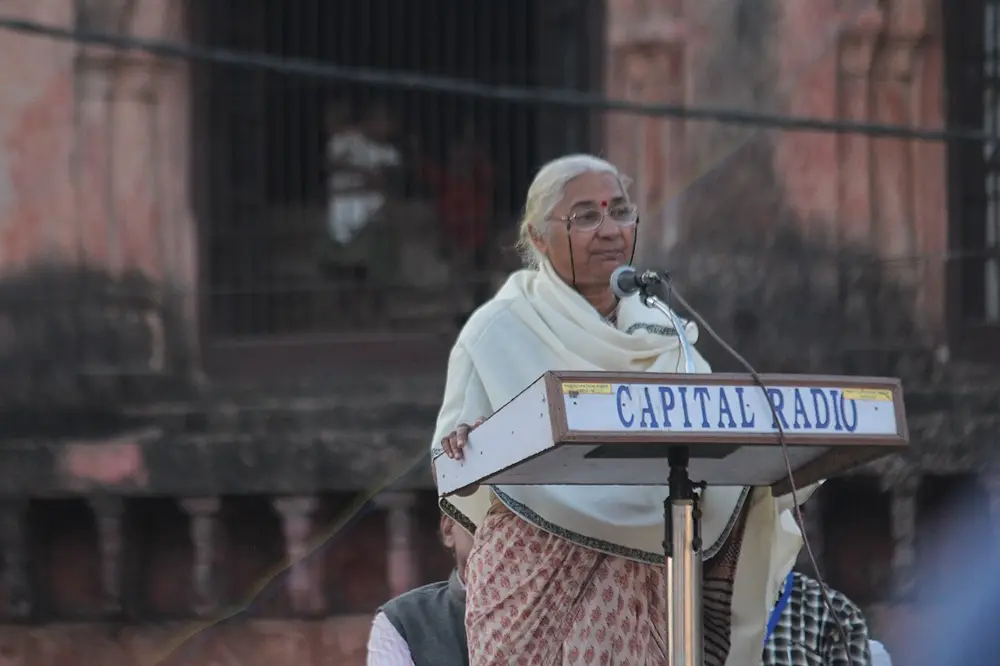
Medha Patkar (shown here in 2017) and Baba Amte
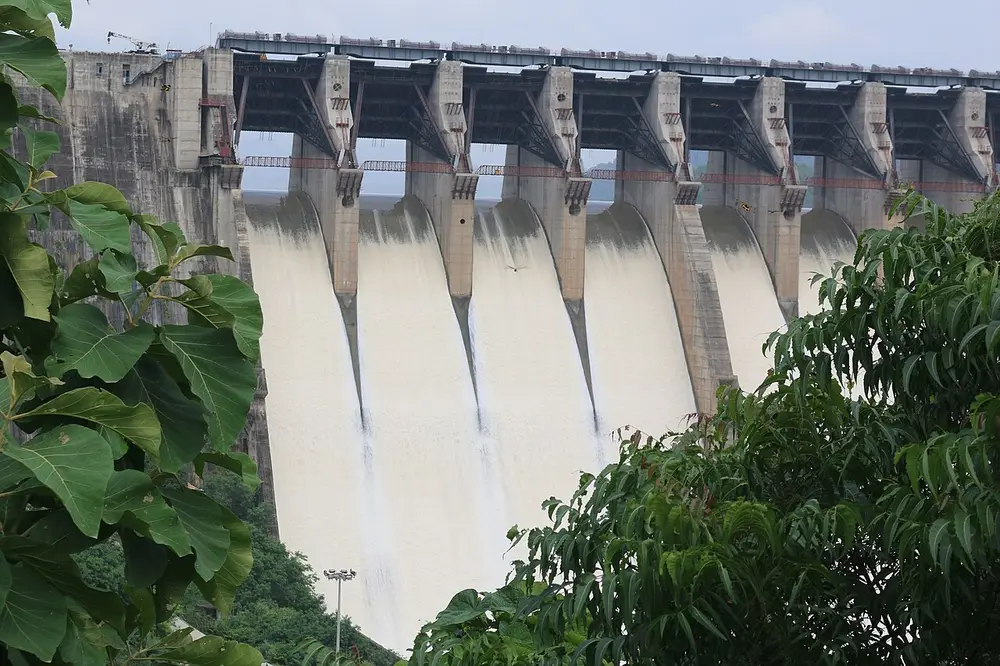
The Sardar Sarovar Dam in Gujarat is the largest of many dams planned on the Narmada. Its reservoir would flood villages, farms and forests upstream, forcing many families, a large share of them adivasis (tribal people), to leave their land. The Narmada Bachao Andolan asked for fair resettlement and questioned whether such big dams were worth it, using marches, long hunger strikes and court cases. Under its pressure the World Bank, which had lent money for the dam, ordered an independent review and pulled out in 1993. Medha Patkar and Baba Amte shared the Right Livelihood Award in 1991. The Supreme Court later let the work go on, and Prime Minister Narendra Modi opened the dam in 2017.
Remember
Narmada Bachao: Medha Patkar against the Sardar Sarovar Dam.
The Sardar Sarovar Dam on the Narmada in Gujarat, the dam the Narmada Bachao Andolan fought.
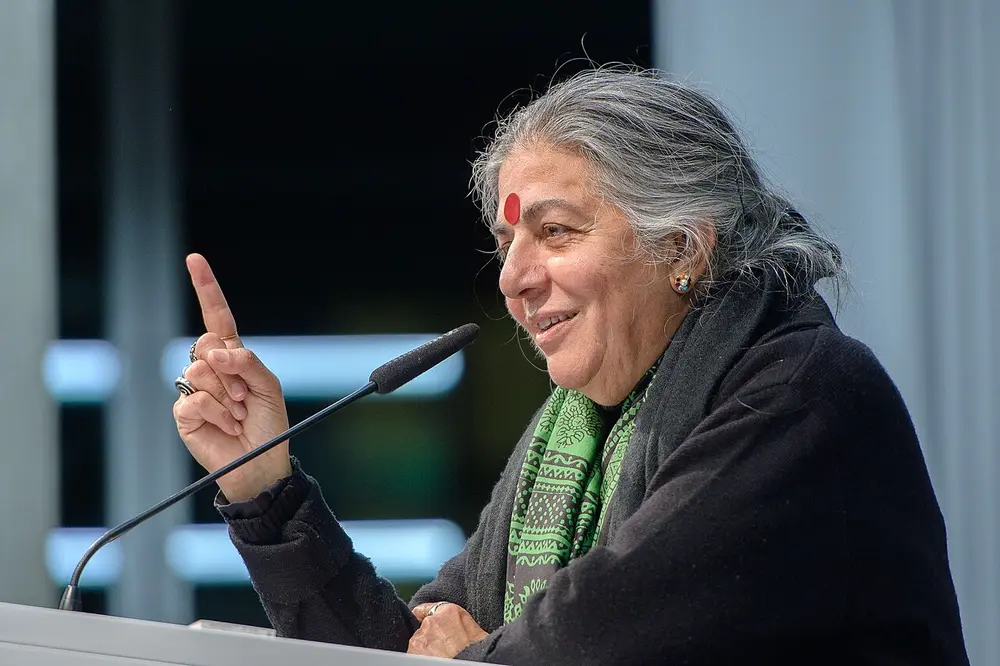
Vandana Shiva grew up in Dehradun and studied physics before turning to ecology. Navdanya means "nine seeds" or "new gift". It helps farmers keep their own traditional seeds in community seed banks, so they can save and swap them instead of buying new seed every year, and it promotes organic farming. Shiva argues that the chemical-heavy farming of the Green Revolution harmed India's soil, and she campaigns against patents on seeds, an idea she calls "seed freedom". She won the Right Livelihood Award in 1993 and also wrote about women's role in movements like Chipko.
Remember
Navdanya means nine seeds: save the seed, save the farm.
In 1976 the 42nd Amendment wrote the environment into the Constitution. Article 48A tells the state to protect and improve the environment and safeguard forests and wildlife, and Article 51A(g) makes it every citizen's duty to protect nature and have compassion for living creatures. Most of the big laws came in the years around it.
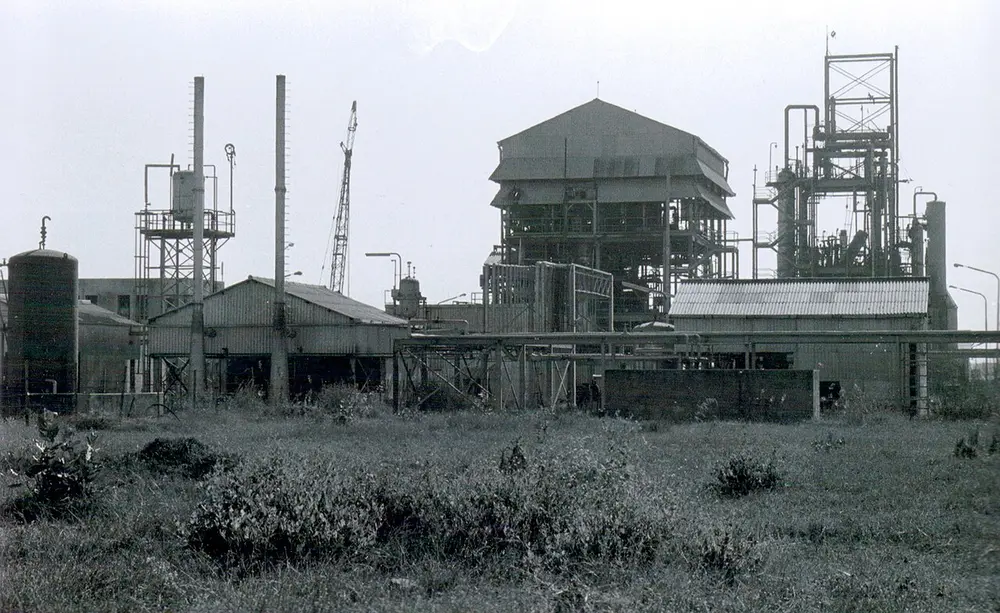
Union Carbide pesticide factory, Bhopal, Madhya Pradesh
When
The night of 2 to 3 December 1984; this photo is from 1985
On a winter night, a poisonous gas called methyl isocyanate (MIC) leaked from a tank at this pesticide factory and spread over the sleeping city. It killed thousands of people and harmed hundreds of thousands more, making it the world's worst industrial disaster. It showed that India's laws were too narrow: the Water and Air Acts each covered only one kind of pollution. So in 1986 Parliament passed the Environment (Protection) Act, an "umbrella" law that lets the central government set standards for any pollution, control dangerous chemicals, shut down harmful factories and demand environmental impact assessments before big projects.
Remember
Bhopal 1984 led to the Environment (Protection) Act 1986.
Law
Year
What it does
Recent change
Wild Life (Protection) Act
1972
Bans hunting of listed animals and protects listed plants; lets governments set up national parks and sanctuaries
A 2022 amendment cut its lists (schedules) of species from six to four and added rules for the wildlife trade treaty CITES
Water (Prevention and Control of Pollution) Act
1974
Controls dirty water from factories and towns; set up the Central and State Pollution Control Boards
A 2024 amendment replaced jail with fines for most offences
Forest (Conservation) Act
1980
A state needs the central government's permission to clear forest land for other uses
A 2023 amendment renamed it the Van (Sanrakshan Evam Samvardhan) Adhiniyam, 1980, and left some kinds of land outside it
Air (Prevention and Control of Pollution) Act
1981
Controls smoke and fumes; uses the same pollution control boards
The Jan Vishwas Act of 2023 replaced jail with fines for many offences
Environment (Protection) Act
1986
The umbrella law passed after Bhopal
The Jan Vishwas Act of 2023 replaced jail with penalties for many offences
Biological Diversity Act
2002
Puts the UN Convention on Biological Diversity into practice; set up the National Biodiversity Authority in Chennai
A 2023 amendment eased rules for traditional medicine (AYUSH) and replaced jail with fines
National Green Tribunal Act
2010
Created a special court for environment cases
None
The National Green Tribunal (NGT) was set up on 18 October 2010. Its main bench sits in New Delhi, with benches in Bhopal, Pune, Kolkata and Chennai, and it aims to decide cases within six months. India was the third country to have such a tribunal, after Australia and New Zealand. The NGT has, for example, banned diesel vehicles more than 15 years old in Delhi.
Also called UN Conference on the Human Environment
Where
Stockholm, Sweden
When
5 to 16 June 1972
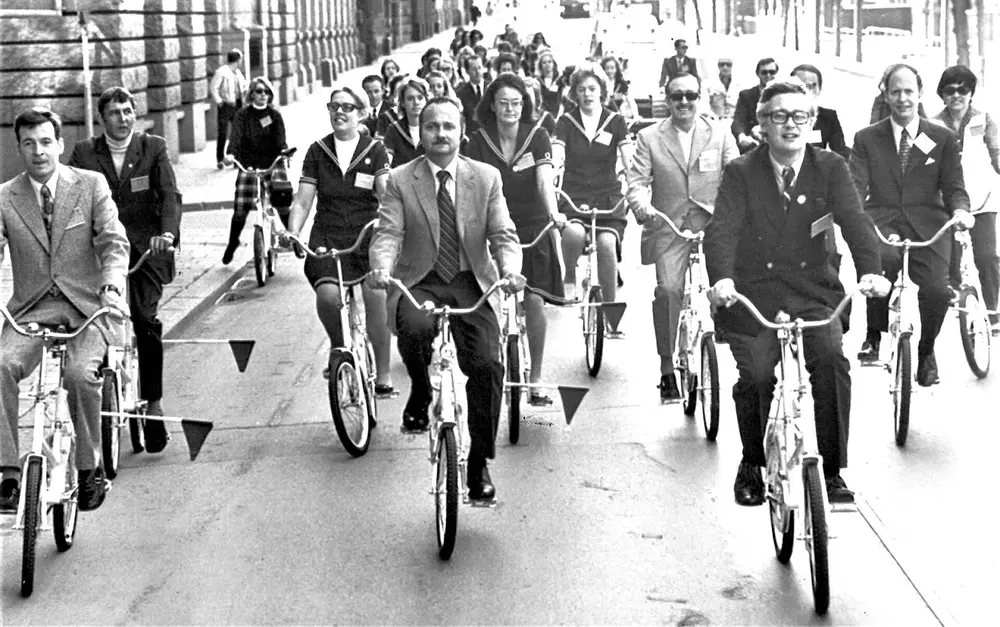
This was the first big UN meeting about the environment. It created the UN Environment Programme (UNEP), based in Nairobi, Kenya, the first UN agency with its headquarters in a developing country. Its opening day, 5 June, became World Environment Day, held every year since 1973; India hosted it in 2018 with the theme "Beat Plastic Pollution". Prime Minister Indira Gandhi told the conference that poverty and the environment could not be separated. In this photo, taken the day before it opened, delegates cycle through Stockholm with the conference's leader, Maurice Strong, in the middle.
Agreed 16 September 1987; in force from 1 January 1989
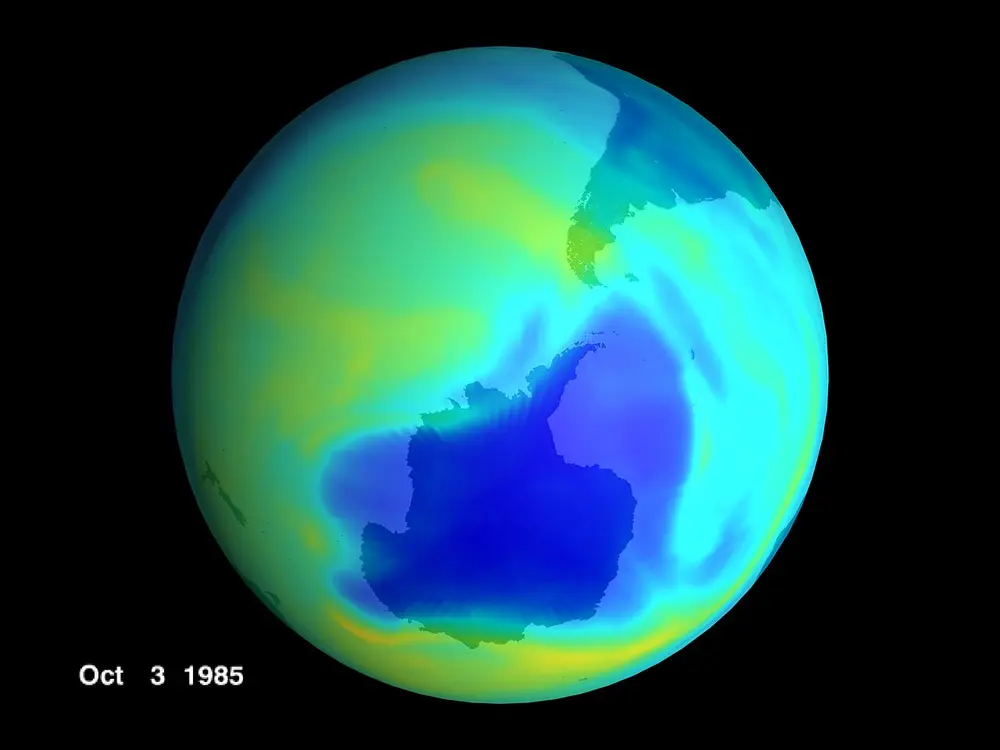
High in the sky, the ozone layer soaks up most of the Sun's harmful ultraviolet (UV) rays, which cause sunburn and skin cancer. Chemicals called CFCs, then used in fridges, air conditioners and spray cans, were destroying it, and in 1985 scientists reported a huge "hole" over Antarctica. The Vienna Convention of 1985 set up talks, and the Montreal Protocol set dates to stop making CFCs and other ozone-eating chemicals. It is the first UN treaty signed up to by every country in the world, 198 parties in all. The Kigali Amendment (2016) adds HFCs, the gases that replaced CFCs, because they heat the planet. The ozone layer is slowly healing and should recover over Antarctica by about 2066. 16 September is World Ozone Day.
Remember
Montreal mends the ozone; Kyoto and Paris fight warming.
Don't confuse
The ozone hole lets in UV rays; it is not the main cause of global warming, which comes from greenhouse gases such as carbon dioxide.
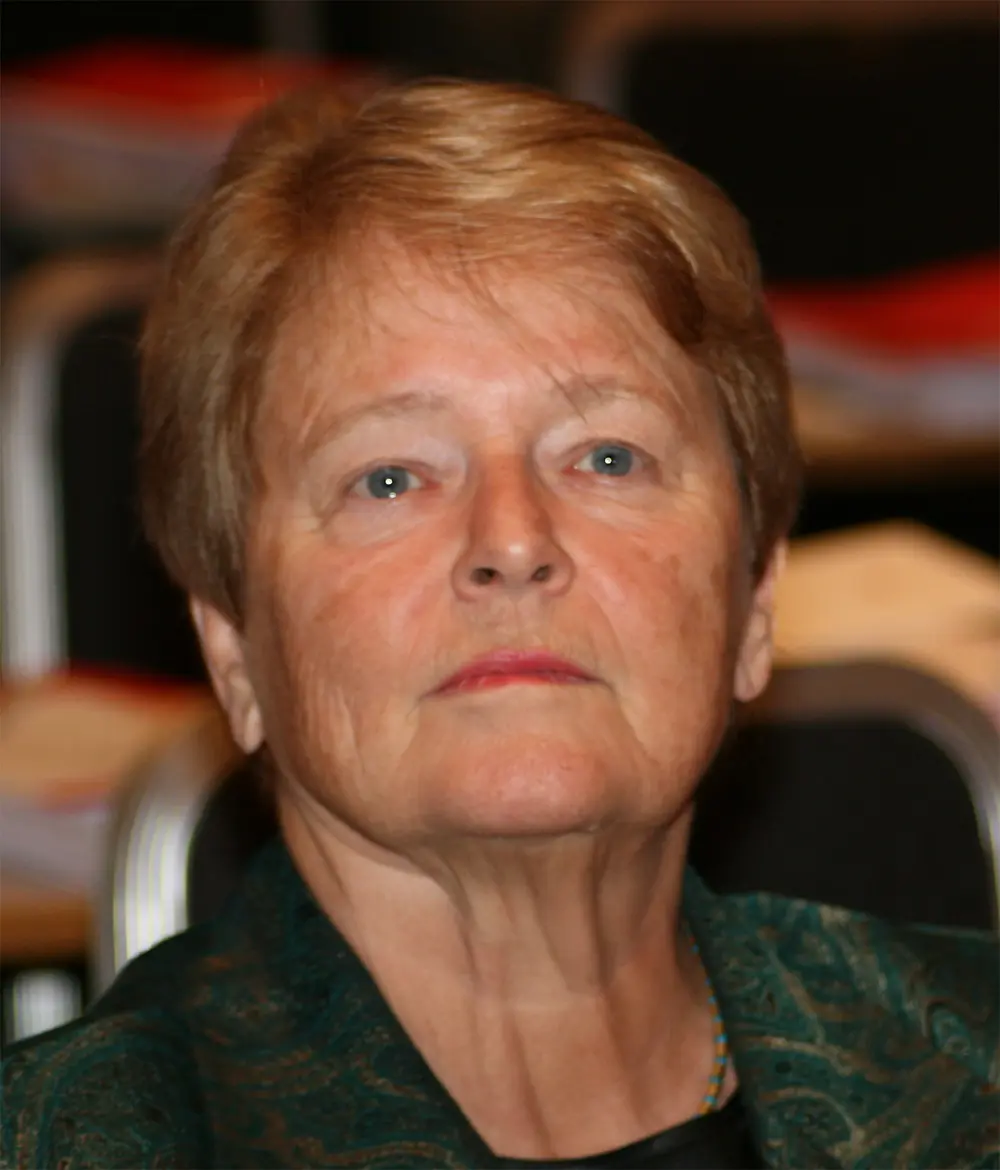
The World Commission on Environment and Development, chaired by Gro Harlem Brundtland, a former Prime Minister of Norway (shown here in 2009)
The UN asked this commission to look at the environment and development together, as one problem. Its report gave the best-known definition of sustainable development: growth that meets the needs of people today without spoiling the chance for future generations to meet their own needs. The idea shaped the Rio Earth Summit five years later.
Remember
Brundtland 1987 defined sustainable development.
Earth Summit
Also called UN Conference on Environment and Development, Rio 1992
Where
Rio de Janeiro, Brazil
When
3 to 14 June 1992
Twenty years after Stockholm, world leaders met in Rio. Two treaties were opened for signing there: the UN Framework Convention on Climate Change (UNFCCC), to stop dangerous warming, and the Convention on Biological Diversity (CBD), to protect the variety of life. The summit also agreed Agenda 21, a plan for sustainable development in the 21st century, the Rio Declaration and the Forest Principles, and started talks on a treaty against desertification, signed in 1994. The countries in the UNFCCC have met every year since 1995 at a COP, the Conference of the Parties, where all the later climate deals were made.
Remember
Rio 1992 gave birth to two conventions: climate (UNFCCC) and biodiversity (CBD).
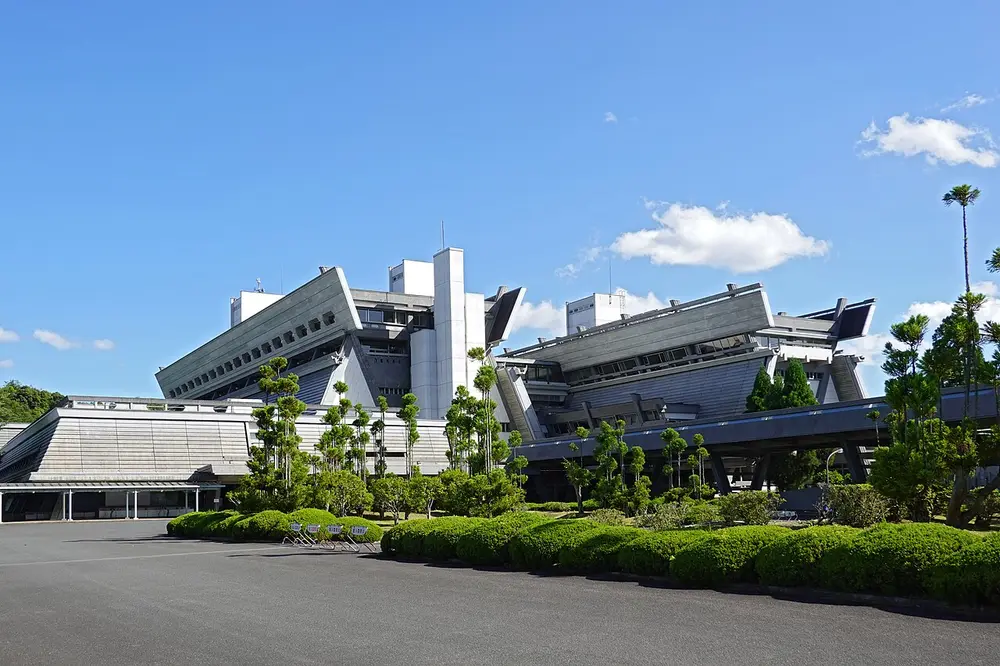
Agreed at COP3, in the Kyoto International Conference Center, Japan
When
Adopted 11 December 1997; in force from 16 February 2005
The Kyoto Protocol was the first treaty to set legally binding targets for cutting greenhouse gases. Only developed, industrialised countries had targets, because they had caused most of the warming so far; developing countries such as India and China had none. It covered six gases: carbon dioxide, methane, nitrous oxide and three factory-made gases (HFCs, PFCs and sulphur hexafluoride). Its first period ran from 2008 to 2012, and the Doha Amendment stretched it to 2020. The United States never joined, and Canada pulled out. The hall where it was agreed was designed by the architect Sachio Otani and opened in 1966, with sloping walls and few upright ones.
Remember
Kyoto put limits on rich countries' greenhouse gases.
Don't confuse
Kyoto told rich countries what to cut; under Paris every country sets its own target.
Adopted 12 December 2015; in force from 4 November 2016
Who
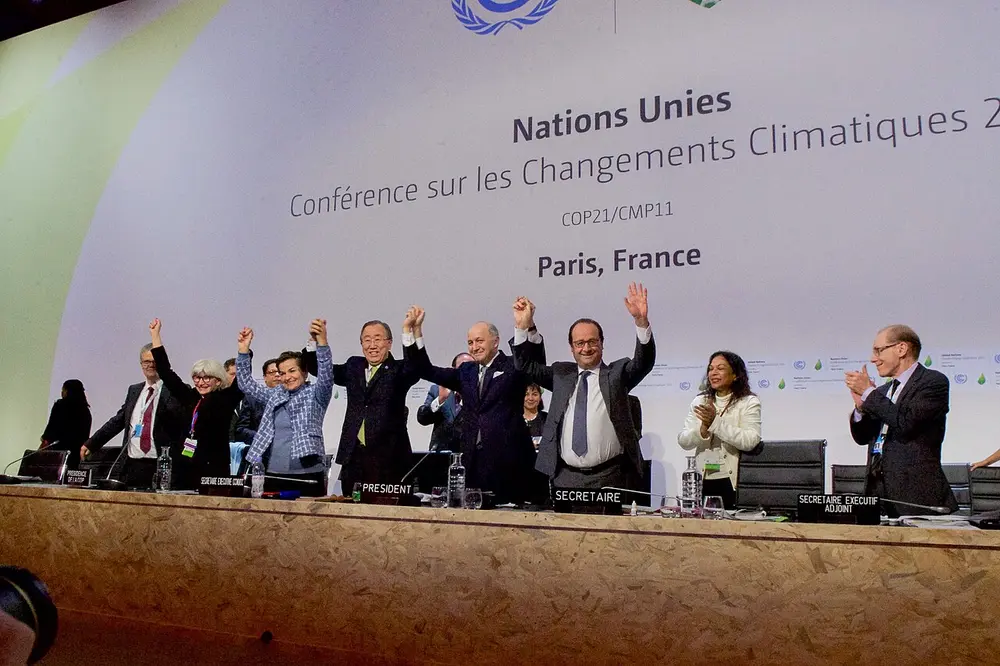
In this photo, France's Laurent Fabius, UN Secretary-General Ban Ki-moon and President François Hollande celebrate the deal
In Paris, 196 parties agreed to keep the rise in the world's average temperature well below 2 degrees Celsius above pre-industrial levels, and to try to limit it to 1.5 degrees. Instead of targets handed down, as in Kyoto, every country, rich or poor, writes its own climate plan, called a Nationally Determined Contribution (NDC), and must make it stronger every five years. The United States left in 2020, rejoined in 2021 and left again on 27 January 2026.
Remember
Paris: well below 2, aim for 1.5, every country writes its own NDC.
10 to 22 November 2025 (one day longer than planned)
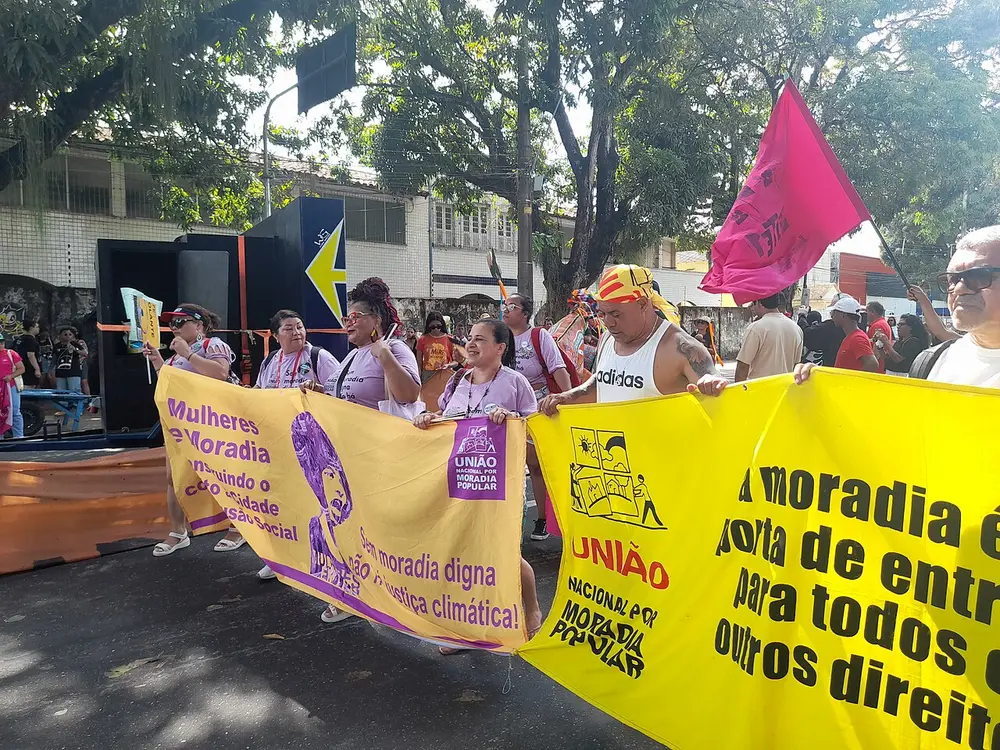
The first COP held in the Amazon ended with a package called the Global Mutirão, a Brazilian word for a community coming together to get a job done. Countries agreed to at least triple money for adaptation (coping with the effects of climate change) by 2035, to set up a Just Transition Mechanism to help workers and communities move away from fossil fuels fairly, and to track adaptation with 59 shared indicators. Oil-producing countries blocked a plan to phase out fossil fuels, so Brazil announced two voluntary roadmaps, on fossil fuels and on deforestation, outside the formal deal. Brazil also launched the Tropical Forest Forever Facility, a fund to pay countries for keeping tropical forests standing. Many observers called the result weak. This photo shows the global climate march through Belém on 15 November 2025.
Remember
COP30: Belém, the Amazon, the Global Mutirão.
Don't confuse
COP31 is not in Brazil or Australia: it is in Antalya, Turkey, in November 2026.
COP
Year and place
Remember it for
COP26
2021, Glasgow, UK
The Glasgow Climate Pact asked countries to "phase down" coal; India announced net zero by 2070
COP27
2022, Sharm el-Sheikh, Egypt
Agreed to create a fund for "loss and damage" in the countries hit hardest
COP28
2023, Dubai, UAE
The UAE Consensus called for moving away from fossil fuels in energy
COP29
2024, Baku, Azerbaijan
Rich countries to provide at least 300 billion US dollars a year for developing countries by 2035
COP30
2025, Belém, Brazil
The Global Mutirão; triple adaptation money by 2035
COP31
9 to 20 November 2026, Antalya, Turkey
Coming up as of October 2026. Turkey hosts and holds the presidency; Australia's Chris Bowen leads the negotiations
India's pledges, the Solar Alliance and LiFE
At COP26 in Glasgow in November 2021, Prime Minister Modi announced that India would reach net zero by 2070: by then, India would remove as much greenhouse gas from the air as it puts in. India's targets for 2030 and 2035 measure emissions intensity, the greenhouse gas given off for each rupee of GDP, so India's total emissions can still rise while its economy grows.
Target
By 2030 (NDC of 2022)
By 2035 (NDC of 2026)
Cut in emissions intensity, compared with 2005
45 per cent
47 per cent
Share of electricity capacity from non-fossil sources (solar, wind, hydro, nuclear)
About 50 per cent; reached early, in June 2025
60 per cent
Extra carbon soaked up by forests and trees
2.5 to 3 billion tonnes of carbon dioxide
3.5 to 4 billion tonnes
The Union Cabinet approved the 2035 targets on 25 March 2026, and India then sent them to the UN.
Launched in Paris; headquarters in Gurugram, Haryana
When
30 November 2015, on the first day of COP21
Who
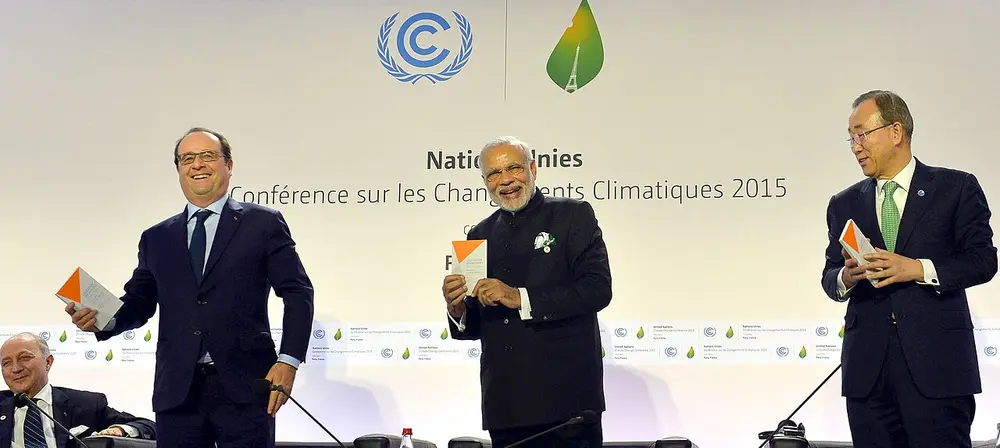
Narendra Modi and François Hollande, with Ban Ki-moon (right)
India and France launched the ISA to spread solar power, first among the sunny countries lying wholly or partly between the Tropic of Cancer and the Tropic of Capricorn. Members share know-how and work together to bring down the cost of solar power and raise money for solar projects. In January 2016 Modi and Hollande laid the foundation stone of its headquarters in Gurugram. As of October 2026 it has more than 110 member countries.
Remember
The ISA is India's sun club: Paris 2015, headquarters in Gurugram.
Mission LiFE (Lifestyle for Environment) asks people, not just governments, to change everyday habits: saving water and electricity, cutting single-use plastic, eating sensibly, and following "reduce, reuse, recycle". Modi first put forward the idea at COP26 in 2021, and launched it with UN Secretary-General António Guterres on 20 October 2022 at Ekta Nagar (Kevadia) in Gujarat, beside the Statue of Unity, a short way from the Sardar Sarovar Dam.
Treaties at a glance
Treaty or meeting
Year
What it is for
Remember
Ramsar Convention
1971
Wetlands
Signed at Ramsar, Iran
Stockholm Conference
1972
The human environment
UNEP and World Environment Day
Vienna Convention
1985
Ozone layer (framework)
Led to Montreal
Montreal Protocol
1987
Ozone layer
Phases out CFCs; World Ozone Day is 16 September
Brundtland Report
1987
Sustainable development
Our Common Future
UNFCCC and CBD
1992
Climate and biodiversity
Opened at the Rio Earth Summit
Kyoto Protocol
1997
Greenhouse gases
Binding cuts for rich countries
Paris Agreement
2015
Greenhouse gases
Well below 2 degrees; every country's own NDC
Timeline
1730
Amrita Devi and 363 Bishnois die protecting the khejri trees of Khejarli
1971
The Ramsar Convention on wetlands is signed in Iran
1972
The Stockholm Conference creates UNEP; India passes the Wild Life (Protection) Act
1973
The first World Environment Day; the first Chipko action at Mandal; the Save Silent Valley campaign begins
1974
Gaura Devi and the women of Reni save their forest; India passes the Water Act
1976
The 42nd Amendment adds Articles 48A and 51A(g) to the Constitution
1980
The Forest (Conservation) Act; a 15-year ban on felling in the Himalayan forests of Uttar Pradesh
1981
India passes the Air Act
1983
Appiko begins in Karnataka; the Silent Valley dam is dropped
1984
Silent Valley becomes a national park; the Bhopal gas leak on the night of 2 to 3 December
1985
The Vienna Convention on the ozone layer; scientists report the ozone hole; the Narmada Bachao Andolan begins
1986
India passes the Environment (Protection) Act
1987
The Montreal Protocol is agreed; the Brundtland Report defines sustainable development; Navdanya's seed work begins
1992
The Rio Earth Summit opens the UNFCCC and the CBD
1993
The World Bank pulls out of the Sardar Sarovar Dam
1997
The Kyoto Protocol is adopted
2002
India passes the Biological Diversity Act
2005
The Kyoto Protocol comes into force
2010
The National Green Tribunal is set up
2015
The International Solar Alliance is launched and the Paris Agreement adopted, both at COP21
2016
The Paris Agreement comes into force; the Kigali Amendment adds HFCs to the Montreal Protocol
2017
The Sardar Sarovar Dam is opened
2021
At COP26 in Glasgow, India pledges net zero by 2070
2022
Mission LiFE is launched at Ekta Nagar; India updates its NDC
2023
The Forest (Conservation) Act is renamed and the Biological Diversity Act amended; COP28 in Dubai
2025
India's non-fossil power capacity passes 50 per cent; COP30 in Belém
2026
The United States leaves the Paris Agreement again; India approves its 2035 targets; COP31 in Antalya, 9 to 20 November
Test yourself
Question 1 of 8
Medha Patkar, shown here, is best known for leading which movement?
Question 2 of 8
This 1985 satellite map shows thin ozone over Antarctica. Which treaty was made to protect the ozone layer?
Question 3 of 8
This temple at Khejarli in Rajasthan remembers 363 people who died in 1730. What were they protecting?
Question 4 of 8
This celebration in December 2015 marked the adoption of which agreement?
Question 5 of 8
What was the main purpose of the Kyoto Protocol?
Question 6 of 8
Which law did India pass in response to the Bhopal gas leak of 1984?
Question 7 of 8
Which pair is correctly matched?
Question 8 of 8
As of October 2026, where is COP31 to be held?
From past papers
Real exam questions on this topic, each with a full solution.
Mark it as studied to track your progress through the course.
Was this note useful?
Each picture is credited underneath it. Pictures of works still in copyright are shown small, for teaching only. If you hold the rights to a picture and want it removed, tell us through the contact page and we will take it down.