Skip to content

Chapter 4: Design history and designers

Objects that changed everyday life

Sixteen everyday objects, from Thonet's café chair to the iPhone and from the Ambassador to the Nano: who made them, when, and what they changed about how we live.

In one minute

6 facts to know

  1. Thonet's No. 14 chair (Vienna, 1859) and Ford's Model T (USA, 1908) are the classic examples of mass production: standard parts made in huge numbers, cheap enough for ordinary people.
  2. Ford's moving assembly line started at Highland Park in 1913, and the 15 millionth Model T left it on 26 May 1927.
  3. Plastic made everyday things cheap and colourful: the Bic Cristal pen (France, 1950) and the Lego brick (Denmark, patented 1958).
  4. Designers to remember: Earl R. Dean drew the 1915 Coca-Cola bottle (not Raymond Loewy), Corradino D'Ascanio the Vespa (1946), and Edwin Land invented the Polaroid SX-70 (1972).
  5. Personal technology came in steps: the Sony Walkman put your music in your pocket in 1979, and the iPhone (2007) put a computer there.
  6. India's icons: the Ambassador (from Britain's Morris Oxford), the Bajaj Chetak (from Italy's Vespa), the Bullet (made in Madras from 1955), Godrej's almirah and typewriter, HMT's Janata watch and the Tata Nano "one lakh car" (2008).

Made for millions: the first mass-produced objects

For most of history, a chair or a cart was made one at a time by a craftsman, so each was slightly different and fairly expensive. Mass production means making the same thing in very large numbers from standard parts: every part is made to the same size, so any part fits any copy of the product. Parts that can be swapped like this are called interchangeable. UCEED 2018 asked what makes products interchangeable; the answer was standardisation. Standard parts also make a product quicker to put together, cheaper to ship and easier to repair.

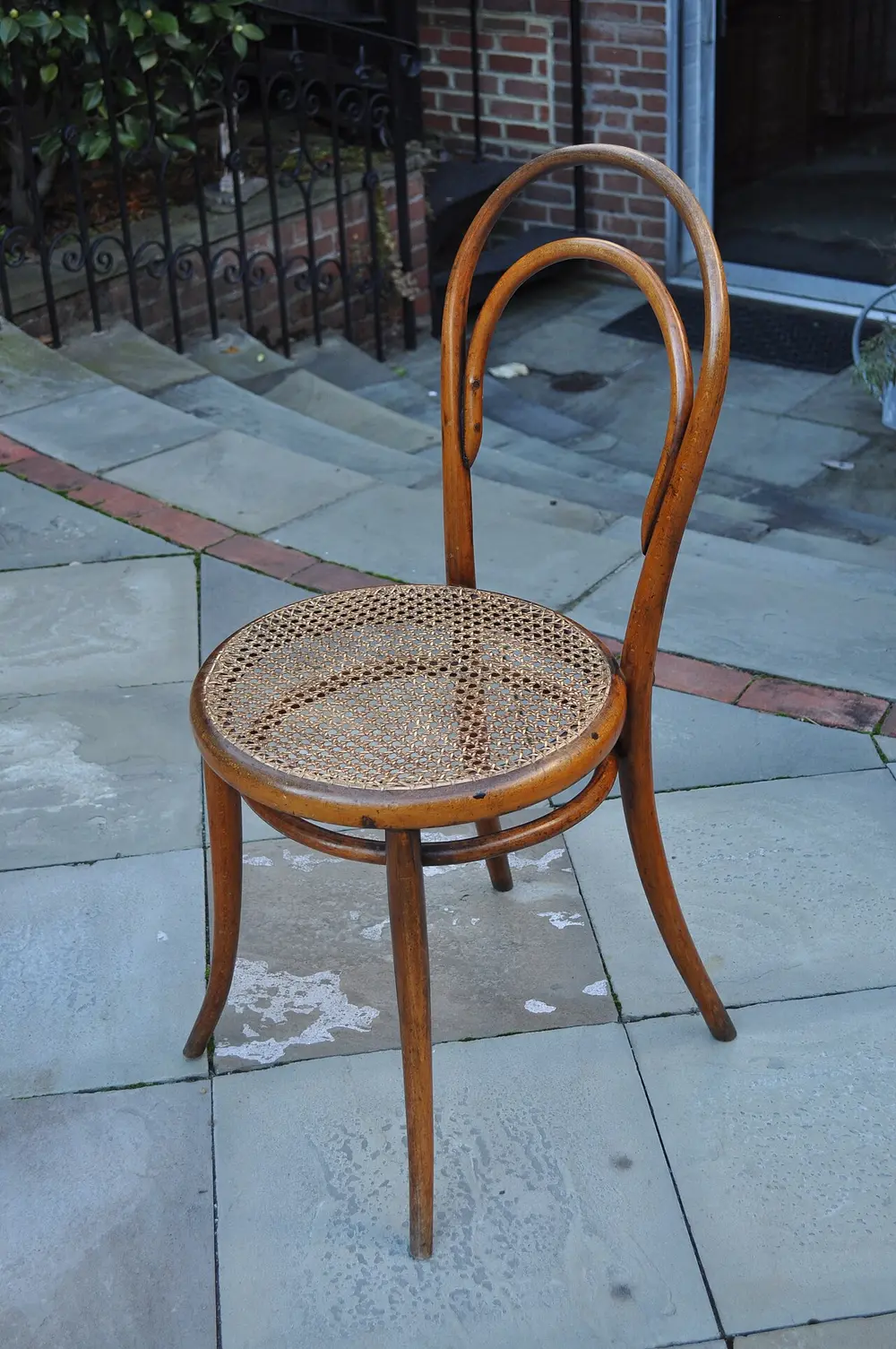
A dark brown bentwood chair with a round woven cane seat, a back made of two curved wooden loops, and a wooden ring joining the four legs, standing on a stone pavement.
Picture: Henry Townsend. FAL.

Thonet No. 14 chair

Also called The bistro chair; the "chair of chairs"

Where
Gebrüder Thonet, Vienna, Austria
When
1859
Who
Michael Thonet, a German-born cabinet maker working in Vienna
Made with
Beech rods softened in steam and bent in iron moulds, with a cane seat; six wooden parts, ten screws and two nuts

Thonet's big discovery was bentwood: he heated strips of solid beech with steam until they could be bent into smooth curves, then dried them in metal moulds so they kept their shape. That let him build a light, strong café chair from just six bent parts held by ten screws and two nuts, which factory workers without special skills could put together. The parts of 36 chairs fitted in a crate of one cubic metre, so the chairs could be shipped flat-packed all over the world and assembled where they were sold. Gebrüder Thonet sold about 50 million No. 14s between 1859 and 1930, and the chair is still made today. It is often called the first mass-produced piece of furniture.

Spot it by

Curved wooden rods with no sharp corners, a round cane seat, a loop-shaped back and a ring between the legs.

Remember

Six pieces, ten screws, two nuts, 36 to a crate.

Don't confuse

Breuer's Wassily Chair (1925) is also made of bent parts, but they are steel tubes, not wood. See Design movements.
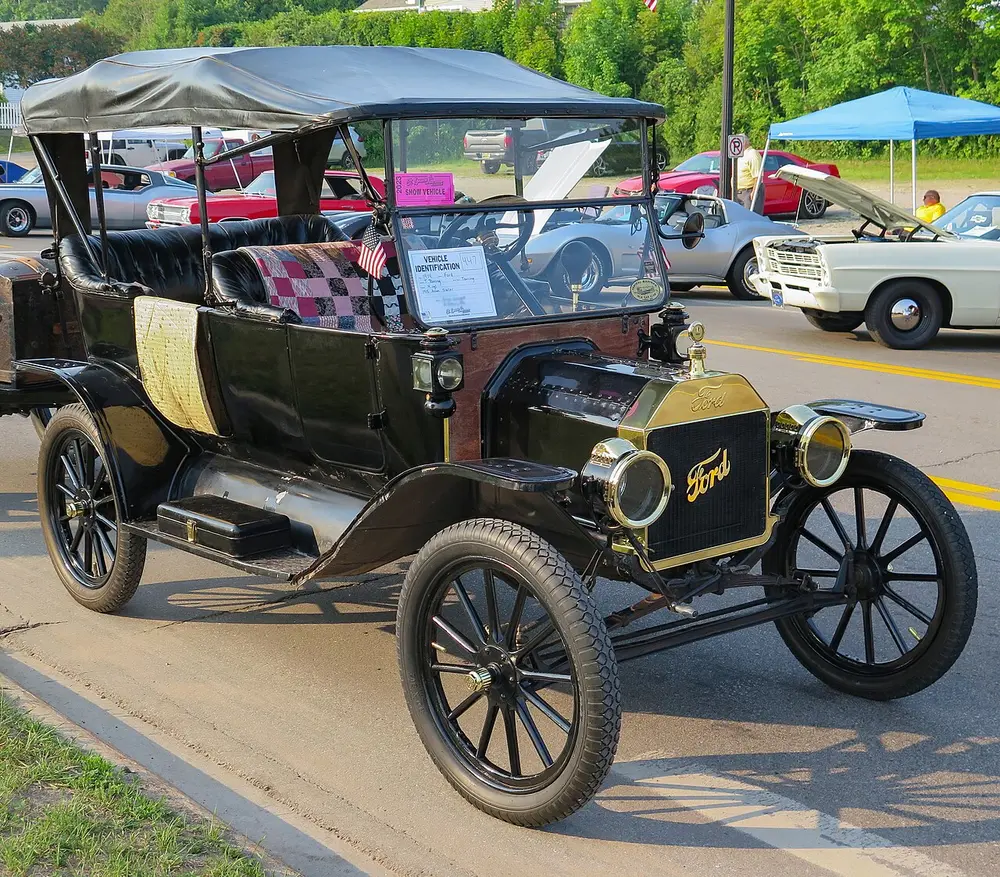
A black 1914 Ford Model T touring car with its fabric roof up, large round headlamps, thin spoked wheels and the Ford name on its radiator, parked at an outdoor car show.
Picture: Elise240SX. CC BY-SA 4.0.

Ford Model T

Also called The Tin Lizzie

Where
Ford Motor Company, Detroit and then Highland Park, Michigan, USA
When
Made from October 1908 to May 1927
Who
Henry Ford, with the engineers Childe Harold Wills, Joseph Galamb and Eugene Farkas
Made with
Standard, interchangeable steel parts, put together on a moving assembly line from 1913

Early cars were hand-built and costly, toys for the rich. Henry Ford wanted a simple, tough car that a middle-class family could buy, drive and repair, and the Model T went on sale in 1908 at 850 dollars. In 1913 his Highland Park factory started a moving assembly line: the half-built car travelled past rows of workers, and each worker did one small job with parts that fitted every car. Cars came off the line far faster, so the price kept falling and sales kept rising. When the 15 millionth Model T rolled out on 26 May 1927, the car had changed how Americans lived, worked and travelled. Ford joked that a customer could have any colour "so long as it is black".

Spot it by

A tall, boxy black car with a flat windscreen, big round lamps, thin spoked wheels and a fold-down roof.

Remember

Model T, 1908; moving line, 1913; 15 million by 1927.

Don't confuse

Ford did not invent the car. His contribution was the way of making it, which spread to almost every factory.

Small things that went everywhere

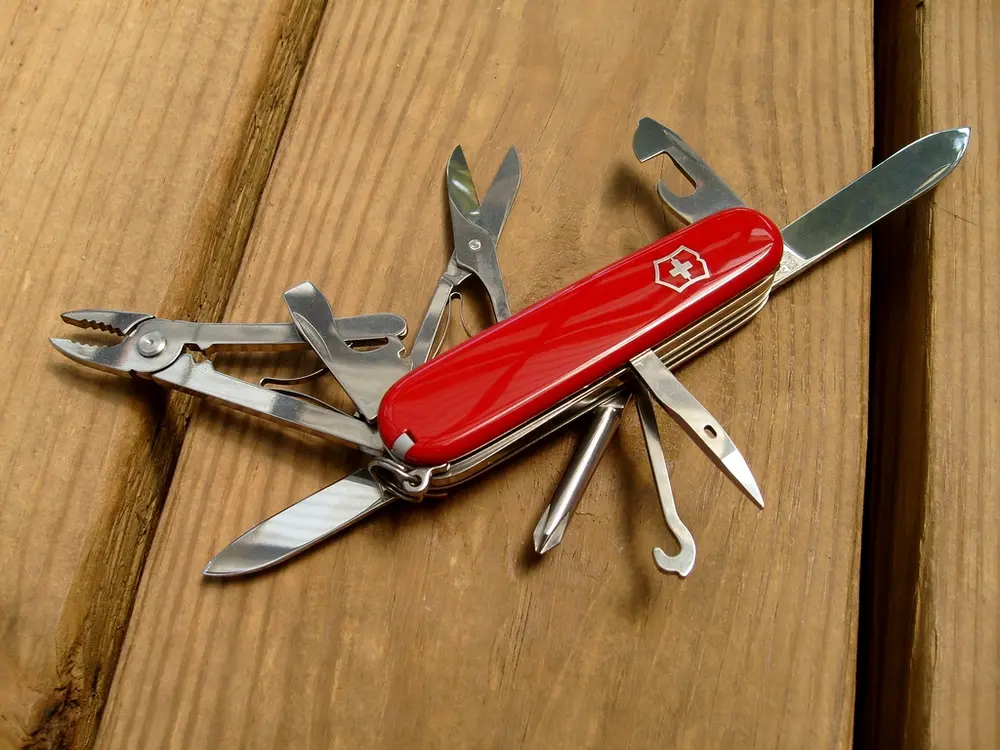
A red Victorinox pocket knife with a white cross on a shield on its handle, its blades, scissors, saw, corkscrew and other tools all opened out, lying on a wooden table.
Picture: James Case from Philadelphia, Mississippi, U.S.A. CC BY 2.0.

Swiss Army knife

Also called The Swiss officer's and sports knife

Where
Ibach, Schwyz, Switzerland
When
Soldier's knife 1891; officer's knife patented on 12 June 1897
Who
Karl Elsener, whose company became Victorinox
Made with
Steel blades and tools folding into one handle, held by springs; red plastic handles on most knives sold to the public

In 1891 the Swiss Army began issuing its soldiers a folding knife with a blade, a can opener and a screwdriver for taking their rifles apart. The first batch came from a German maker, so Karl Elsener, a cutler in Ibach, set out to make them in Switzerland. In 1897 he patented an improved knife for officers, with tools on both sides of the handle held by a clever shared spring; this is the knife the world now calls the Swiss Army knife. Its idea, many tools folded into one pocket-sized object, became a phrase: anything that does many jobs is called a "Swiss Army knife". In 1921 the company took the name Victorinox, joining his mother's name, Victoria, with "inox", the French word for stainless steel.

Spot it by

A red handle with a white cross on a shield, and many fold-out tools.

Remember

Victorinox is Victoria plus inox.
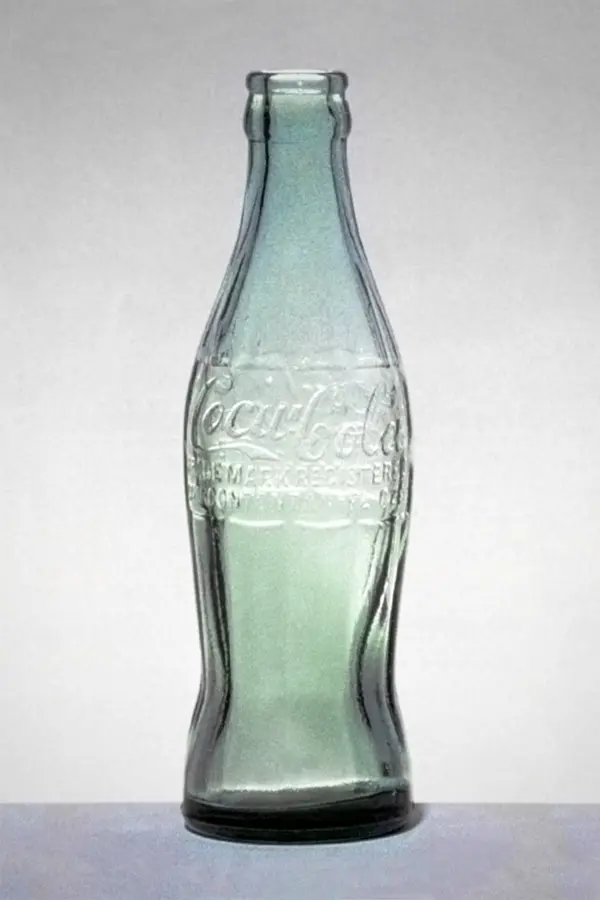
A pale green glass Coca-Cola bottle with fine vertical ribs and the Coca-Cola name moulded into the glass, narrow at the neck, bulging in the middle and pinched near the base.
Picture: nagualdesign. CC0.

Coca-Cola contour bottle

Also called The hobble-skirt bottle

Where
Root Glass Company, Terre Haute, Indiana, USA
When
Designed and patented in 1915; on sale from 1916
Who
Earl R. Dean, a bottle designer at the Root Glass Company
Made with
Moulded glass

In 1915 Coca-Cola, tired of copycat drinks in look-alike bottles, asked glassmakers for a bottle so distinctive that you could recognise it by touch in the dark, or from a single broken piece. At Root Glass, Dean's team went to a library to look up the coca leaf and the kola nut. They found neither, but a picture of a ribbed, gourd-shaped cocoa pod in the Encyclopaedia Britannica gave Dean the idea for the curves and ribs. The design was patented in November 1915, and the new bottle was on sale in 1916. The shape became so well known that the bottle works like a logo you can hold, a famous lesson in packaging design.

Spot it by

Curvy glass with a bulge in the middle, vertical ribs and the name in raised letters.

Remember

Inspired by a cocoa pod, not by the coca plant.

Don't confuse

Raymond Loewy is often wrongly named as the designer. He was part of the team that reworked the bottle for bigger sizes in 1955; the 1915 original is Dean's. See Designers to know.

After the war: plastic, scooters and play

After the Second World War, factories that had made weapons and aircraft turned to things for ordinary homes. New plastics could be moulded quickly and cheaply into exact shapes in any colour.

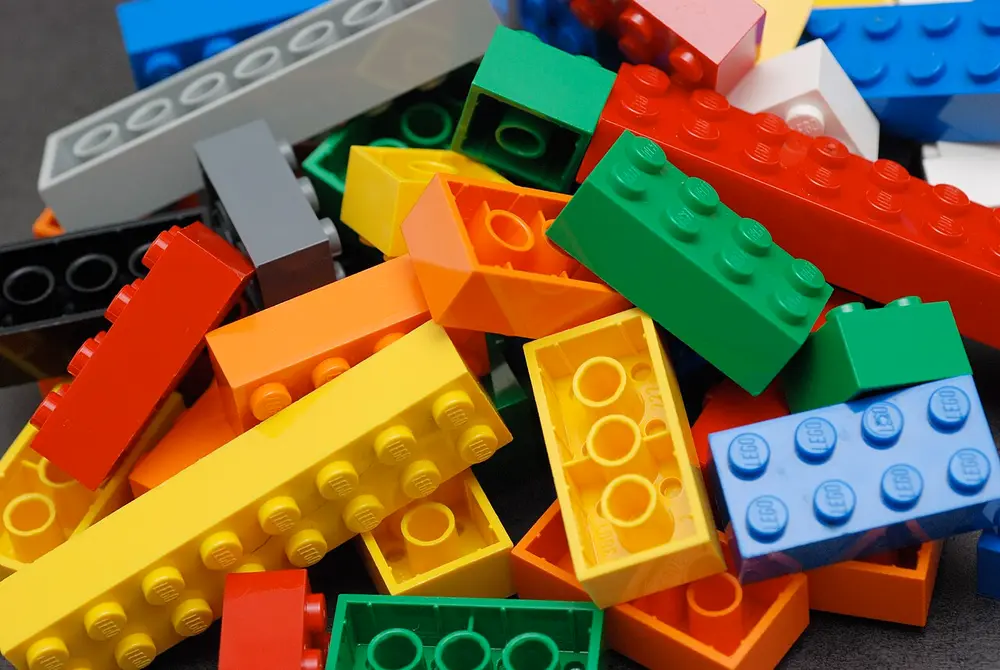
A heap of Lego bricks in red, yellow, green, blue, orange and grey, of different lengths, with the round studs on their tops showing.

Plastic moulding made bright, exact, identical parts cheap. Every Lego brick here, whatever its size or colour, locks onto every other.

Picture: Alan Chia. CC BY-SA 2.0.
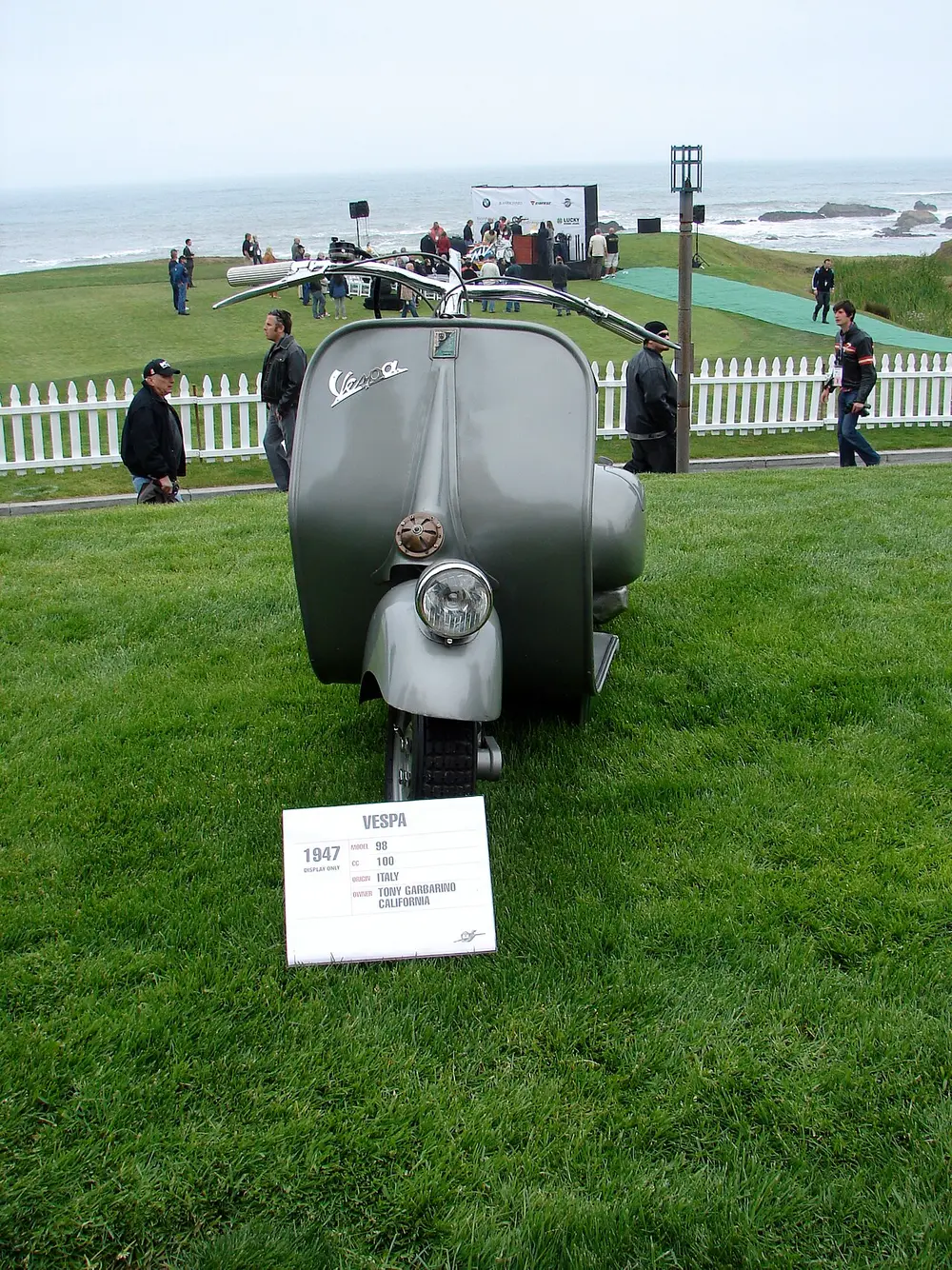
A grey 1947 Vespa scooter seen from the front on a lawn at an outdoor show, with its rounded front shield and single headlamp, and a small information sign in front of it.
Picture: Jay Cross. CC BY 2.0.

Vespa 98

Where
Piaggio, Pontedera, Italy
When
Patented on 23 April 1946
Who
Corradino D'Ascanio, an aircraft engineer, for Enrico Piaggio
Made with
A pressed-steel body that is also the frame, with the engine covered beside the rear wheel

After the war Piaggio's aircraft factory at Pontedera lay in ruins, and Italy needed cheap transport. Enrico Piaggio asked D'Ascanio, who disliked motorcycles as dirty and awkward, to design something better. His scooter had a step-through shape, so you sat on it as on a chair instead of sitting astride; the engine was hidden under covers so it could not dirty your clothes; and the gears were changed from the handlebar. The body itself carried the load, an idea from aircraft. On seeing the prototype Piaggio said it looked like a wasp, "vespa" in Italian, and the name stuck. The 1953 film Roman Holiday, with Audrey Hepburn and Gregory Peck riding one through Rome, made it a symbol of freedom.

Spot it by

A rounded steel body, a front shield that protects your legs, a flat floor and a swollen rear cover over the engine.

Remember

Vespa means wasp: a fat back, a thin waist.

Don't confuse

The Bajaj Chetak looks almost the same because it began as the Vespa Sprint made in India.
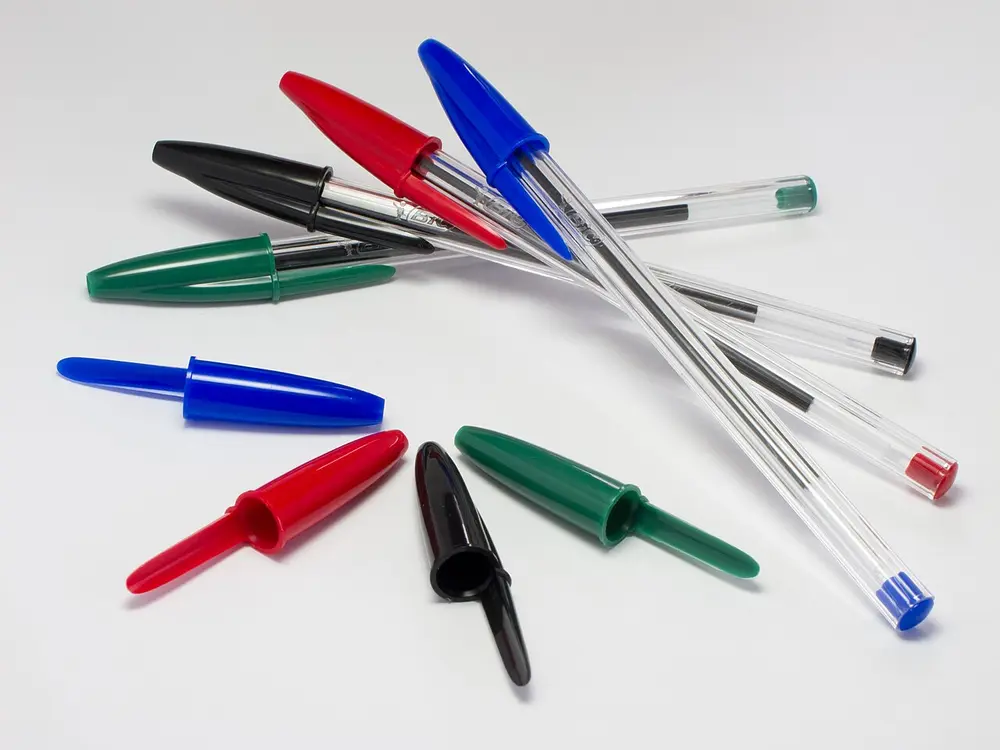
Four clear, six-sided Bic Cristal ballpoint pens lying on a white surface with their blue, red, black and green caps beside them.
Picture: Carlos Delgado. CC BY-SA 3.0.

Bic Cristal

Where
Société Bic, Clichy, France
When
December 1950
Who
Marcel Bich's company; designed by its Décolletage Plastique design team
Made with
Clear polystyrene barrel, polypropylene cap and ink tube, and a tiny tungsten carbide ball

The ballpoint pen was invented by László Bíró, a Hungarian, whose design used a tiny rolling ball to spread thick ink. Marcel Bich licensed Bíró's patent, developed an ink that neither leaked nor clogged, and made pens so cheaply that people simply threw them away when they ran dry, a new habit: the disposable product. The barrel has six sides like a pencil, so it is easy to grip and does not roll off a desk, and it is clear so you can see how much ink is left. A tiny hole in the barrel keeps the air pressure the same inside and out, and since 1991 the cap has had a hole too, so that a swallowed cap is less likely to block someone's breathing. It is the world's best-selling pen: the 100 billionth was sold in September 2006. The Museum of Modern Art in New York keeps one in its collection.

Spot it by

A clear six-sided barrel, a coloured cap and end plug, and the ink tube visible inside.

Remember

Bíró invented the ballpoint; Bich made it throwaway cheap.
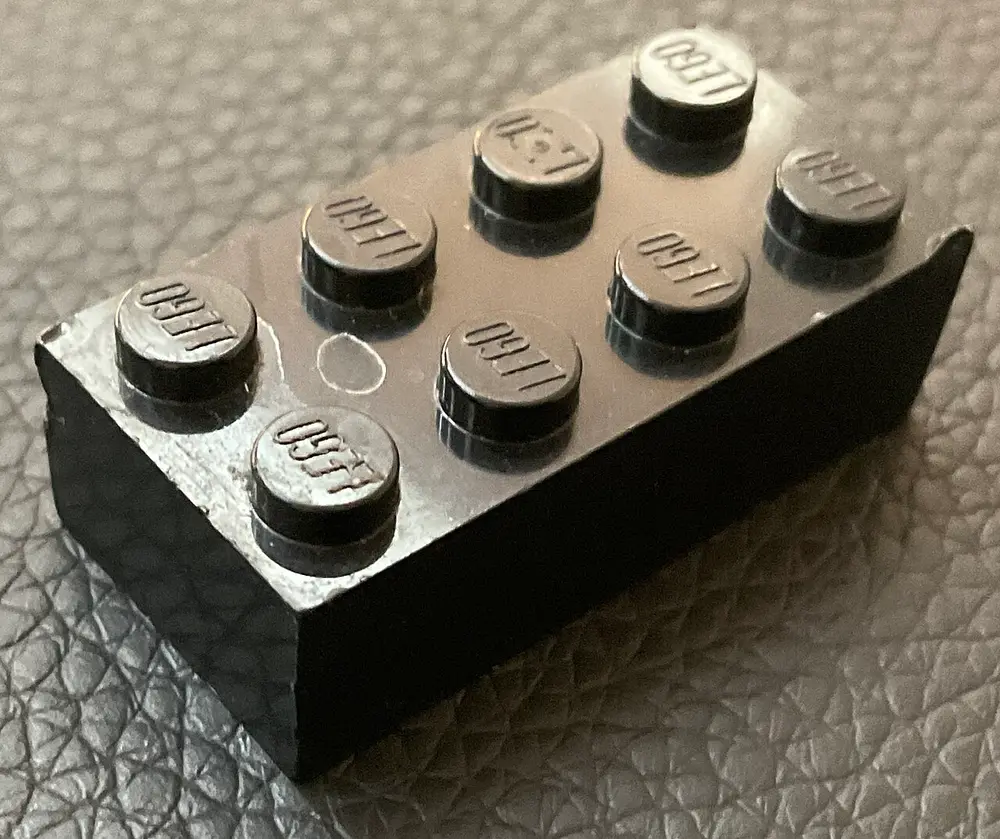
A single black Lego brick with two rows of four round studs on top, each stud stamped with the word LEGO, resting on a grey leather surface.
Picture: Ziongarage. CC0.

Lego brick

Where
The Lego Group, Billund, Denmark
When
Plastic bricks from 1949; the modern brick patented on 28 January 1958
Who
The carpenter Ole Kirk Christiansen and his son Godtfred Kirk Christiansen
Made with
Moulded plastic, ABS since 1963

Ole Kirk Christiansen made wooden toys in Billund from 1932, and called his company Lego from the Danish words "leg godt", meaning "play well". In 1949 it began making plastic "Automatic Binding Bricks" with studs on top, but they did not grip each other well. In 1958 the company patented a new brick with hollow tubes underneath that clamp the studs of the brick below, so models stay together and pull apart cleanly. Godtfred saw the bricks as a whole system: every piece fits every other, and bricks made in 1958 still lock onto bricks made today. A tiny change of shape turned a toy into a way of building anything.

Spot it by

A rectangular plastic brick with round studs on top, each stamped LEGO, in bright colours or black and white.

Remember

Leg godt: play well. 1958: tubes under the studs.

Pictures and music to go

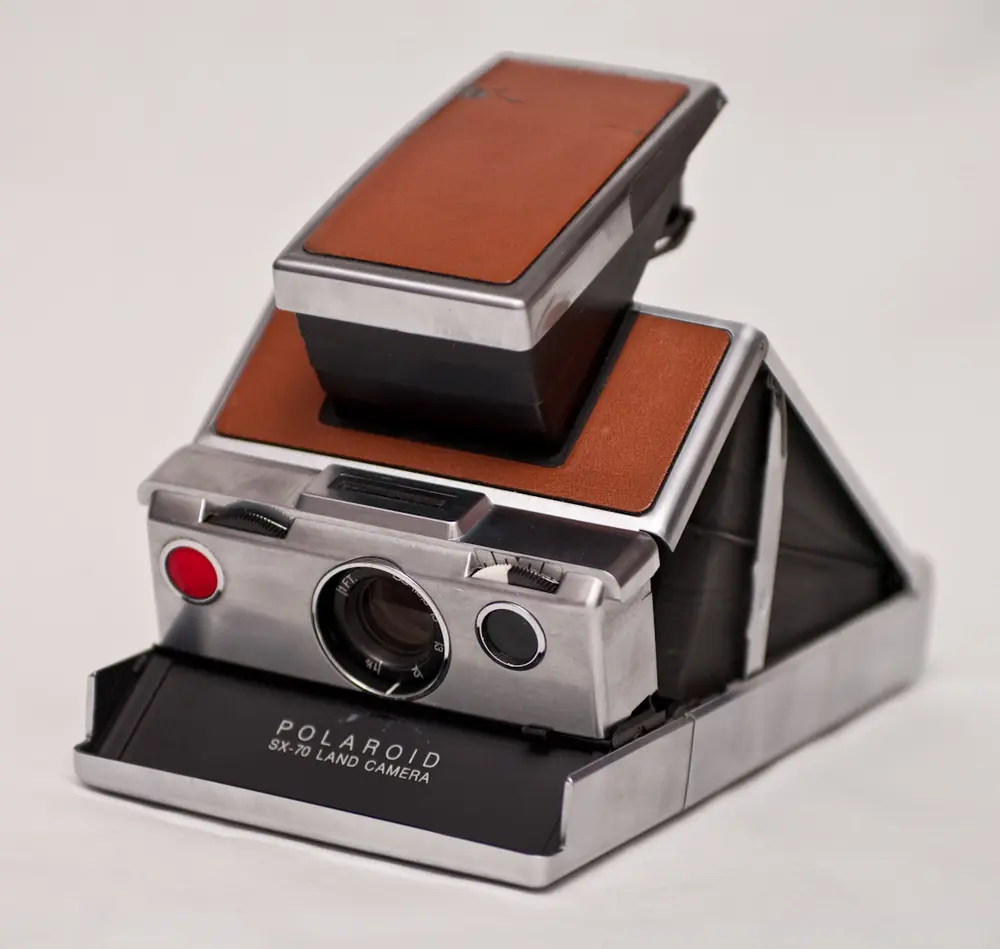
A Polaroid SX-70 camera opened up into its triangular shape, with a brushed silver metal body, brown leather-look panels, and the lens and a red shutter button on the front.
Picture: Thomas Backa from Turku, Finland. CC0.

Polaroid SX-70

Where
Polaroid Corporation, USA
When
Announced in April 1972
Who
Edwin Land, Polaroid's founder and inventor of instant photography
Made with
Metal and leather-look panels; a folding body with mirrors inside

Earlier Polaroid cameras gave you an instant print, but you had to peel it apart, wait, and keep the chemicals off your hands. The SX-70 pushed the photo out on its own, and the picture slowly appeared in your hand within minutes. This was integral film: everything needed to develop the photo is sealed inside each print. The camera folds flat enough to slip into a coat pocket, and it is a single-lens reflex camera, meaning you look through the same lens that takes the picture. When Land introduced it, he pulled a folded SX-70 from his jacket and took five pictures in about ten seconds. Instant photos became a social habit: you took a picture and shared it on the spot.

Spot it by

A folding, wedge-shaped camera in silver metal and brown leather-look panels.

Remember

The SX-70's photo developed in your hand.
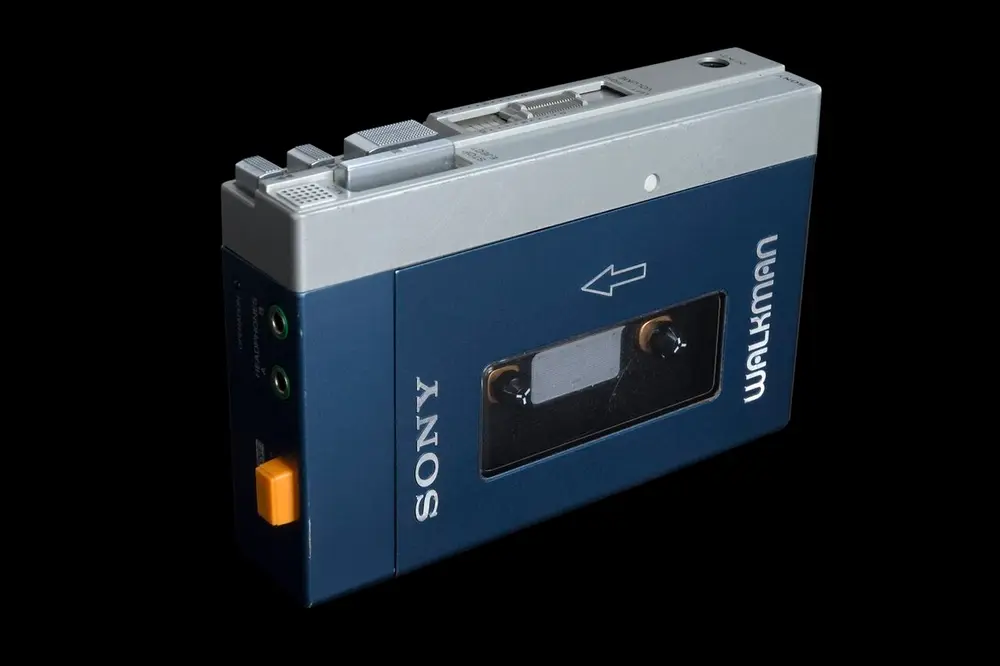
A blue and silver Sony Walkman cassette player with a window showing the tape inside, an orange button on the side and the word WALKMAN on its edge, photographed against a black background.
Picture: Anna Gerdén. CC BY-SA 3.0.

Sony Walkman TPS-L2

Where
Sony, Tokyo, Japan
When
On sale in Japan from 1 July 1979
Who
Made at the request of Sony co-founder Masaru Ibuka and launched by chairman Akio Morita
Made with
A metal-cased cassette player with light headphones

Ibuka wanted to listen to music on long business flights. Sony's engineers took a small tape recorder used by reporters, removed its speaker and recording parts, and added stereo sound and light headphones. Morita saw that young people would love it and pushed it into shops. For the first time you could carry your own music anywhere and listen alone while walking, travelling or exercising, which was a completely new habit. "Walkman" became the everyday word for any personal stereo. Sony stopped making cassette Walkmans in 2010, but the idea lives on in every phone and pair of earphones.

Spot it by

A small box the size of a cassette case, with a tape window, headphones and Sony and Walkman written on it.

Remember

1979: music that walks with you.
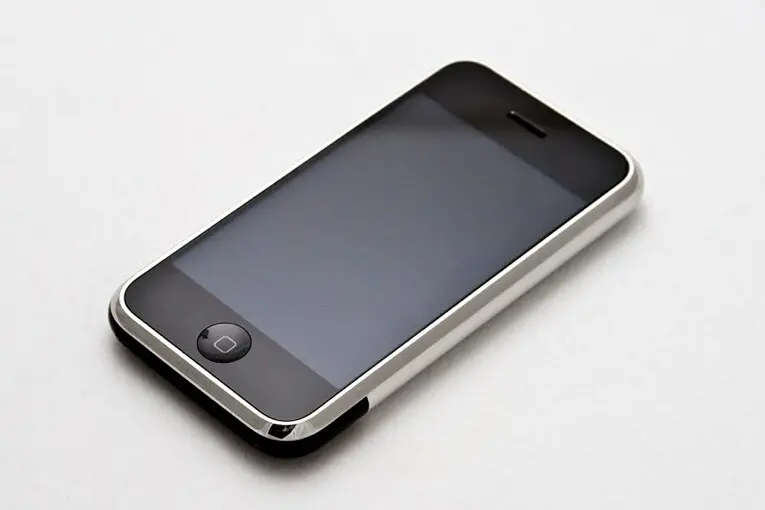
The first iPhone lying at an angle on a white surface, with a black glass screen filling the front, one round button below it and a silver metal edge.
Picture: Carl Berkeley from Riverside California. CC BY-SA 2.0.

iPhone (first generation)

Where
Apple, California, USA
When
Announced on 9 January 2007; on sale in the US from 29 June 2007
Who
Apple under Steve Jobs; its design team was led by Jony Ive
Made with
A glass multi-touch screen, aluminium back and one home button

Phones in 2007 had small screens and rows of plastic keys. Steve Jobs presented the iPhone at Macworld in San Francisco as three things in one: a phone, an iPod for music and an internet device. Almost its whole front was a multi-touch screen that you worked with your fingers, pinching and swiping, and a keyboard appeared on the screen only when you needed one. When the App Store opened in 2008, anyone could add new programs, and the phone became a pocket computer, camera, map and music player. Nearly every smartphone since has followed its slab-of-glass shape. Jony Ive's other work is in Designers to know.

Spot it by

A rounded black glass slab with one round button below the screen and no keyboard.

Remember

2007: the keyboard moved onto the screen.

Indian icons

Many of India's best-loved objects began as foreign designs made here under licence, which means with the original maker's permission and drawings. After independence, rules favoured making things in India, so these designs were built here for decades and became Indian in their own right. Others were Indian from the start. For the people and institutions behind Indian design, see Design in India.

Indian object Based on Original maker
Hindustan Ambassador (1958) Morris Oxford Series III (1956) Morris Motors, Britain
Bajaj Chetak (1972) Vespa Sprint Piaggio, Italy
Royal Enfield Bullet, Madras (1955) Royal Enfield Bullet (1932) Royal Enfield, Redditch, England
HMT watches (1961) Made with Japanese help Citizen Watch, Japan
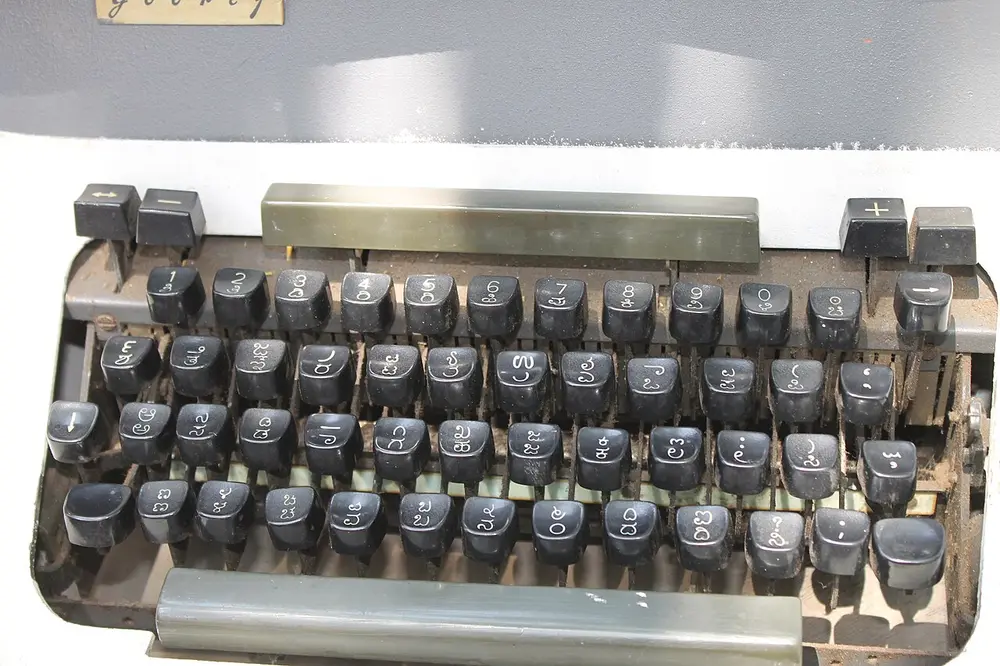
Close-up of the keyboard of an old grey Godrej typewriter, with Kannada letters on its rounded black keys and part of a Godrej name plate at the top.
Picture: Rohini. CC BY-SA 4.0.

Godrej almirah and typewriter

Where
Godrej & Boyce, Mumbai
When
Steel almirah from 1923; typewriter from 1955
Who
Godrej & Boyce, founded in 1897 by Ardeshir Godrej and his brother Pirojsha
Made with
Pressed and painted steel

Godrej began in 1897 by making locks, then fire-proof and burglar-proof safes. In 1923 it made a steel almirah: a plain grey cupboard with shelves and a locker built inside. Later sold as the Storwel, it became the cupboard where Indian families kept their clothes, jewellery and important papers. In 1955 Godrej made India's first home-grown typewriter. For decades Godrej typewriters, including models with keys in Indian languages like this Kannada one, photographed outside a government office in Mysuru, clattered in offices and at typing desks outside government buildings. Godrej stopped making typewriters in 2009 and is often called the world's last maker of office typewriters.

Spot it by

The Godrej name on sturdy grey steel, whether a tall cupboard or a heavy office typewriter.

Remember

Godrej: locks in 1897, the almirah in 1923, the typewriter in 1955.
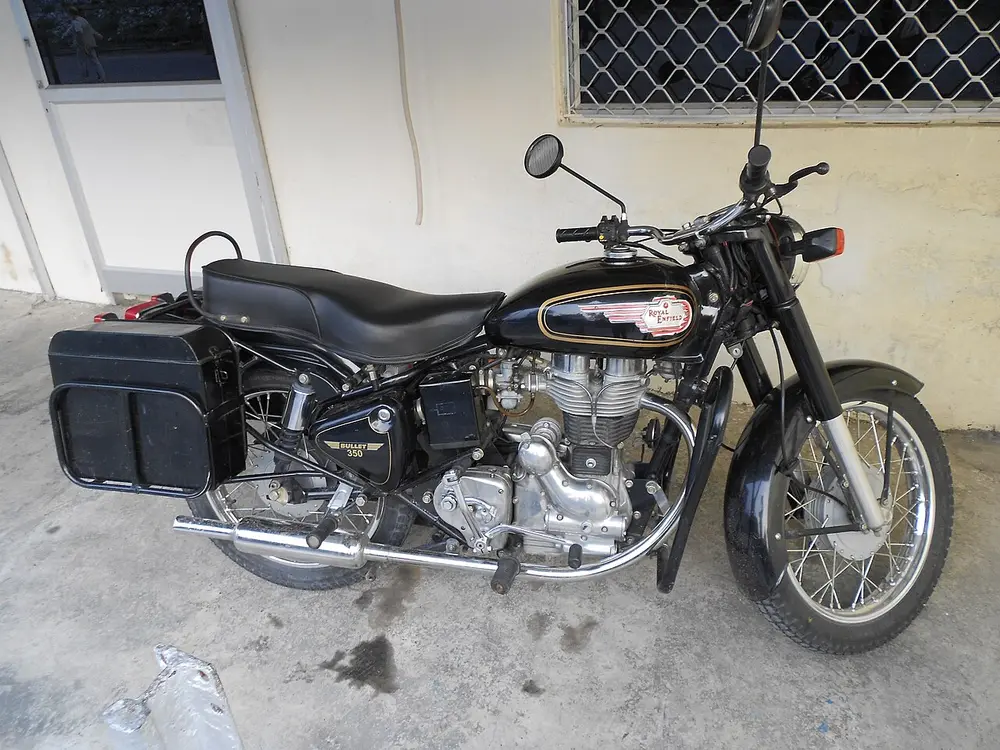
A black Royal Enfield Bullet 350 motorcycle with a chrome engine, a round headlamp and black saddlebags, parked in front of a white building with a barred window.
Picture: Yann (talk). CC BY-SA 4.0.

Royal Enfield Bullet

Where
First made in Redditch, England; made in Madras (now Chennai) since 1955
When
The Bullet name since 1932; Indian production since 1955
Who
Royal Enfield of England; then Enfield India, set up with Madras Motors
Made with
A heavy steel frame and a 350 cc single-cylinder engine

The first Bullet was made in England in 1932. In the early 1950s the Indian Army chose the Bullet for patrolling India's borders, and in 1955 Royal Enfield and Madras Motors set up Enfield India to assemble it in Madras, first from kits shipped from England. By 1962 every part was made in India. The British company changed its bikes over the years, but the Indian factory kept making almost the same machine for the army and for riders who loved its toughness. The Eicher group took over Enfield India in 1994 and renamed it Royal Enfield. The Bullet is often said to have the longest production run of any motorcycle.

Spot it by

A classic black motorcycle with lots of chrome, a round headlamp, a teardrop fuel tank with fine lines painted on it, and a single fat exhaust pipe.

Remember

An English bike that became Indian in Madras in 1955.
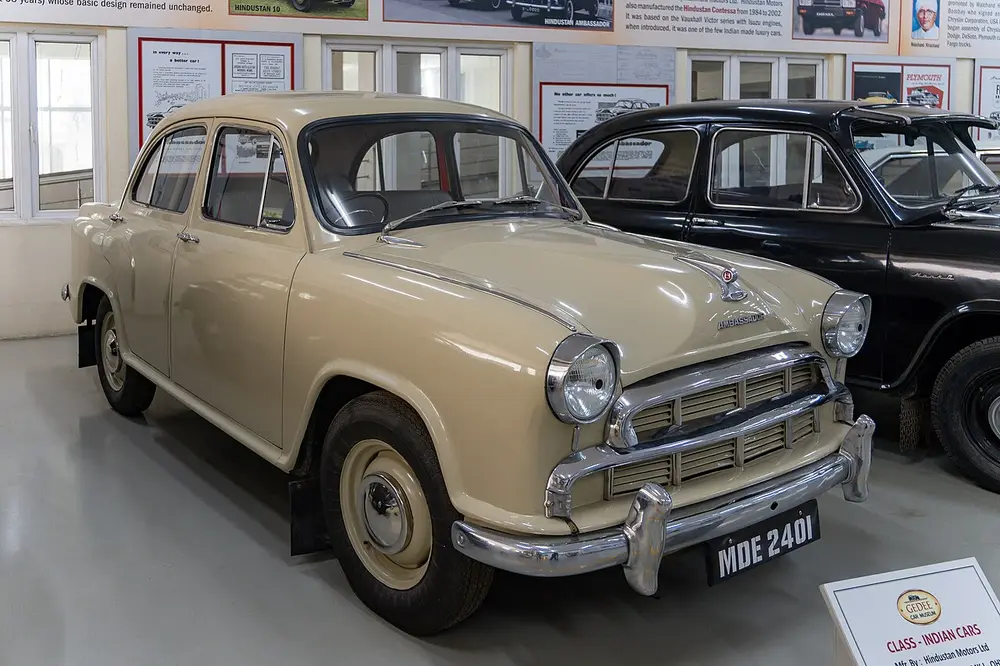
A cream Hindustan Ambassador Mark I car with a rounded body, a chrome grille and bumpers and round headlamps, on display in a car museum.
Picture: Rainer Halama. CC BY-SA 4.0.

Hindustan Ambassador

Also called The Amby

Where
Hindustan Motors, Uttarpara, West Bengal
When
1958 to 2014
Who
Hindustan Motors, from the British Morris Oxford Series III
Made with
A steel monocoque body, meaning the body and frame are one strong shell

In 1956 Morris Motors sold the drawings and tools of its Morris Oxford Series III to Hindustan Motors, which turned it into the Ambassador. With few changes it stayed in production for over 50 years. Its strong body, roomy seats and simple, easily repaired engine suited India's roads, and for decades it was the car of government officials and the taxi of choice, including Kolkata's famous yellow taxis. Private buyers moved to newer, lighter cars from the 1980s, and production ended in May 2014. In 2017 the Ambassador name was sold to the French car group PSA, the owner of Peugeot.

Spot it by

A rounded, humped car with a chrome grille, round headlamps and a high roof; often white, black or yellow as a taxi.

Remember

A 1956 British car that became India's king of the road until 2014.
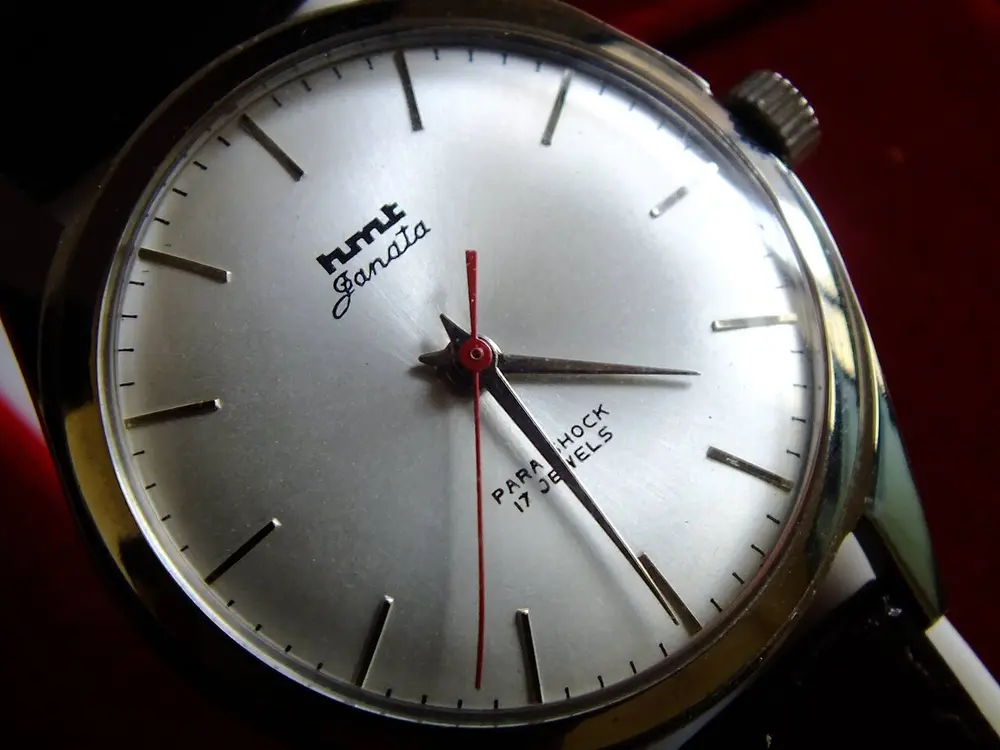
Close-up of an HMT Janata wristwatch with a plain silver dial, thin line markers instead of numbers, a red seconds hand and the words HMT Janata near the top.
Picture: Ronie88. CC BY-SA 3.0.

HMT Janata

Where
HMT watch factory, Bengaluru
When
The factory opened in 1961
Who
HMT (Hindustan Machine Tools), a government company, with Citizen Watch of Japan
Made with
A hand-wound mechanical movement in a steel case

Until 1961 India imported most of its watches. HMT, a public-sector company that made machine tools, set up a watch factory in Bangalore with help from Citizen of Japan, and Prime Minister Jawaharlal Nehru released its first batch of watches. The plain, sturdy, hand-wound Janata ("the people") became its most popular model, and in the 1970s and 1980s HMT was India's biggest supplier of wristwatches. Heavy losses later forced the watch division to close in 2016. Old Janatas are now collectors' pieces.

Spot it by

A simple round watch with a plain dial and the small HMT name above the model name.

Remember

HMT 1961, made with Citizen; Janata means "the people".
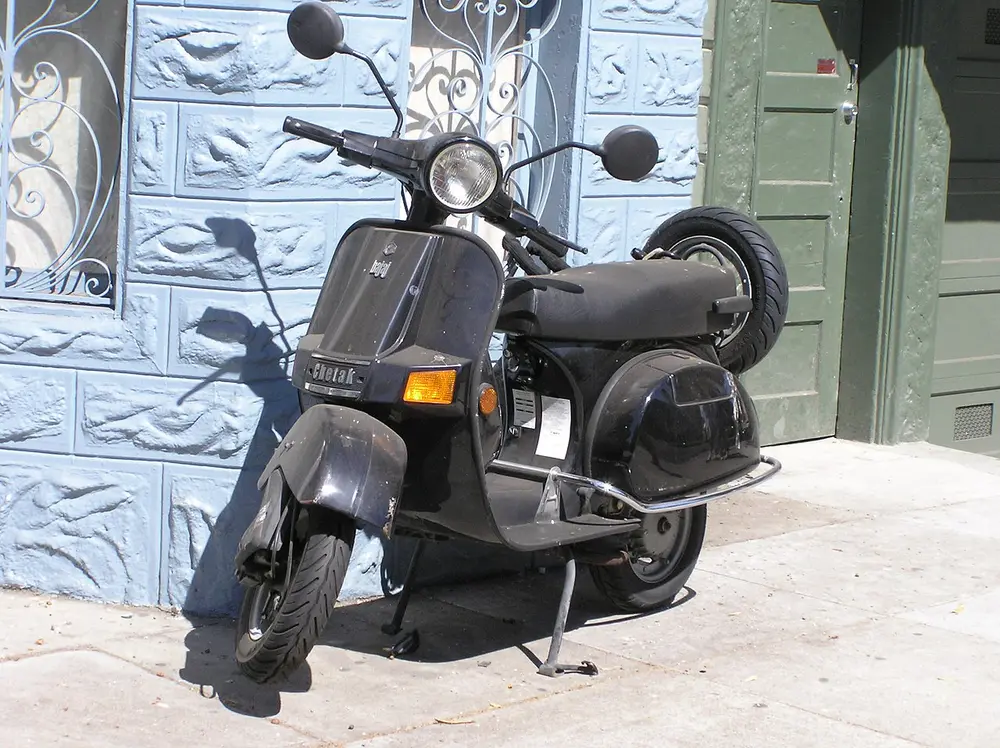
A dark grey Bajaj Chetak scooter with a rounded front shield, a long black seat and a spare wheel at the back, parked on a pavement in front of a pale blue patterned wall.
Picture: Dharmesh Patel. CC BY 2.0.

Bajaj Chetak

Where
Bajaj Auto, India
When
1972; petrol models until the mid-2000s; an electric Chetak since 2019
Who
Bajaj Auto, under Rahul Bajaj; based on Piaggio's Vespa Sprint
Made with
A pressed-steel body with a two-stroke engine beside the rear wheel

From the 1960s Bajaj made Vespas in India under licence from Piaggio. In 1971 the licence was not renewed because of new rules limiting foreign control of brands, but Bajaj could still use the tools and know-how it had, so from 1972 it sold the scooter under its own name: Chetak, after the horse of the warrior king Maharana Pratap. It carried whole families, its "Hamara Bajaj" ("Our Bajaj") advertisements became famous, and buyers waited years for delivery. Bajaj stopped making scooters in the mid-2000s to focus on motorcycles, then brought the Chetak name back on an electric scooter unveiled on 16 October 2019.

Spot it by

A Vespa-like rounded steel scooter with a spare wheel; the Bajaj name on the front shield.

Remember

Chetak was Maharana Pratap's horse; the scooter was a Vespa made Indian.

Don't confuse

The Vespa 98 of 1946 is the Italian original. The Chetak is the later Vespa Sprint design, built by Bajaj.
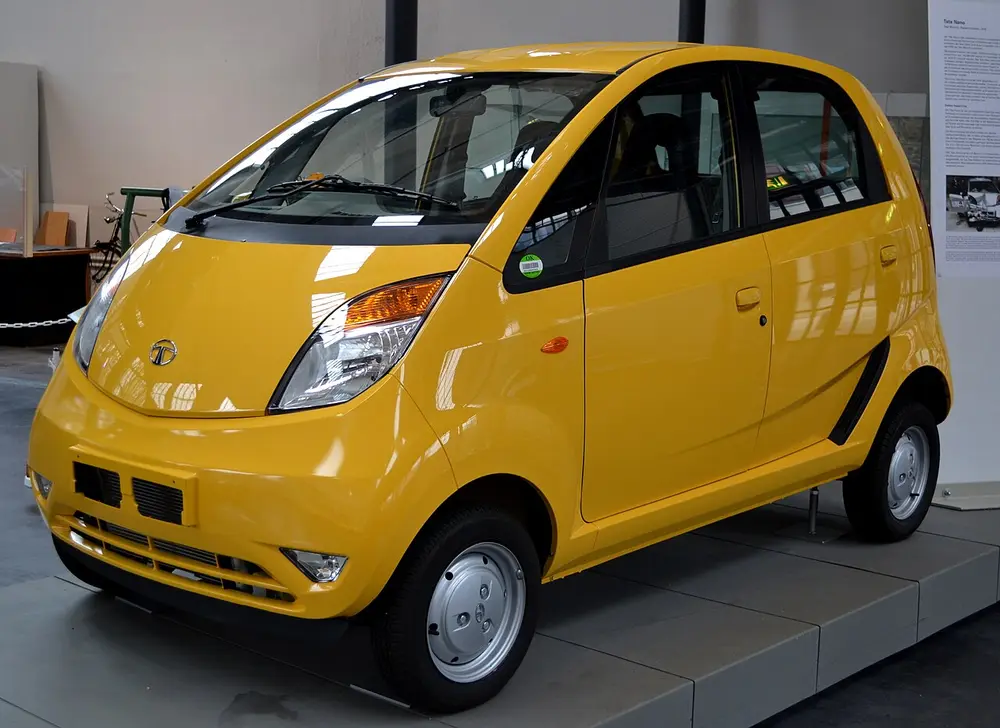
A small, tall, rounded bright yellow Tata Nano car with big headlamps, on display in a museum hall.
Picture: High Contrast. CC BY 3.0 de.

Tata Nano

Also called The one lakh car; the people's car

Where
Tata Motors; built at Sanand, Gujarat
When
Unveiled on 10 January 2008; on sale from 2009; made until 2018
Who
Tata Motors, from an idea of its chairman Ratan Tata
Made with
A small, light steel body with a 624 cc engine

Ratan Tata kept seeing families of four squeezed onto one scooter, with a child in front and a baby on the mother's lap, and wanted to give them a safer choice at a price they could afford: one lakh rupees. Tata's engineers questioned every part to cut cost, down to a single windscreen wiper and three nuts on each wheel instead of four. It was unveiled at the Auto Expo in New Delhi in 2008 as the world's cheapest car. Its factory had to move from Singur in West Bengal to Sanand in Gujarat after protests over farmland, which delayed it. Buyers did not want a car seen as "the cheapest", early fires hurt its name, and production ended in 2018. The Nano shows that people buy how a product makes them feel, not just its price. This one is in the Deutsches Museum in Munich.

Spot it by

A tiny, tall egg-shaped car with big swept-back headlamps and short overhangs.

Remember

2008, the one lakh car.

Who made what

Exams like to ask which country or company an object or brand comes from. This table puts the makers and years in one place.

Object Maker Country Year
No. 14 chair Gebrüder Thonet (Michael Thonet) Austria 1859
Swiss Army knife Karl Elsener (Victorinox) Switzerland 1897
Model T Ford Motor Company (Henry Ford) USA 1908
Contour bottle Root Glass Company (Earl R. Dean) for Coca-Cola USA 1915
Steel almirah Godrej & Boyce India 1923
Vespa Piaggio (Corradino D'Ascanio) Italy 1946
Bic Cristal Société Bic (Marcel Bich) France 1950
Royal Enfield Bullet Enfield India, Madras India (from England) 1955
Godrej typewriter Godrej & Boyce India 1955
Ambassador Hindustan Motors India (from Britain) 1958
Lego brick The Lego Group (Godtfred Kirk Christiansen) Denmark 1958
HMT Janata HMT, with Citizen India 1961
SX-70 Polaroid (Edwin Land) USA 1972
Chetak Bajaj Auto India (from Italy) 1972
Walkman Sony Japan 1979
iPhone Apple USA 2007
Nano Tata Motors India 2008

Past papers also ask you to match makers with their creations, such as James Dyson with the cyclone vacuum cleaner and Dean Kamen with the Segway (CEED 2018), or brands with their home countries, such as Godrej with India and Haier with China (NID 2020).

Timeline

  1. 1859

    Thonet's No. 14 chair goes on sale in Vienna

  2. 1891

    The Swiss Army issues its first soldier's knife; Karl Elsener starts making them in Ibach

  3. 1897

    Elsener patents the officer's knife, today's Swiss Army knife

  4. 1908

    Ford launches the Model T

  5. 1913

    Ford's moving assembly line starts at Highland Park

  6. 1915

    Earl R. Dean designs the Coca-Cola contour bottle at Root Glass

  7. 1923

    Godrej makes its first steel almirah

  8. 1927

    The 15 millionth Model T leaves the line on 26 May

  9. 1932

    The first Royal Enfield Bullet, in England; Ole Kirk Christiansen starts making wooden toys in Billund

  10. 1946

    Piaggio patents the Vespa on 23 April

  11. 1949

    Lego's first plastic bricks

  12. 1950

    The Bic Cristal goes on sale in France

  13. 1955

    Enfield India begins assembling Bullets in Madras; Godrej makes India's first home-grown typewriter

  14. 1958

    Lego patents its modern brick; Hindustan Motors launches the Ambassador

  15. 1961

    HMT's watch factory opens in Bangalore with Citizen of Japan

  16. 1972

    Polaroid's SX-70 and the Bajaj Chetak

  17. 1979

    Sony launches the Walkman on 1 July

  18. 2007

    Apple announces the iPhone on 9 January

  19. 2008

    Tata unveils the Nano at the Auto Expo in New Delhi

  20. 2009

    Godrej stops making typewriters

  21. 2014

    Hindustan Motors stops making the Ambassador

  22. 2016

    HMT's watch division closes

  23. 2018

    Tata stops making the Nano

  24. 2019

    Bajaj unveils the electric Chetak

Test yourself

Question 1 of 8

This bentwood café chair of 1859 is often called the first mass-produced piece of furniture. Who designed it?

Question 2 of 8

Which of these is the Hindustan Ambassador?

Question 3 of 8

Which company launched this portable cassette player in 1979?

Question 4 of 8

Who designed the original 1915 version of this bottle?

Question 5 of 8

Which idea made the Model T cheap enough for millions of families?

Question 6 of 8

Which of these came first?

Question 7 of 8

The Bajaj Chetak scooter was developed from which earlier design?

Question 8 of 8

This Janata wristwatch was made by which Indian company, set up with help from Citizen of Japan?

From past papers

Real exam questions on this topic, each with a full solution.

Finished this note?

Mark it as studied to track your progress through the course.

Was this note useful?

Each picture is credited underneath it. Pictures of works still in copyright are shown small, for teaching only. If you hold the rights to a picture and want it removed, tell us through the contact page and we will take it down.