From William Morris to Memphis: the big design movements of the last 150 years, with the chairs, posters, buildings and typefaces exams show, and how to tell the styles apart.
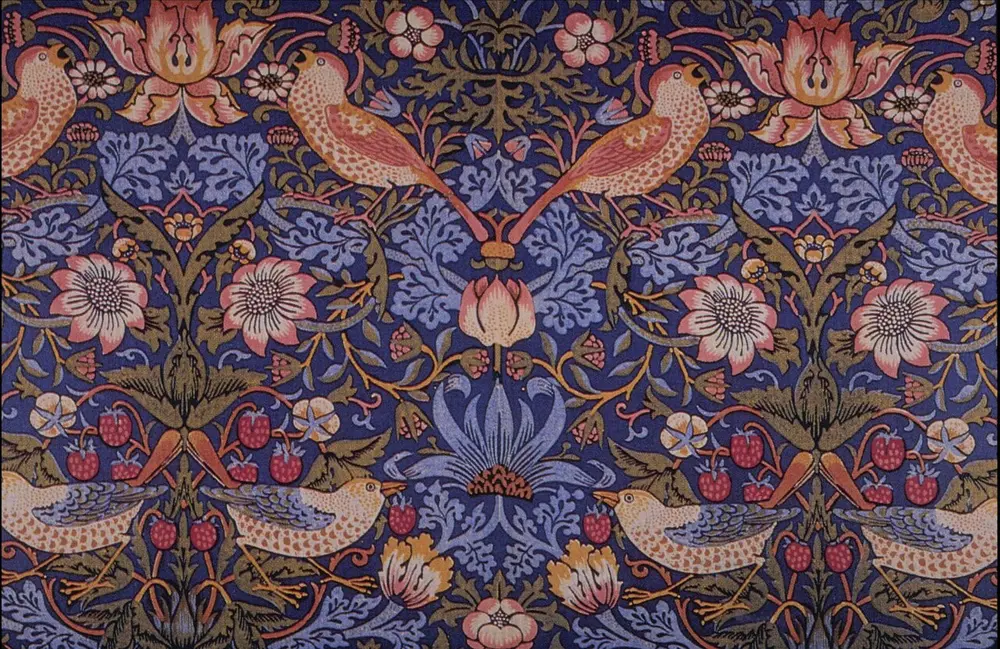
1Arts and Crafts (William Morris, from the 1860s) wanted handmade, honest, beautiful objects instead of cheap factory goods.
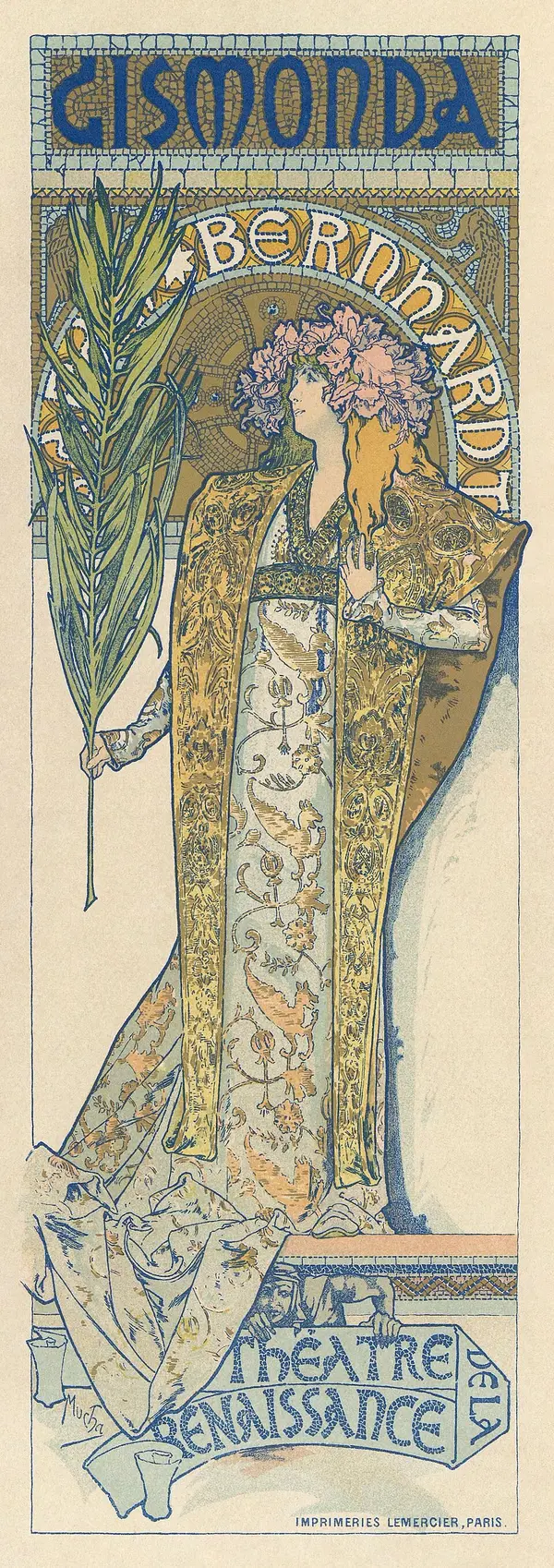
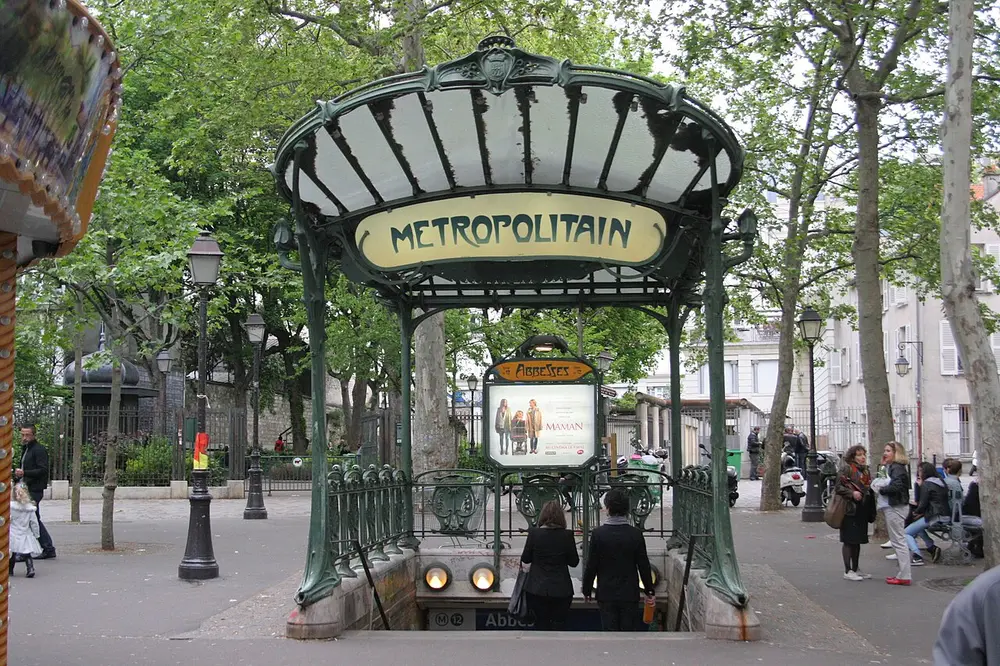
2Art Nouveau (about 1890 to 1910) is all long curves, plants and flowing hair: Mucha's posters and Guimard's Paris Métro entrances.
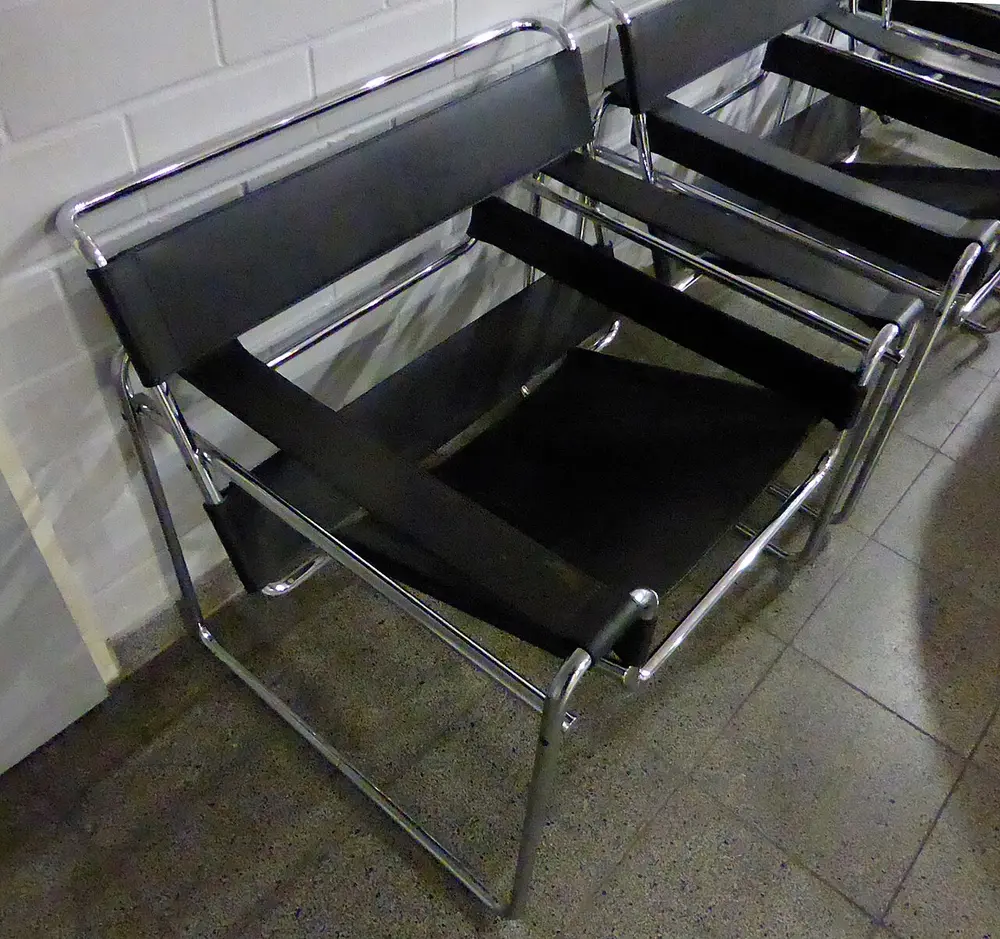
3The Bauhaus opened in Weimar in 1919, moved to Dessau in 1925 and closed in 1933. It joined art with industry and gave us steel-tube furniture such as Breuer's Wassily Chair.
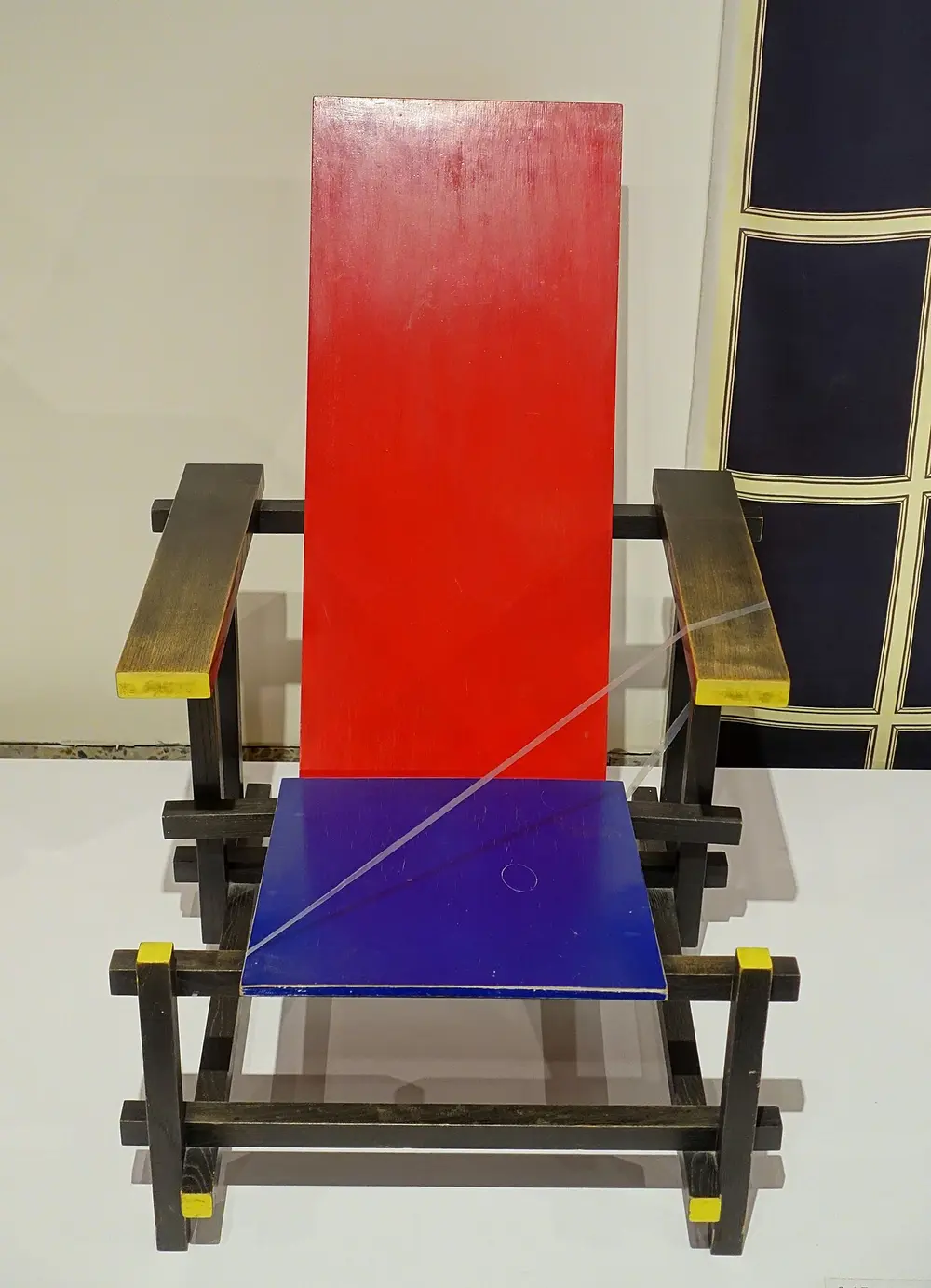
4De Stijl used only straight lines and primary colours. Rietveld's Red Blue Chair is a Mondrian painting you can sit on.
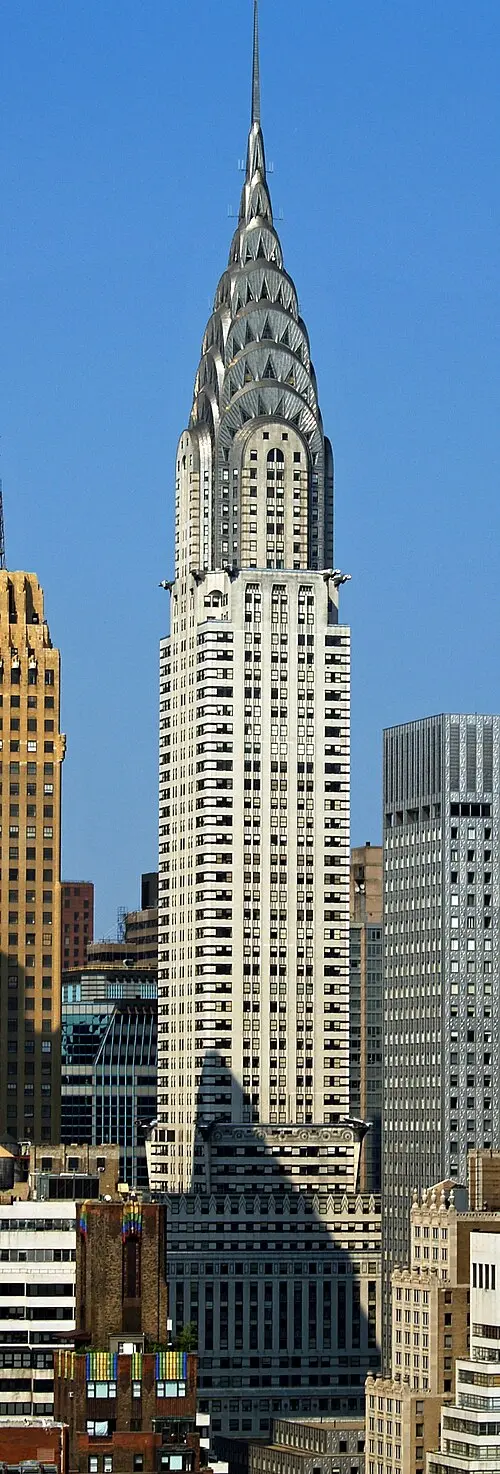
5Art Deco (1920s and 1930s) is geometric glamour: the Chrysler Building, and Mumbai's Art Deco buildings, part of a UNESCO World Heritage Site since 2018.
6Memphis (Milan, 1981) broke the modernist rules with loud colours and jokes, while Dieter Rams kept to "less, but better".
Cotton, printed by the slow indigo discharge method at Morris's Merton Abbey works
Morris disliked the cheap, badly made goods pouring out of Victorian factories. Inspired by the critic John Ruskin, he wanted useful things that were beautiful and made by skilled hands, and in 1861 he set up a firm with friends to make wallpaper, fabric, stained glass and furniture. Strawberry Thief shows the thrushes that stole strawberries from his garden at Kelmscott Manor. It was slow and costly to print but became one of the firm's most popular designs. The movement is named after the Arts and Crafts Exhibition Society, founded in London in 1887.
Spot it by
Dense, symmetrical, repeating patterns of birds, leaves and flowers, deep indigo with soft reds, and a hand-crafted look.
Remember
Morris wanted more craft and less factory.
Don't confuse
Art Nouveau also loves plants, but its lines are long, loose and flowing. Morris's patterns are dense, repeating and symmetrical.
Curves from nature: Art Nouveau
Art Nouveau ("new art") spread across Europe from about 1890 to 1910. It refused to copy old styles and took its shapes from nature instead: stems, flowers, insects and long, whiplash curves. The name comes from a Paris shop, the Maison de l'Art Nouveau, opened by Siegfried Bing in 1895. It had other names in other countries: Jugendstil in Germany, Stile Liberty in Italy, Modernisme in Catalonia and Secession style in Austria.
Designed at the end of 1894, posted in January 1895
Who
Alphonse Mucha, Czech, working in Paris
Style
Art Nouveau
Made with
Colour lithograph (a printed poster)
Mucha made this life-size poster for the actress Sarah Bernhardt, starring in the play Gismonda in Paris. It appeared on the city's walls in the first days of 1895 and made him famous almost overnight. Bernhardt then gave him a contract to design her posters for years. His tall posters of graceful women with flowing hair, flowers and halo-like circles became the best-known images of Art Nouveau.
Spot it by
A graceful woman with long flowing hair, halo-like circles, flowers, mosaic patterns and decorative hand-drawn lettering.
Remember
Mucha's women have hair like ribbons.
Don't confuse
CEED 2026 showed a cover of the German magazine Jugend as its Art Nouveau example. Jugendstil, "youth style", is the German name for the same movement.
For the Paris Métro, which opened in 1900, Guimard designed entrances of green-painted cast iron shaped like plant stems, with lamps like flower buds and lettering that seems to grow. Because cast iron is made in moulds, the same parts could be repeated at station after station across the city. The Abbesses entrance is one of the few with its glass canopy still standing. In Brussels, Victor Horta's Hôtel Tassel (1893) had already brought the same curling lines into a house, and in New York, Louis Comfort Tiffany's studios made leaded-glass lamps shaped like flowers.
Spot it by
Green cast iron like plant stems, glass canopies like insect wings, bud-shaped lamps and flowing lettering.
Remember
Guimard grew the Métro out of iron plants.
Vienna and Germany: from craft to industry
In Vienna, Klimt and other artists left the official art society in 1897 to form the Vienna Secession (see the modern art note). In 1903 the architect Josef Hoffmann and the designer Koloman Moser set up the Wiener Werkstätte ("Vienna Workshops"), which made furniture, silver, jewellery and fabric. Their work turned away from Art Nouveau's curves towards squares, grids and black and white.
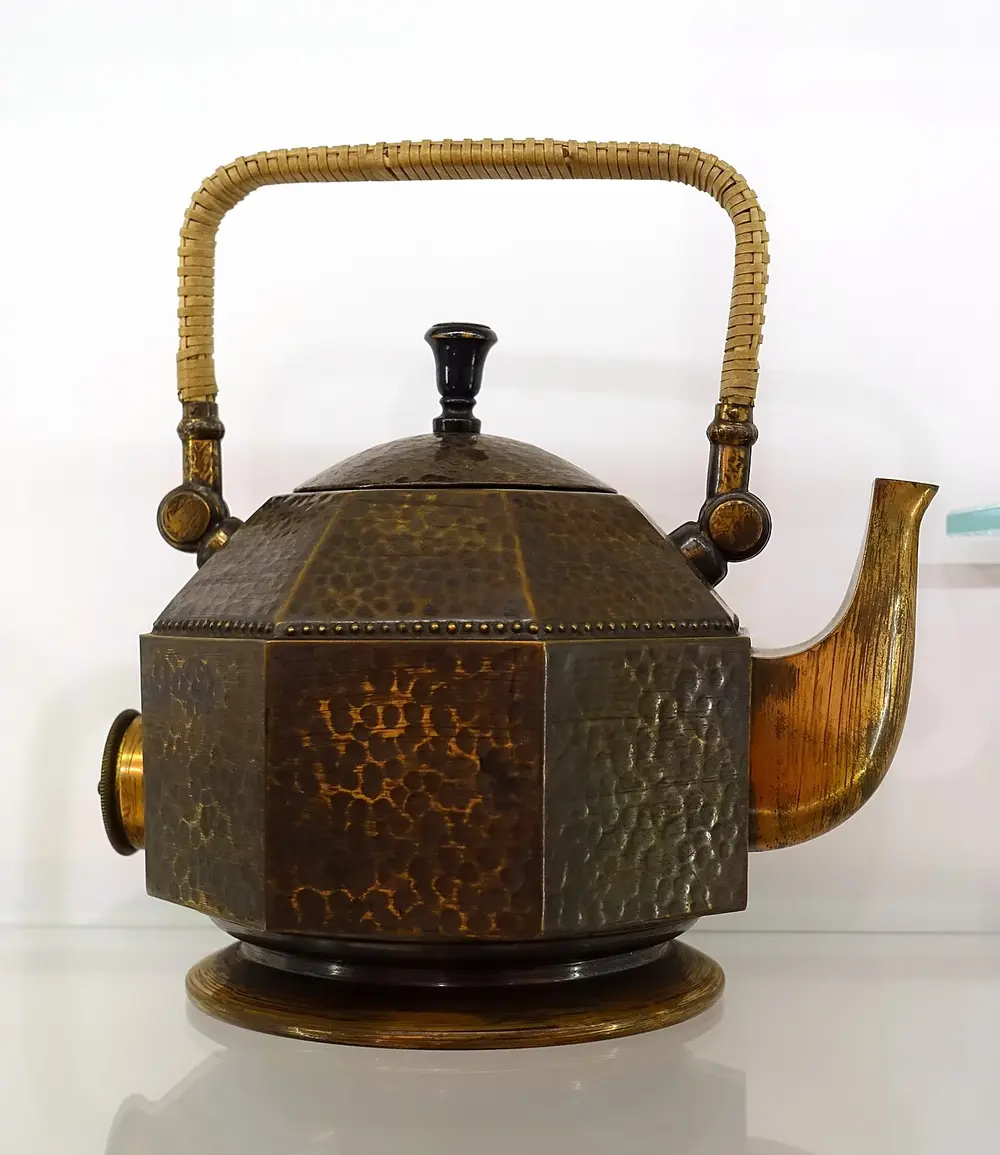
This one is at the Museum für Angewandte Kunst, Cologne
When
1909
Who
Peter Behrens, for AEG, Germany
Style
Deutscher Werkbund (early industrial design)
Made with
Copper, cane and wood
In 1907 German designers, architects and manufacturers founded the Deutscher Werkbund in Munich. Unlike Morris, they wanted to make machine production better, not fight it. That same year the electrical company AEG hired Peter Behrens as its artistic consultant. He designed its kettles, fans, clocks and lamps, its logo and printed material, and even its Turbine Factory in Berlin (1909), so he is often credited with the first complete corporate identity. His kettles came in a few shapes, metals and finishes that could be mixed, so a small set of standard parts made many models.
Spot it by
Simple geometric shapes, good materials, and a family of products and graphics that clearly belong to one company.
Remember
Behrens gave AEG one look, from the kettle to the factory.
Straight lines and revolution: De Stijl and Constructivism
This 1960s example is at the Montreal Museum of Fine Arts
When
Designed about 1917 to 1918; painted in these colours about 1923
Who
Gerrit Rietveld, Netherlands
Style
De Stijl
Made with
Painted wood, in standard-size boards and rails
De Stijl ("The Style") began in the Netherlands in 1917. Its members, including Piet Mondrian, Theo van Doesburg and Rietveld, used only straight lines, right angles and the primary colours with black, white and grey. Rietveld's chair looks like a Mondrian painting in three dimensions: flat boards and square rails that just touch, with no curves at all. It was first left as plain wood and painted red, blue, yellow and black a few years later. In 1924 he used the same ideas for the Rietveld Schröder House in Utrecht, a UNESCO World Heritage Site since 2000.
Spot it by
Flat planes and square rails meeting at right angles, red, blue and yellow with black, and no curves anywhere.
Remember
The Red Blue Chair is a Mondrian you can sit on.
Don't confuse
The Wassily Chair is also a frame with flat seat and back, but it is bent steel tube with leather straps, from the Bauhaus.
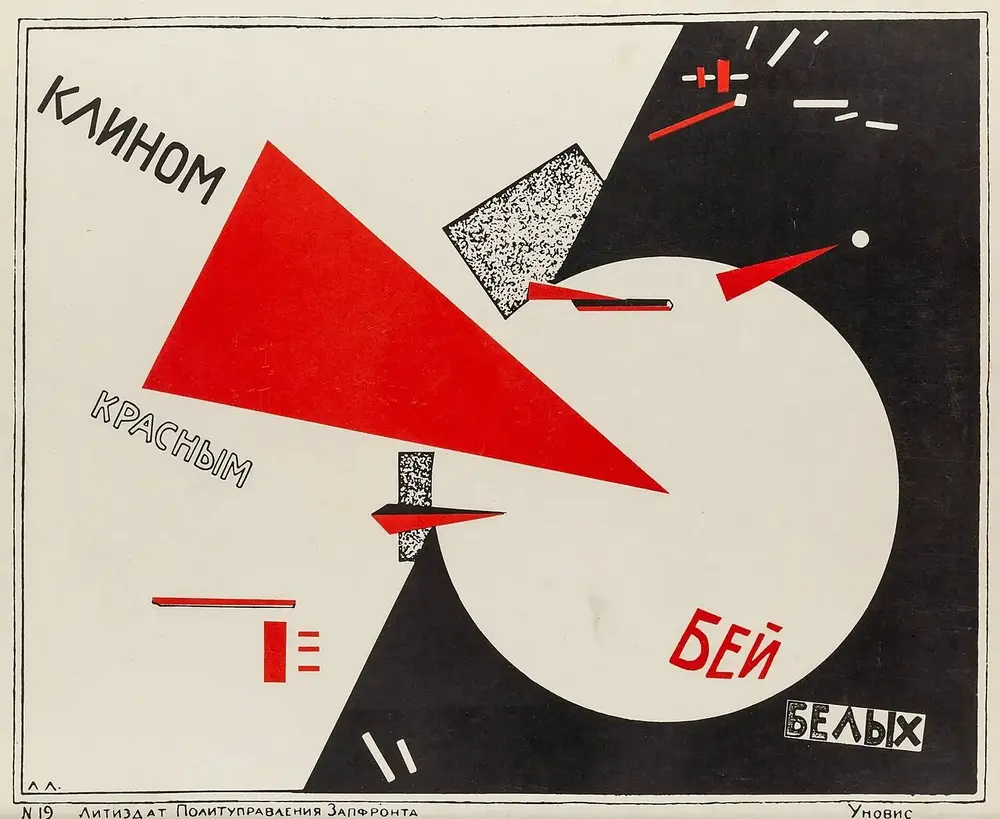
After the Russian Revolution of 1917, artists such as Vladimir Tatlin, Alexander Rodchenko and El Lissitzky wanted art to serve the new society rather than hang in galleries. Their approach, Constructivism, built designs from basic geometric shapes, bold type and photographs, for posters, books, stage sets and buildings. In this Civil War poster, a red wedge (the Bolshevik "Reds") drives into a white circle (their enemies, the "Whites").
Spot it by
Red, black and white, sharp wedges, circles and bars, diagonal layouts, bold sans-serif letters and photomontage.
Remember
Constructivism builds a message out of shapes: a red wedge beats a white circle.
Gropius founded the Bauhaus in Weimar in 1919 by joining an art school with a crafts school. Students trained in workshops for metal, weaving, furniture, printing and more, aiming to make prototypes that factories could produce. In 1925 the school moved to Dessau, into this building, whose workshop wing is walled entirely in glass. After Gropius, it was led by Hannes Meyer and then Ludwig Mies van der Rohe. Under pressure from the Nazis it moved to Berlin in 1932 and closed in 1933, and many of its teachers took its ideas to the United States. The Bauhaus sites in Weimar and Dessau have been a UNESCO World Heritage Site since 1996.
Spot it by
White boxes, flat roofs, large glass walls and no decoration; in objects, simple geometry and machine-made materials.
Remember
Weimar 1919, Dessau 1925, Berlin 1932, closed 1933.
Bent chrome-plated steel tube with leather or canvas straps
Breuer trained at the Bauhaus and then ran its furniture workshop. The bent steel tubes of his bicycle are said to have given him the idea for a light armchair of steel tube and stretched straps, one of the first pieces of tubular steel furniture. It was later named after his fellow teacher Wassily Kandinsky, who had one in his home.
Spot it by
A cube-like frame of shiny steel tube, with the seat, back and arms made of tight leather or canvas straps.
Remember
A bicycle became a chair.
More Bauhaus names to know: Marianne Brandt joined the metal workshop in 1924 and later ran it; her small geometric teapot of circles and half-spheres is still copied. Herbert Bayer designed a "universal" alphabet of lowercase letters only (about 1925). Mies van der Rohe, the last director, is known for the motto "less is more". With Lilly Reich he designed the Barcelona Chair (1929) for Germany's pavilion at the Barcelona International Exposition: CEED 2018 showed it and asked who designed it.
Glamour and speed: Art Deco and Streamline
Art Deco takes its name from a great exhibition of decorative and industrial arts held in Paris in 1925, although the short name only came into wide use in the 1960s. Where Art Nouveau curved like a plant, Art Deco is geometric and glamorous: zigzags, sunbursts, stepped shapes and shiny metal. In graphic design, A.M. Cassandre's travel posters, such as the liner Normandie (1935), are classic Art Deco.
Steel frame and brick, with a crown clad in stainless steel
The Chrysler Building's crown of stacked steel arches with triangular windows is one of the best-known Art Deco designs. Its spire was built in secret inside the tower and raised into place to beat a rival skyscraper, making it the tallest building in the world, at 319 metres, until the Empire State Building passed it in 1931.
Spot it by
Zigzags, sunbursts, stepped towers, geometric lettering, chrome and rich materials.
Remember
Deco is geometric glamour; Nouveau is curly nature.
Don't confuse
Art Nouveau (about 1890 to 1910) came first and is curvy and plant-like. Art Deco (1920s and 1930s) is straight, stepped and machine-age.
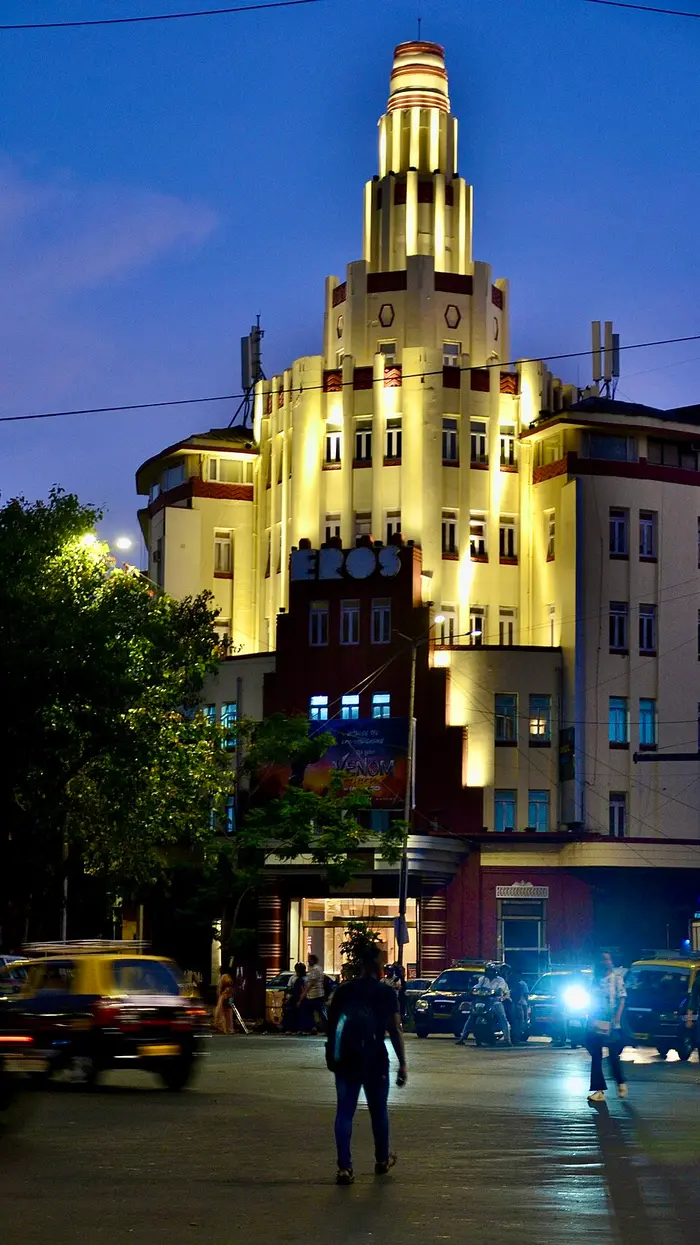
In the 1930s Mumbai built whole rows of Art Deco flats, cinemas and offices on land reclaimed from the sea, along Marine Drive and beside the Oval Maidan. Eros Cinema, with its stepped tower and cream and red face, is one of the best known. In 2018 UNESCO listed the Victorian Gothic and Art Deco Ensembles of Mumbai as a World Heritage Site: Victorian Gothic buildings line one side of the Oval Maidan and Art Deco buildings face them across it.
Spot it by
A stepped tower, rounded corners, horizontal bands, sunburst and zigzag details, and cream walls with coloured trim.
Remember
Marine Drive, the "Queen's Necklace", is strung with Art Deco.
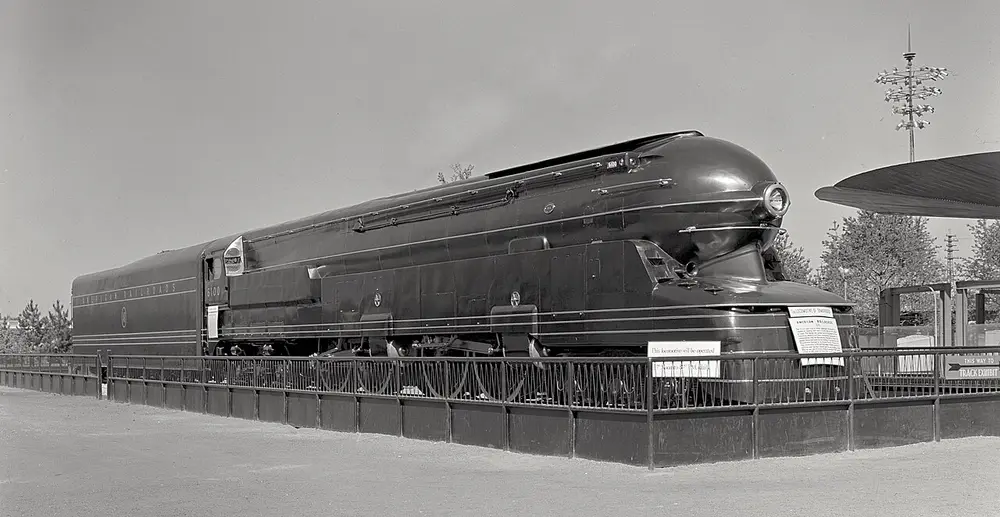
Styled by Raymond Loewy, French-born American designer
Style
Streamline Moderne
Made with
Steel shell over a steam locomotive
In the 1930s American designers gave trains, cars, radios and even pencil sharpeners smooth, rounded, teardrop shapes that looked fast. This style is called Streamline Moderne. Raymond Loewy was its star. He styled the shell of this giant steam locomotive, which was a main attraction at the 1939 New York World's Fair. Loewy also designed Greyhound buses, the Shell logo and the colours of the US president's plane, Air Force One. UCEED 2015 showed his streamlined pencil sharpener and asked what it was.
Spot it by
Smooth teardrop shapes, rounded bullet noses, long horizontal speed lines and polished metal.
Remember
Streamlining makes even a standing object look as if it is moving.
Don't confuse
Art Deco is stepped and angular; Streamline is rounded and smooth, as if shaped by the wind.
After the war: mid-century modern and Scandinavian design
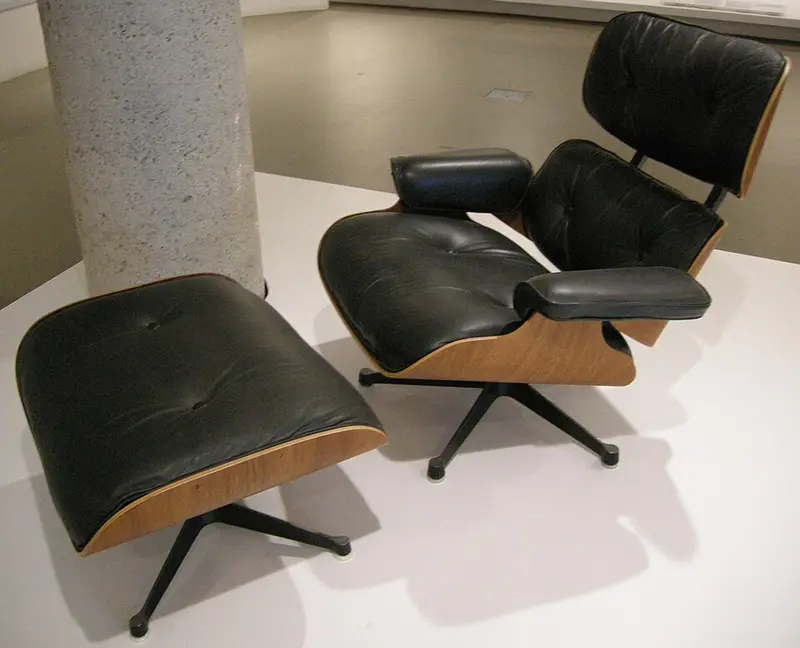
This one is at the National Gallery of Victoria, Melbourne
When
1956
Who
Charles and Ray Eames, for Herman Miller, United States
Style
Mid-century modern
Made with
Moulded plywood shells, leather cushions and an aluminium base
After the Second World War, designers used new materials and wartime factory methods to make modern furniture for ordinary homes. This style, from about 1945 to 1970, is called mid-century modern. Charles and Ray Eames, a husband-and-wife team, experimented with bending plywood into curved shells, and their Lounge Chair became a symbol of comfortable modern living. Eero Saarinen's Tulip Chair (about 1956) stands on a single stem because he wanted to clear away what he called the "slum of legs" under tables and chairs. The Eameses also matter for India: their India Report of 1958 led to the founding of NID in Ahmedabad.
Spot it by
Curved plywood or fibreglass shells, slim metal legs or a single pedestal, and warm wood with leather or bright colour.
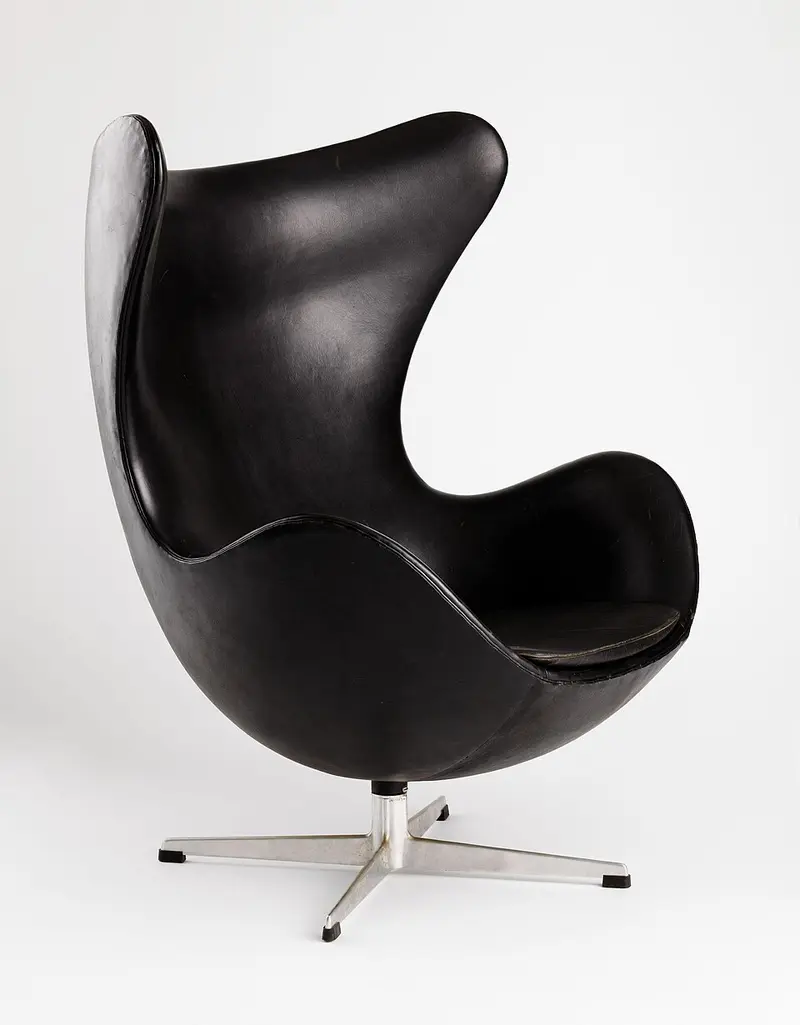
Upholstered moulded shell on a swivelling metal base
Scandinavian design, from Denmark, Sweden, Norway and Finland, became famous in the 1950s for simple, warm, well-made things for everyday life, often in pale wood. Jacobsen designed the Egg Chair for the SAS Royal Hotel in Copenhagen, where he designed the building and almost everything inside it. Its high, wrapping back gives the sitter a little private space in a busy lobby. Other names to know are Alvar Aalto of Finland and Hans Wegner of Denmark.
Spot it by
Soft, organic curves, swivel bases, natural materials, pale wood and calm colours.
Remember
The Egg Chair is a nest in a hotel lobby: Danish, 1958.
Max Miedinger, with Eduard Hoffmann of the Haas type foundry, Switzerland
Style
Swiss Style (International Typographic Style)
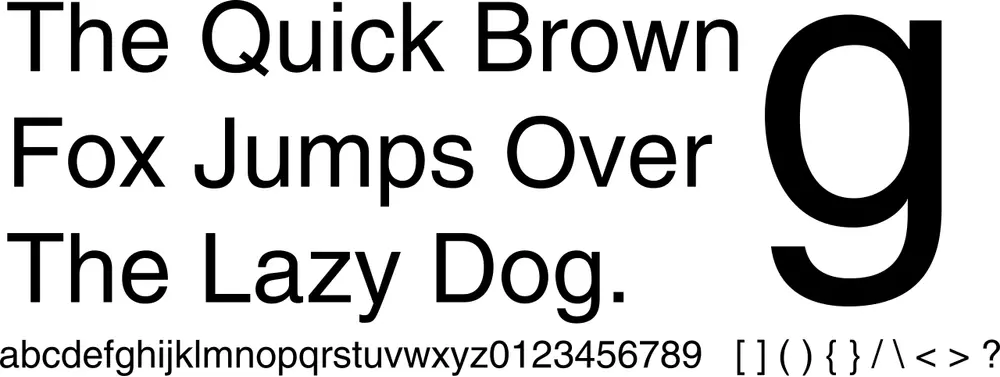
In the 1950s Swiss designers such as Josef Müller-Brockmann and Armin Hofmann worked out a clean, orderly way to design posters and books: layouts on a strict grid, sans-serif type, text lined up on the left, lots of white space, and photographs rather than drawings. It became known as the Swiss Style. Helvetica, released in 1957 as Neue Haas Grotesk and renamed around 1960 after Helvetia, the Latin name for Switzerland, became its signature typeface and is still used on signs and logos worldwide.
Spot it by
Clean sans-serif letters, strict grids, text aligned left with a ragged right edge, white space, and photos instead of illustrations.
Remember
Helvetica is Latin for "Swiss".
Don't confuse
Arial looks very like Helvetica. Helvetica's stroke ends are cut flat, exactly level or upright, as in its c, e and s.
Breaking the rules again: Postmodernism and Memphis
By the 1960s many designers felt modernism had become plain, cold and too serious. Postmodernism brought back colour, ornament, history and humour. The architect Robert Venturi turned Mies's "less is more" into "less is a bore" in his 1966 book Complexity and Contradiction in Architecture. Michael Graves's kettle for Alessi (1985), with a little bird on its spout, became a postmodern best-seller.
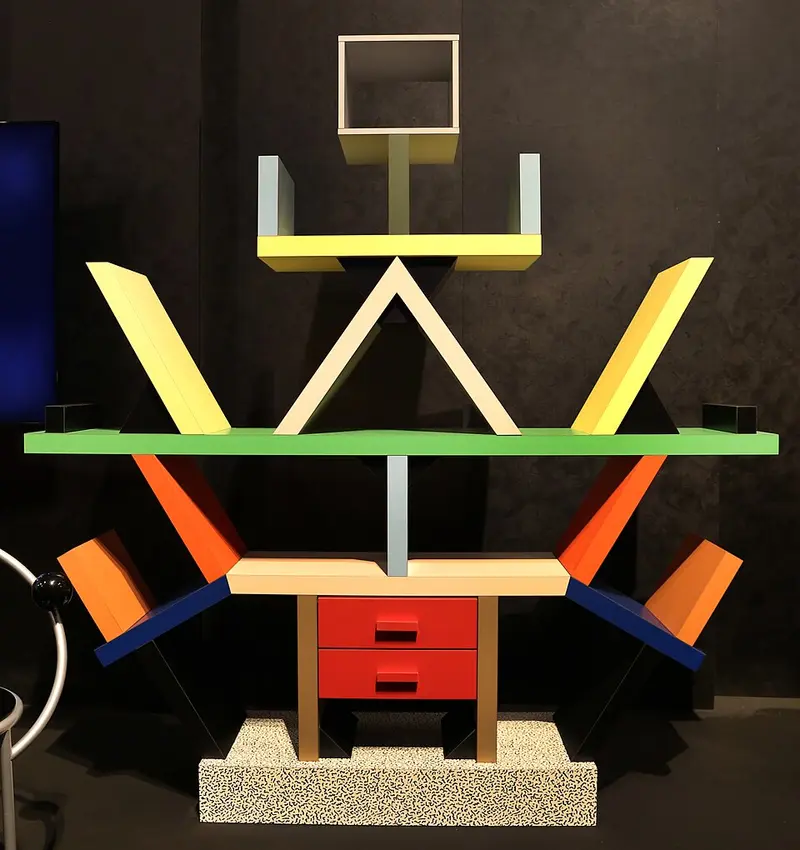
The Memphis Group, gathered in Milan by Ettore Sottsass, showed its first collection in 1981. Its furniture used clashing bright colours, cheap-looking plastic laminates printed with squiggles, and shapes like toys or totems, all on purpose. The group's name came from a Bob Dylan song. The Carlton bookcase, with its shelves sticking out at odd angles, is its best-known piece.
Spot it by
Clashing bright colours, plastic laminate with squiggles and dots, odd angles, and shapes that look like toys or totems.
Remember
Memphis is Milan, 1981, and loud.
Don't confuse
Postmodernism is the wider movement in architecture and design; Memphis is one Milan group within it.
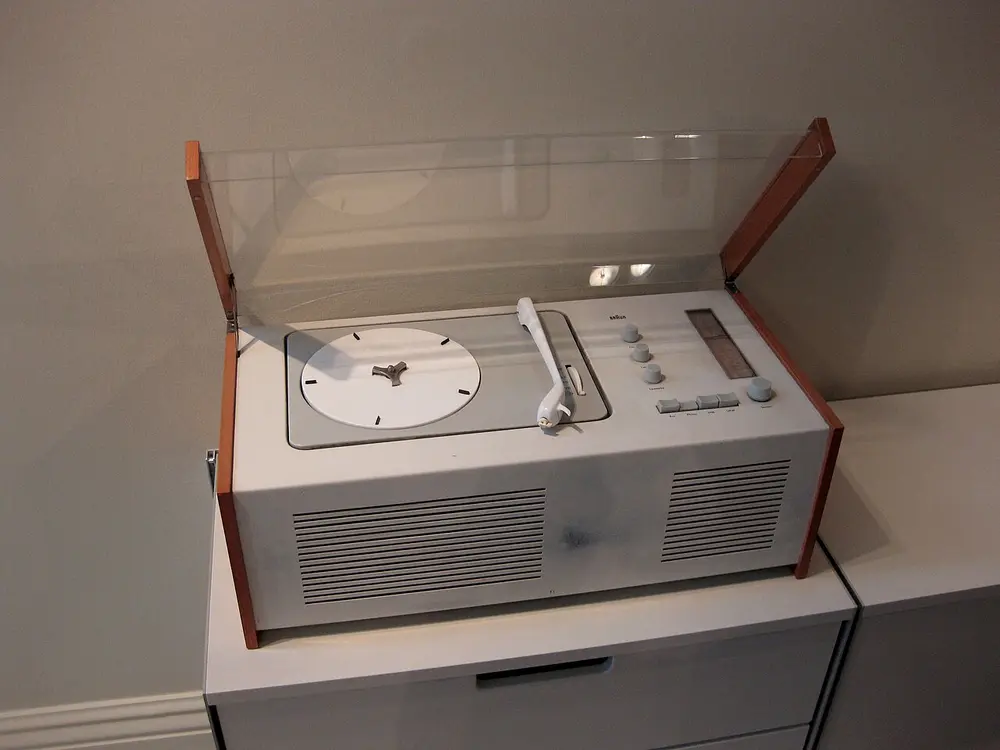
White-painted steel, wooden sides and a clear plastic lid
Dieter Rams led design at the German electronics firm Braun for decades. The SK 4 radio and record player swapped the usual wooden cabinet for white metal and a see-through lid, which earned it the nickname "Snow White's coffin". Rams's motto is "less, but better", and he wrote down ten principles of good design, ending with "good design is as little design as possible". His calm, plain products influenced later electronics, including Apple's. The Japanese brand Muji, started in 1980 as a line of no-brand goods, follows a similar idea.
Spot it by
White or grey boxes, a few controls in neat rows, no decoration and honest materials.
Remember
Rams: less, but better.
Don't confuse
Memphis and Rams are opposites. Memphis shouts with colour and pattern; Rams removes everything that isn't needed.
Movements at a glance
Movement
Years
Big idea
Icon object
Arts and Crafts
1860s to 1910s
Handmade, honest, beautiful everyday things
Morris's Strawberry Thief fabric (1883)
Art Nouveau
about 1890 to 1910
Flowing lines taken from plants
Guimard's Métro entrances (1900)
Vienna Secession and Wiener Werkstätte
from 1897 and 1903
Break with the academy; total design with strict geometry
Klimt's The Kiss; Hoffmann's silver and furniture
Deutscher Werkbund
from 1907
Good design for machine production
Behrens's AEG kettle (1909)
De Stijl
1917 to about 1931
Straight lines and primary colours only
Rietveld's Red Blue Chair
Constructivism
about 1915 to the early 1930s
Design to serve the new Soviet society
Lissitzky's Red Wedge poster (1919)
Bauhaus
1919 to 1933
Join art, craft and industry
Breuer's Wassily Chair (1925)
Art Deco
1920s and 1930s
Geometric, machine-age glamour
Chrysler Building (1930)
Streamline Moderne
1930s
Smooth shapes that look fast
Loewy's S1 locomotive (1939)
Mid-century modern
about 1945 to 1970
New materials and modern comfort for ordinary homes
Eames Lounge Chair (1956)
Scandinavian design
from the 1950s
Simple, warm, natural, everyday
Jacobsen's Egg Chair (1958)
Swiss Style
1950s and 1960s
Grids, sans-serif type and clarity
Helvetica (1957)
Postmodernism and Memphis
1960s to 1980s
Colour, ornament and humour against plain modernism
Sottsass's Carlton bookcase (1981)
Minimalism
from the 1950s
Less, but better
Braun SK 4 (1956)
Timeline
1861
William Morris and friends set up their decorating firm in London
1883
Morris designs Strawberry Thief
1887
The Arts and Crafts Exhibition Society is founded in London, giving the movement its name
1893
Victor Horta builds the Hôtel Tassel in Brussels
1895
Mucha's Gismonda poster appears in Paris; Siegfried Bing opens the Maison de l'Art Nouveau
1897
The Vienna Secession is founded
1900
The Paris Métro opens, with Guimard's entrances
1903
Josef Hoffmann and Koloman Moser found the Wiener Werkstätte
1907
The Deutscher Werkbund is founded in Munich, and Peter Behrens joins AEG
1917
De Stijl is founded in the Netherlands
1919
Walter Gropius opens the Bauhaus in Weimar; El Lissitzky's Red Wedge poster
1925
The Bauhaus moves to Dessau; the Paris exhibition that later gives Art Deco its name; Breuer's Wassily Chair
1929
Mies van der Rohe and Lilly Reich's Barcelona Chair
1930
The Chrysler Building is completed in New York
1933
The Bauhaus closes under Nazi pressure
1938
Eros Cinema opens in Mumbai
1939
Loewy's streamlined S1 locomotive at the New York World's Fair
1956
The Eames Lounge Chair, and Braun's SK 4 by Rams and Gugelot
1957
Helvetica is released as Neue Haas Grotesk
1958
Arne Jacobsen's Egg Chair; the Eameses' India Report
1981
The Memphis Group shows its first collection in Milan
2018
UNESCO lists Mumbai's Victorian Gothic and Art Deco Ensembles
Test yourself
Question 1 of 8
Which design movement does this chair belong to?
Question 2 of 8
Which of these is Art Nouveau?
Question 3 of 8
Which list puts the movements in order from oldest to newest?
Question 4 of 8
This steel-tube chair was designed at which school?
Question 5 of 8
Who designed this textile pattern?
Question 6 of 8
Raymond Loewy is best known for which style?
Question 7 of 8
In 1925 the Bauhaus moved from Weimar to which city?
Question 8 of 8
Which of these was designed for the Memphis Group?
From past papers
Real exam questions on this topic, each with a full solution.
Mark it as studied to track your progress through the course.
Was this note useful?
Each picture is credited underneath it. Pictures of works still in copyright are shown small, for teaching only. If you hold the rights to a picture and want it removed, tell us through the contact page and we will take it down.