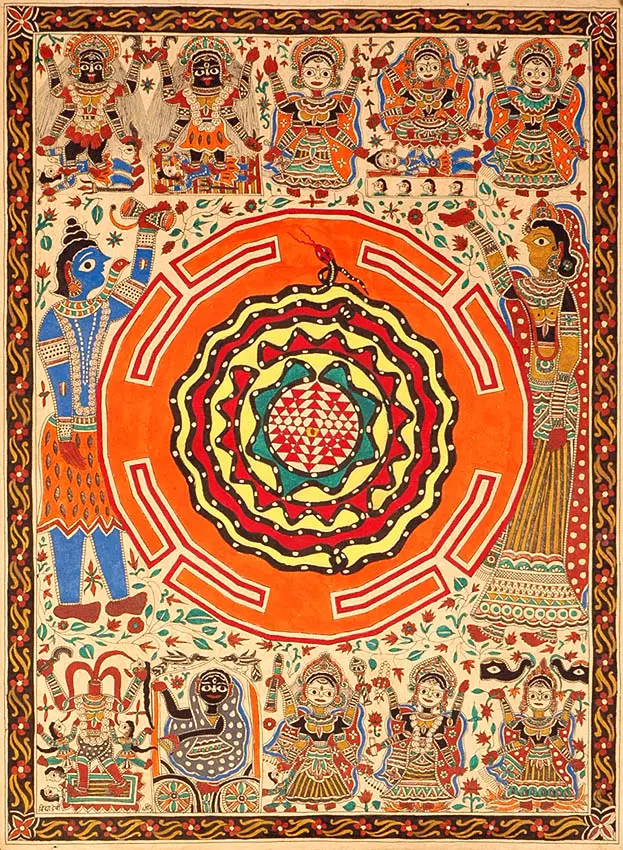
Madhubani
Also called Mithila painting
- Where
- Mithila region of north Bihar, and across the border in Nepal
- When
- An old wall tradition; on paper since the late 1960s
- Who
- Women of Mithila; Sita Devi (Padma Shri 1981) and Ganga Devi (Padma Shri 1984)
- Style
- Five styles: Bharni, Kachni, Tantrik, Godna and Kohbar
- Made with
- Natural colours such as lampblack and ochre, put on with fingers, twigs, nib pens and matchsticks
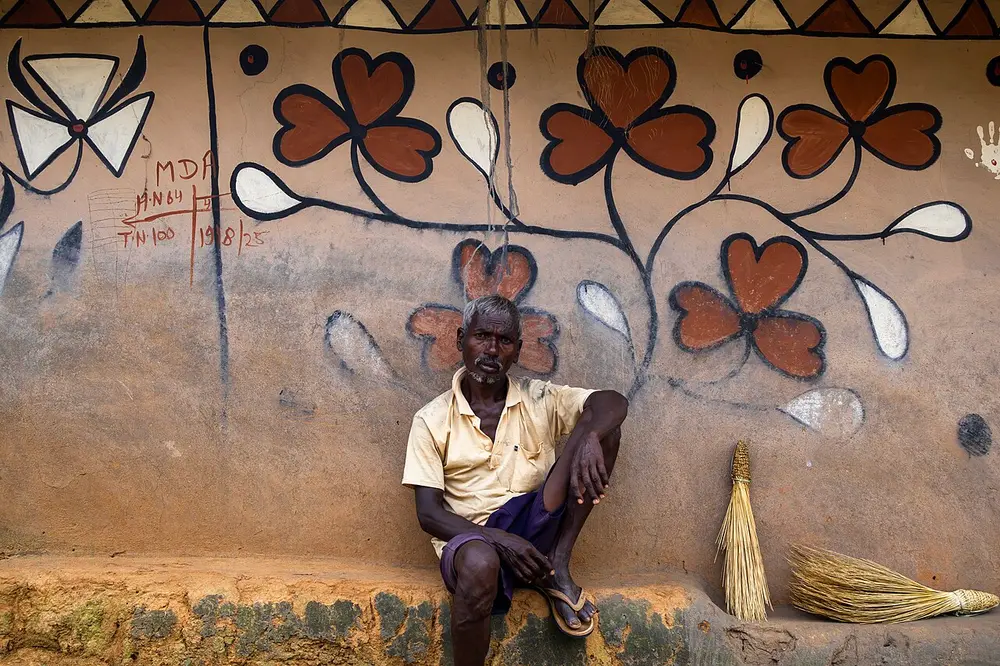
Women of Mithila painted the mud walls and floors of their homes for weddings, births and festivals. The outside world first noticed the paintings after the 1934 Bihar earthquake, when the British officer W. G. Archer saw them on broken walls, and during a drought in the late 1960s women were encouraged to paint on paper so they could sell their work. The five styles are Bharni (shapes filled with bright colour, Sita Devi's style), Kachni (fine lines and hatching in one or two colours, Ganga Devi's style), Tantrik (goddesses and sacred diagrams, as in the picture), Godna (patterns taken from tattoos) and Kohbar (paintings for the wedding room).
Spot it by
Double outlines, no empty space at all, borders of flowers or lines, fish, peacocks, lotus, the sun and moon, and faces in profile with large eyes.Remember
Mithila is the land of Sita, so picture a wall painted for her wedding.Don't confuse
Manjusha is also from Bihar, but it is painted on box-shaped shrines, uses only pink, green and yellow, and is full of snakes.