Skip to content

Chapter 4: Design history and designers

Design awards and innovations

The design prizes exams name, from the Compasso d'Oro and Red Dot to the Pritzker, plus ideas borrowed from nature and Indian low-cost inventions such as the Jaipur Foot.

In one minute

6 facts to know

  1. Italy's Compasso d'Oro (Milan, 1954) is the classic industrial design prize. Germany has Red Dot (Essen) and iF (Hanover), and Japan's Good Design Award lets winners carry the red G Mark.
  2. Chicago's Good Design goes back to 1950, which is why it is called the oldest design award. India's own mark of good design is the India Design Mark (2012).
  3. D&AD Pencils (London, 1962) and Cannes Lions (first held in Venice in 1954) reward advertising and communication design. The Black Pencil is D&AD's top prize.
  4. The Pritzker Prize (since 1979) is architecture's biggest prize. As of October 2026, B.V. Doshi (2018) is the only Indian winner, and the latest winner is Smiljan Radić of Chile (2026).
  5. Biomimicry means copying nature: burrs gave us Velcro, a kingfisher's beak shaped a bullet train's nose, and termite mounds inspired the Eastgate Centre's cooling.
  6. The Jaipur Foot (1968) and Mansukhbhai Prajapati's Mitticool clay fridge are Indian frugal innovations: cheap, simple, and made for the way people really live.

The first design awards

A design award does two jobs. It tells buyers that a product is well designed, and it pushes companies to hire good designers. Most awards are judged by a jury of designers, and winners may print the award's mark on the product or its box. Design also wins prizes outside design awards: in 1983 the costume designer Bhanu Athaiya became the first Indian to win an Oscar, for the costumes of Gandhi.

Good Design, Chicago

Where
Chicago, United States
When
Exhibitions from 1950; yearly awards since the 1990s
Who
Started by MoMA and the Merchandise Mart; run today by the Chicago Athenaeum

In 1950 the Museum of Modern Art (MoMA) in New York and the Merchandise Mart, a giant trade building in Chicago, began a series of Good Design exhibitions led by the curator Edgar Kaufmann Jr. Each show picked the best new furniture, fabrics, lamps and household goods on sale, and Charles and Ray Eames designed the displays for the first one. Shops could put a round Good Design tag on the chosen products. Strictly, those 1950s shows chose products rather than handing out prizes. Today the Chicago Athenaeum, a museum of architecture and design, runs yearly Good Design Awards and counts them from 1950, so they are often called the oldest design awards in the world.

Remember

Good Design began in Chicago in 1950, the year the Eameses set up its first show.

Don't confuse

Japan also has a Good Design Award, with the G Mark. The two are not connected.
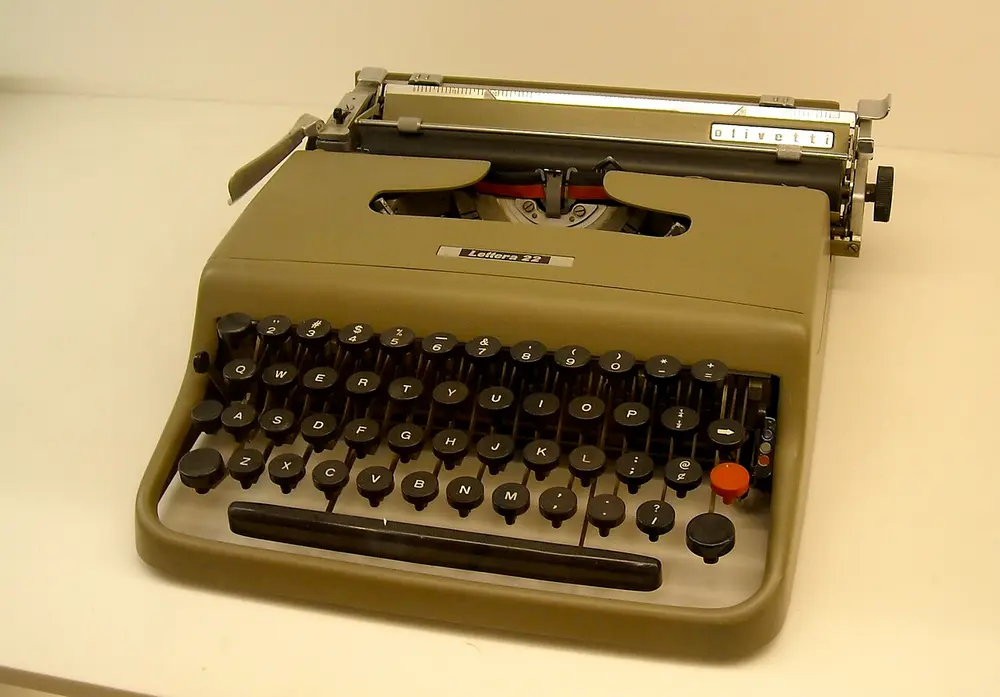
A compact olive-green portable typewriter with round black keys and one red key, on a museum display shelf.
Picture: David Orban. CC BY 2.0.

Compasso d'Oro

Also called The Golden Compass

Where
Milan, Italy
When
1954
Who
Started by the Milan department store La Rinascente; now run by ADI
Key works
The photo shows the Olivetti Lettera 22 typewriter by Marcello Nizzoli, a 1954 winner, at MoMA

The name means "golden compass", after the drawing compass that designers use, and the trophy is shaped like one. La Rinascente started the award in 1954, from an idea by the architect and designer Gio Ponti and Alberto Rosselli, to reward the best of Italy's new industrial design. The Italian industrial design association, ADI (Associazione per il Disegno Industriale), later took it over. Its collection of winners is shown at the ADI Design Museum in Milan, on a square renamed Piazza Compasso d'Oro. Among the very first winners, in 1954, was Marcello Nizzoli's light, portable Olivetti Lettera 22 typewriter.

Spot it by

A golden drafting compass as the trophy, and Italian products: typewriters, lamps, chairs and cars.

Remember

Compasso d'Oro: Italy, Milan, 1954, a golden compass.

Germany's big two: Red Dot and iF

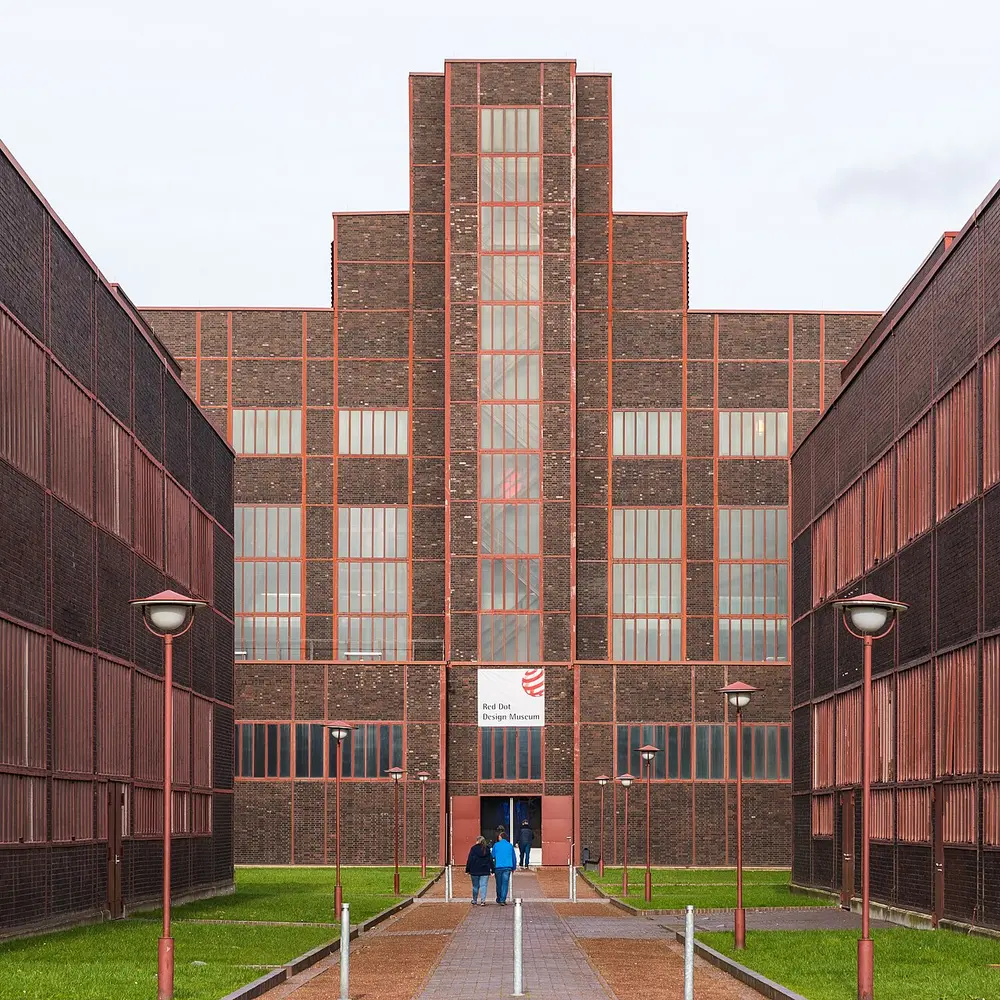
A tall, symmetrical brick and steel industrial building with long vertical windows, at the end of a paved path between two long brick wings.
Picture: Raimond Spekking. CC BY-SA 4.0.

Red Dot Design Award

Where
Essen, Germany
When
First jury show 1955; called Red Dot since the 1990s
Who
Red Dot, led since 1991 by Peter Zec
Key works
The photo shows the Red Dot Design Museum in the old boiler house of the Zollverein coal mine

Red Dot grew out of a design association in Essen that held its first jury-picked show of well-designed industrial products in 1955. In the 1990s, under its director Peter Zec, the prize took the name Red Dot, after the red dot that art galleries stick beside a painting that has been sold. Today there are three Red Dot competitions: Product Design, Brands and Communication Design, and Design Concept, for ideas that are not yet made. Companies pay a fee to enter, and winners may use the red dot label. Winning products are shown at the Red Dot Design Museum in Essen, in a coal mine boiler house redesigned by Norman Foster that opened in 1997. The Zollverein mine is a UNESCO World Heritage Site, and a second Red Dot museum opened in Singapore in 2005.

Spot it by

A plain red dot beside the words "red dot", on products, packaging and adverts.

Remember

A red dot in a gallery means "sold"; on a product it means "well designed".

iF Design Award

Also called International Forum Design

Where
Hanover, Germany
When
Show from 1953; awards every year since 1954

The iF began in 1953 as a special show of well-designed industrial goods at the Hanover Fair, one of the world's largest trade fairs, and it has given design awards every year since 1954. The letters stand for Industrie Forum, now International Forum Design. Today the iF Design Award covers products, packaging, communication, interior architecture, service design and more, and draws thousands of entries from dozens of countries each year.

Remember

iF is Hanover, Red Dot is Essen: Germany's two big design awards.

Don't confuse

Red Dot and iF are both German, both from the 1950s and both cover many fields. Tell them apart by the city and the mark: a red dot, or the letters iF.

Japan's G Mark and India's I Mark

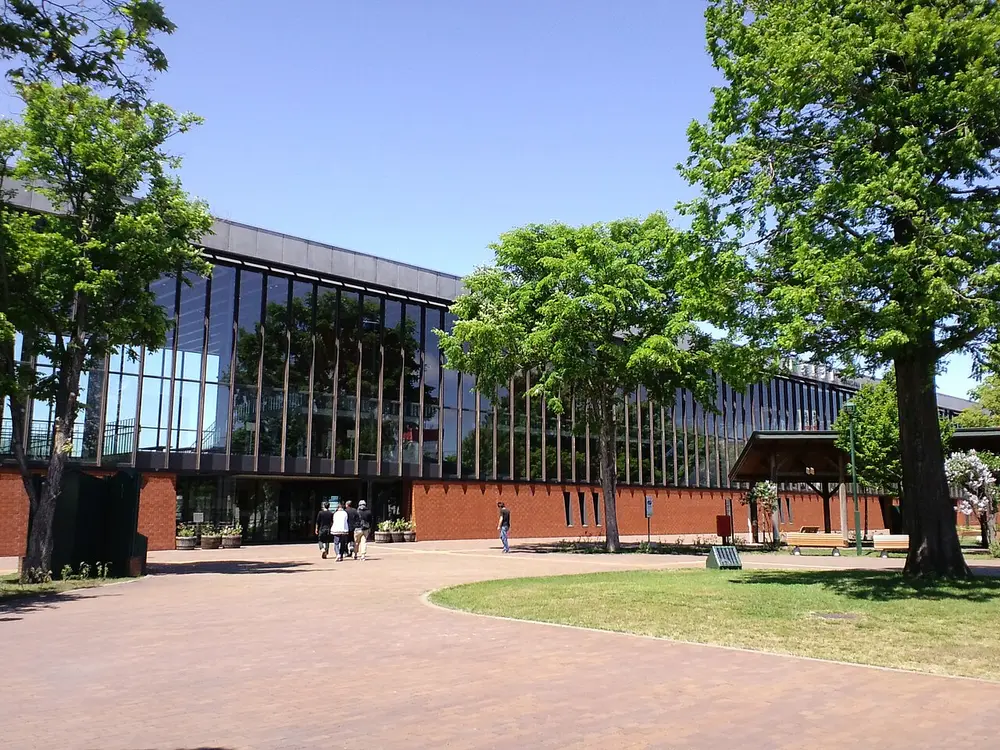
A long, low station building with a glass front in a grid of thin frames above a brick base, seen across a paved square with trees.
Picture: SelEle-MS. CC BY-SA 3.0.

Good Design Award, Japan

Also called G Mark

Where
Japan
When
1957
Who
Set up by Japan's trade ministry (MITI); run today by the Japan Institute of Design Promotion
Key works
The photo shows Iwamizawa Station, Hokkaido, winner of the 2009 Good Design Grand Award

In 1957 Japan's Ministry of International Trade and Industry set up a Good Design selection system to raise the quality of Japanese products. Things that pass its jury carry the G Mark, a red circle with a white diamond cut into the shape of a G, designed by the graphic designer Yusaku Kamekura. The government system was turned into a private award in the late 1990s, and the Japan Institute of Design Promotion (JDP) runs it today. It now covers buildings, software and services as well as products, and the best entry of the year wins the Good Design Grand Award. In 2009 that went to the new Iwamizawa Station in Hokkaido, designed by Hiroshi Nishimura, with walls of imprinted bricks and a glass front framed with old railway rails.

Spot it by

The red circle with the white G-shaped diamond.

Remember

G for Good, Japan, 1957.
A red circle with a white diamond inside, cut so that the red shape in its middle forms a letter G.

The G Mark, designed by Yusaku Kamekura, is shown on products that win Japan's Good Design Award.

Picture: Yusaku Kamekura. Public domain.

India's own version is the India Design Mark, or I Mark, given since 2012 by the India Design Council with help from Japan's JDP, the body behind the G Mark. Like the G Mark, it is a label for products that pass a jury, not a contest with one winner. Its story is in Design in India.

Awards for advertising and communication

D&AD Pencils

Also called Design and Art Direction

Where
London, United Kingdom
When
D&AD founded 1962

D&AD was set up in London in 1962 by designers and art directors to celebrate great advertising and design and to train young creatives. Its awards are pencils. In rising order they are the Wood, Graphite and Yellow Pencils, and the Black Pencil, for truly ground-breaking work, which in some years nobody receives. The White Pencil, added in 2011, goes to creative work that does real good in the world.

Remember

Wood, Graphite, Yellow, Black: the darker the pencil, the bigger the prize.

Don't confuse

D&AD gives pencils; Cannes gives lions.
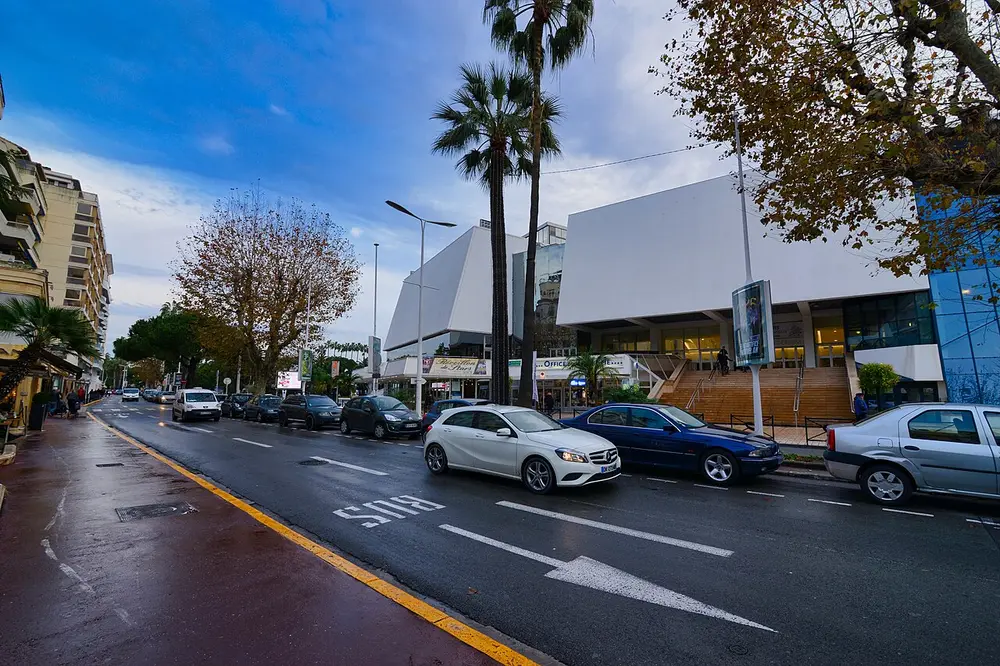
A large white modern building with slanted walls at the end of a palm-lined street, with parked cars and a wet road in front.
Picture: Jorge Láscar from Australia. CC BY 2.0.

Cannes Lions

Also called Cannes Lions International Festival of Creativity

Where
Cannes, France
When
First held in Venice in 1954; settled in Cannes in 1984
Key works
The photo shows the Palais des Festivals, where the festival is held

Cinema advertising companies wanted a festival for adverts like the Cannes Film Festival for films, so in September 1954 they held the International Advertising Film Festival in Venice. Its trophy, a lion, comes from the winged lion of St Mark that stands in Venice's Piazza San Marco. The festival moved between cities before settling in Cannes in 1984. Each June it fills the Palais des Festivals, the same building as the film festival, and gives Grand Prix, gold, silver and bronze Lions for advertising, branding, digital and other creative work. It is often called the Oscars of advertising.

Spot it by

A lion trophy, and the French Riviera.

Remember

The Lion came from Venice and settled in Cannes.

In the United States, the Industrial Designers Society of America (IDSA) has given the International Design Excellence Awards (IDEA) since 1980, for industrial design that helps users, business and society.

Architecture and crafts

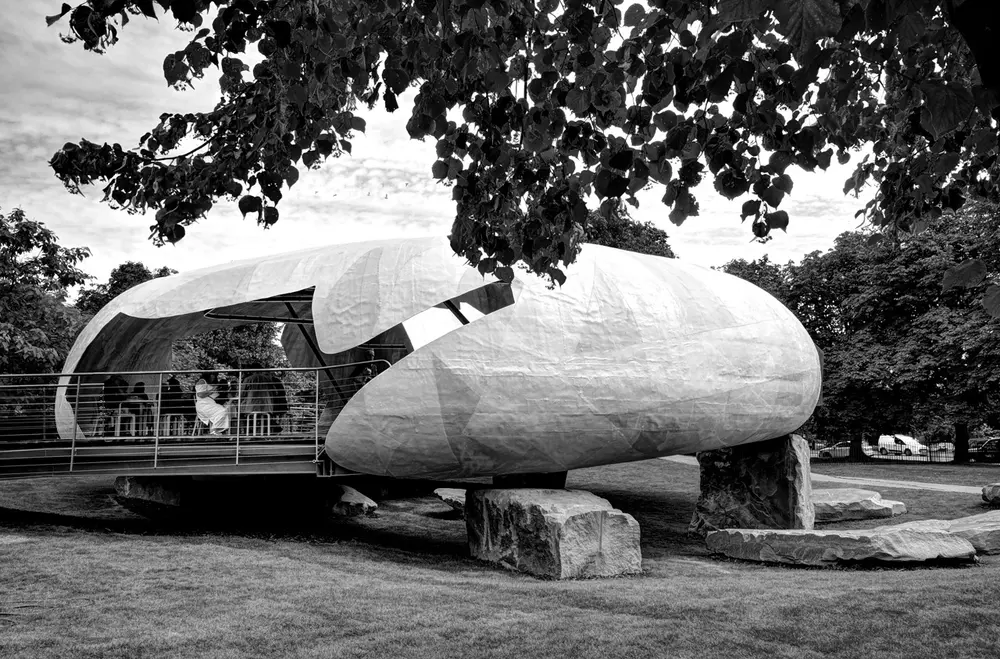
A black and white photo of a pavilion like a cracked, hollow white shell, resting on large rough boulders on a lawn under trees.
Picture: Images George Rex from London, England. CC BY-SA 2.0.

Pritzker Architecture Prize

Where
Given worldwide by the Hyatt Foundation, based in Chicago
When
Every year since 1979
Who
Founded by Jay and Cindy Pritzker
Key works
The photo shows the 2014 Serpentine Pavilion in London by Smiljan Radić, the 2026 winner

Jay and Cindy Pritzker, the family behind the Hyatt hotels, founded the prize in 1979 to honour a living architect for a lifetime of built work. The winner, called the laureate, receives US$100,000 and a bronze medallion, and the prize is often called the Nobel Prize of architecture. In 2018 Balkrishna Doshi became the first Indian laureate, and as of October 2026 he is still the only one. The 2025 prize went to Liu Jiakun of China. The 2026 prize, announced in March 2026, went to Smiljan Radić of Chile, the second Chilean winner after Alejandro Aravena in 2016. His pavilion for London's Serpentine Gallery (2014) was a thin fibreglass shell resting on huge stones.

Remember

Pritzker since 1979; Doshi 2018, India's only one so far.

Don't confuse

The Pritzker is for one architect's whole body of work, not for a single building.

Shilp Guru and National Handicrafts Awards

Where
New Delhi, presented by the President of India
When
National Awards since 1965; Shilp Guru since 2002
Who
Ministry of Textiles, through the Development Commissioner (Handicrafts)

India's government honours master craftspeople with two main awards. The National Handicrafts Awards, given since 1965, reward outstanding pieces of craft work. The Shilp Guru ("craft teacher") award, started in 2002 to mark fifty years of the revival of Indian handicrafts, is the highest honour in the sector. It goes to masters who are not only highly skilled but have also passed their craft on to the next generation, and it brings ₹2 lakh, a gold coin, a shawl and a tamrapatra (an inscribed copper plate). As of October 2026, the latest awards were presented by President Droupadi Murmu on 9 December 2025, during National Handicrafts Week, for the years 2023 and 2024.

Remember

Shilp Guru means "craft teacher": the honour is for skill and for teaching it.

Award comparison

Award Country Started What it rewards
Good Design United States (Chicago) 1950 Well-designed products and graphics
iF Design Award Germany (Hanover) 1953 show, awards from 1954 Products, packaging, communication, interiors
Compasso d'Oro Italy (Milan) 1954 Industrial design
Cannes Lions France (begun in Venice, Italy) 1954 Advertising and creative communication
Red Dot Germany (Essen) 1955 Product, brand and communication design, and concepts
Good Design Award (G Mark) Japan 1957 Products, buildings, software and services
D&AD Pencils United Kingdom (London) 1962 (first awards 1963) Advertising and design
National Handicrafts Awards India 1965 Outstanding craft work by master artisans
Pritzker Prize Given worldwide from the United States 1979 A living architect's lifetime of work
IDEA United States 1980 Industrial design
Shilp Guru India 2002 Master craftspeople who also teach
India Design Mark (I Mark) India 2012 Well-designed products

Ideas borrowed from nature

Biomimicry (from the Greek bios, life, and mimesis, copying) means solving design problems by studying how plants and animals already solve them. Nature has had millions of years to test its designs. CEED 2022 asked students to match four animals and plants with the products they inspired; all four are in this section.

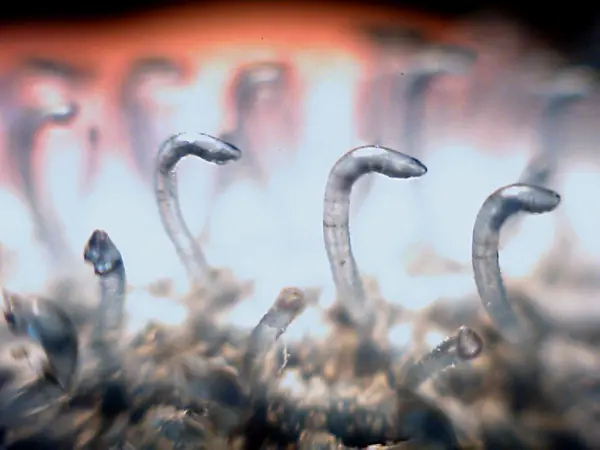
A close-up of Velcro, showing tiny curved plastic hooks standing up from a woven base like little walking sticks.
Picture: Flickr User Olivepixel. CC BY-SA 2.0.

Velcro

Also called Hook-and-loop fastener

Where
Switzerland
When
Idea in the 1940s; patented in 1955
Who
George de Mestral, Swiss engineer
Made with
One strip of tiny nylon hooks and one strip of soft loops

After a walk in the Alps with his dog, de Mestral found burrs, the prickly seed heads of plants such as burdock, stuck to his clothes and the dog's fur. Under a microscope he saw that each burr was covered in hundreds of tiny hooks that caught on any loop of thread or hair. He spent years copying this in nylon: one strip covered in tiny hooks and one covered in loops, which grip when pressed together and peel apart. He patented it in 1955 and named it Velcro, from the French words velours (velvet) and crochet (hook). It was later used on astronauts' space suits, and now holds shoes, bags and much more together.

Remember

Velcro is a burr you can buy: velvet plus hooks.
A silver bullet train with a very long, smooth, pointed nose and a round cab window, running on tracks under overhead wires.
Picture: JobanLineE531 at Japanese Wikipedia. CC BY 3.0.

500 Series Shinkansen

Also called The kingfisher-nosed bullet train

Where
Japan, run by JR West
When
In passenger service from 1997
Who
Eiji Nakatsu, JR West engineer and birdwatcher

When a fast train shoots into a tunnel, it pushes a wall of air ahead of it, which bursts out of the far end with a loud bang, called a tunnel boom, that disturbed people living nearby. Eiji Nakatsu, an engineer and keen birdwatcher, thought of the kingfisher, a bird that dives from air into water with hardly a splash. The 500 Series was given a long, rounded nose shaped like a kingfisher's beak. It was quieter, and according to Nakatsu it used about 15 percent less electricity while running about 10 percent faster than before. It was the first Japanese train to run at 300 km/h in regular service.

Spot it by

A very long, smooth, needle-like silver nose.

Remember

The kingfisher taught the bullet train to enter tunnels quietly.
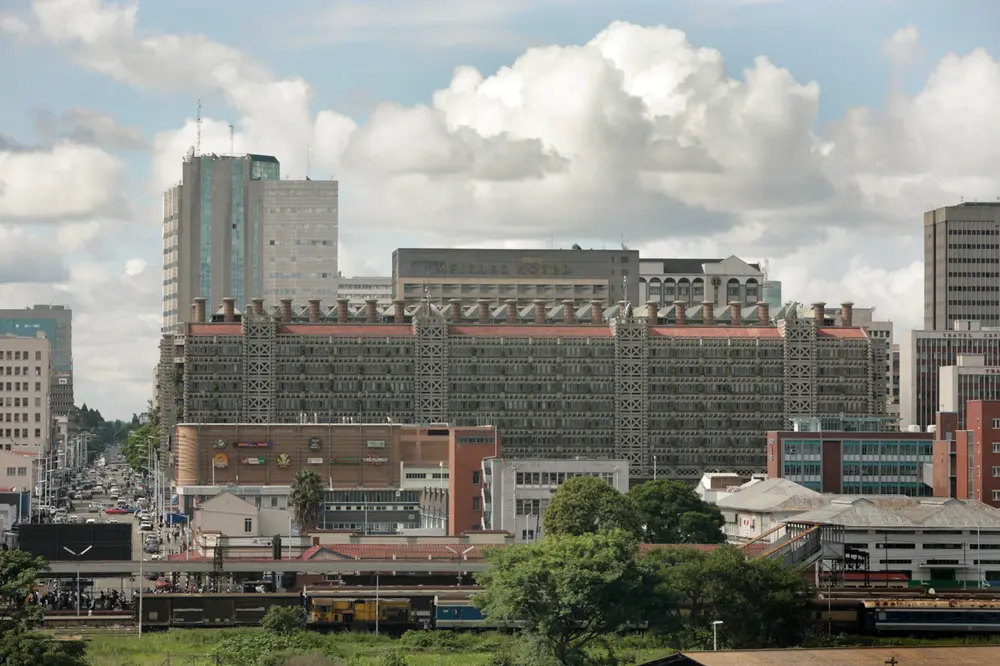
A view across a city centre to a long, low-rise block whose roof is lined with rows of tall brick chimneys.
Picture: David Brazier. CC BY-SA 3.0.

Eastgate Centre

Where
Harare, Zimbabwe
When
Opened 1996
Who
Mick Pearce, architect, with the engineers Arup
Made with
Heavy concrete and brick, with rows of chimneys on the roof

The owners wanted a big office and shopping block that would not need expensive air conditioning. Pearce looked at termite mounds, which stay at a steady temperature inside while the air outside swings from hot days to cold nights. His building stores heat in its thick concrete and brick walls. At night, fans pull cool air through it; by day, warm air rises and escapes through the chimneys on the roof. Early reports said it used less than a tenth of the energy of a normal building of its size. Later research found that real termite mounds breathe in a more complicated way than Pearce had assumed, but his building still shows how nature can help cool a building.

Spot it by

Rows of tall brick chimneys along the roof.

Remember

Eastgate breathes like a termite mound.
Nature Design What it copies
Burrs (burdock) Velcro Tiny hooks that catch on loops
Kingfisher's beak 500 Series Shinkansen nose A shape that pierces air or water without a bang or splash
Termite mound Eastgate Centre, Harare Steady inside temperature without machines
Humpback whale's flipper Bumpy-edged blades for wind turbines and fans Bumps (tubercles) on the front edge that let it turn sharply without losing lift
Gecko's feet Gecko tape and climbing pads Millions of tiny hairs that cling to smooth surfaces
Lotus leaf Self-cleaning paints, glass and fabrics A surface that water rolls off, carrying the dirt with it

Frugal innovation in India

Frugal innovation means designing something that works well at a very low cost, often for people who cannot afford the usual product. The best examples are designed around how people really live.

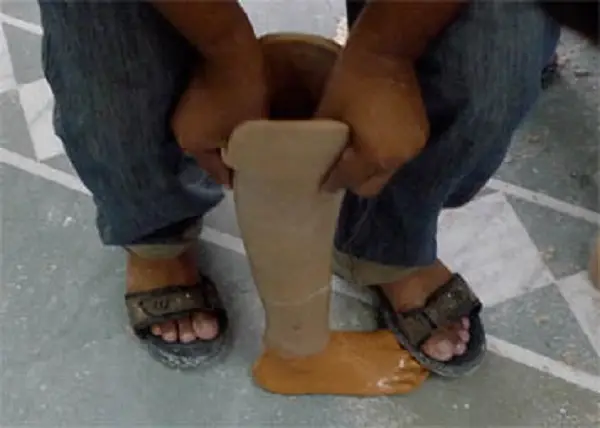
A seated person holds a beige artificial lower leg and foot, made of rubber, upright between their sandalled feet.
Picture: Nadya Peek. CC BY 2.0.

Jaipur Foot

Also called Jaipur leg

Where
Jaipur, Rajasthan
When
1968
Who
Dr P.K. Sethi, orthopaedic surgeon, and Ram Chandra Sharma, craftsman
Made with
Rubber and a wooden block, coated in vulcanised (heat-hardened) rubber

At the Sawai Man Singh (SMS) hospital and medical college in Jaipur, Dr Sethi and the craftsman Ram Chandra Sharma, known as "Masterji", made a cheap artificial foot for people who had lost a leg below the knee. Imported artificial feet were costly and did not let a person squat, sit cross-legged, walk barefoot or work in wet fields, all part of daily life in rural India. The Jaipur Foot can do all of these and is waterproof. It was never patented, so anyone could make it. The charity Bhagwan Mahaveer Viklang Sahayata Samiti (BMVSS), set up in Jaipur in 1975 by D.R. Mehta, fits it free of charge.

Remember

The Jaipur Foot can squat and sit cross-legged, like the people who wear it.

Don't confuse

NID 2020 asked what the Jaipur Foot is. It is an artificial (prosthetic) leg, not a shoe brand or a place.
A small white clay cabinet on short legs, with a lid and a small tap on its top section and two shelves of tomatoes, beans and other vegetables below.
Picture: Mitticool (Clay Creations). Copyright Mitticool, shown for teaching.

Mitticool clay fridge

Where
Morbi area, Gujarat
When
Work began in 2002
Who
Mansukhbhai Prajapati, potter
Made with
Terracotta clay

Mansukhbhai Prajapati, from a family of potters, lost most of his stock in the Gujarat earthquake of January 2001. A newspaper photo of one of his broken clay water filters carried the caption "the broken fridge of the poor", and it gave him an idea: a real fridge, made of clay, that needs no electricity. He began work in 2002, helped by grassroots innovation networks. Water poured into a tank at the top soaks into the porous clay walls and evaporates from the outside, which cools the food chamber below, just as a matka (clay water pot) keeps water cool. It works best in hot, dry weather. The National Innovation Foundation honoured his range of clay kitchen products at its National Grassroots Innovation Awards in 2009.

Remember

Mitticool is a matka turned into a fridge.

Timeline

  1. 1950

    MoMA and Chicago's Merchandise Mart begin the Good Design exhibitions

  2. 1953

    The iF show of well-designed goods begins at the Hanover Fair

  3. 1954

    La Rinascente starts the Compasso d'Oro in Milan; the first advertising film festival, later Cannes Lions, is held in Venice

  4. 1955

    Essen holds the first jury show that grew into Red Dot; George de Mestral patents Velcro

  5. 1957

    Japan starts the Good Design selection system and the G Mark

  6. 1962

    D&AD is founded in London

  7. 1965

    India's National Handicrafts Awards begin

  8. 1968

    Dr P.K. Sethi and Ram Chandra Sharma create the Jaipur Foot

  9. 1975

    BMVSS is set up in Jaipur to fit the Jaipur Foot free

  10. 1979

    The first Pritzker Architecture Prize is awarded

  11. 1980

    IDSA begins the IDEA awards

  12. 1984

    Cannes Lions settles in Cannes

  13. 1996

    The Eastgate Centre opens in Harare

  14. 1997

    The 500 Series Shinkansen enters service; the Red Dot Design Museum opens at Zollverein

  15. 2001

    The Gujarat earthquake sets Mansukhbhai Prajapati thinking about a clay fridge

  16. 2002

    The first Shilp Guru awards

  17. 2009

    Iwamizawa Station wins Japan's Good Design Grand Award

  18. 2012

    The India Design Council begins the India Design Mark

  19. 2018

    B.V. Doshi becomes the first Indian to win the Pritzker Prize

  20. 2026

    Smiljan Radić of Chile wins the Pritzker Prize

Test yourself

Question 1 of 8

The nose of this bullet train was modelled on which bird?

Question 2 of 8

Which of these buildings is cooled by an idea taken from termite mounds?

Question 3 of 8

Products that win which award carry this mark?

Question 4 of 8

This Olivetti typewriter won which Italian design award in 1954?

Question 5 of 8

What did George de Mestral copy to invent this fastener?

Question 6 of 8

As of October 2026, who is the only Indian to have won the Pritzker Architecture Prize?

Question 7 of 8

The Jaipur Foot is

Question 8 of 8

Bumps on the flippers of humpback whales have inspired which design?

From past papers

Real exam questions on this topic, each with a full solution.

Finished this note?

Mark it as studied to track your progress through the course.

Was this note useful?

Each picture is credited underneath it. Pictures of works still in copyright are shown small, for teaching only. If you hold the rights to a picture and want it removed, tell us through the contact page and we will take it down.