Skip to content

Chapter 11: Cinema, photography and media

Indian cinema

The firsts of Indian film from Raja Harishchandra to the first talkie and colour film, Satyajit Ray, the Dadasaheb Phalke Award, every Indian Oscar win and the big Cannes prizes, as of October 2026.

In one minute

5 facts to know

  1. Dadasaheb Phalke made Raja Harishchandra (1913), India's first full-length feature film. Ardeshir Irani made Alam Ara (1931), the first Indian talkie, and produced Kisan Kanya (1937), the first colour film made fully in India.
  2. Satyajit Ray's first film, Pather Panchali (1955), won a prize at Cannes in 1956. Ray received an honorary Oscar in 1992. Before films he worked as a graphic designer and later designed typefaces.
  3. Bhanu Athaiya was the first Indian to win an Oscar, for the costumes of Gandhi (1983). Resul Pookutty, A.R. Rahman and Gulzar won for Slumdog Millionaire (2009); Naatu Naatu and The Elephant Whisperers won in 2023.
  4. The Dadasaheb Phalke Award, India's highest film honour, began in 1969 with Devika Rani. As of October 2026 the latest winner is the actor Anant Nag (the award for 2024, presented on 22 September 2026).
  5. Payal Kapadia's All We Imagine as Light won the Grand Prix at Cannes in 2024, the festival's second-highest prize.

The first Indian films

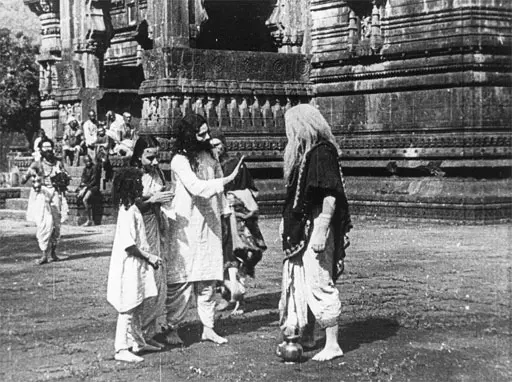
A black and white still from Raja Harishchandra: actors in robes and turbans standing in the courtyard of a carved stone temple.
Picture: Unknown author. Public domain.

Raja Harishchandra

Where
Bombay (now Mumbai)
When
Released on 3 May 1913
Who
Made by Dadasaheb Phalke (1870 to 1944)

India's first full-length feature film, a silent film about the truthful king Harishchandra from Indian legend. Phalke wrote, directed, produced and edited it after seeing a film about the life of Christ in 1911 and learning filmmaking in London. No women would act, so men played the female roles. Phalke is called the father of Indian cinema, and the country's top film award is named after him.

Remember

1913, Phalke, Harishchandra: India's first feature film.

Don't confuse

Raja Harishchandra (1913) was silent; Alam Ara (1931) was the first with sound.
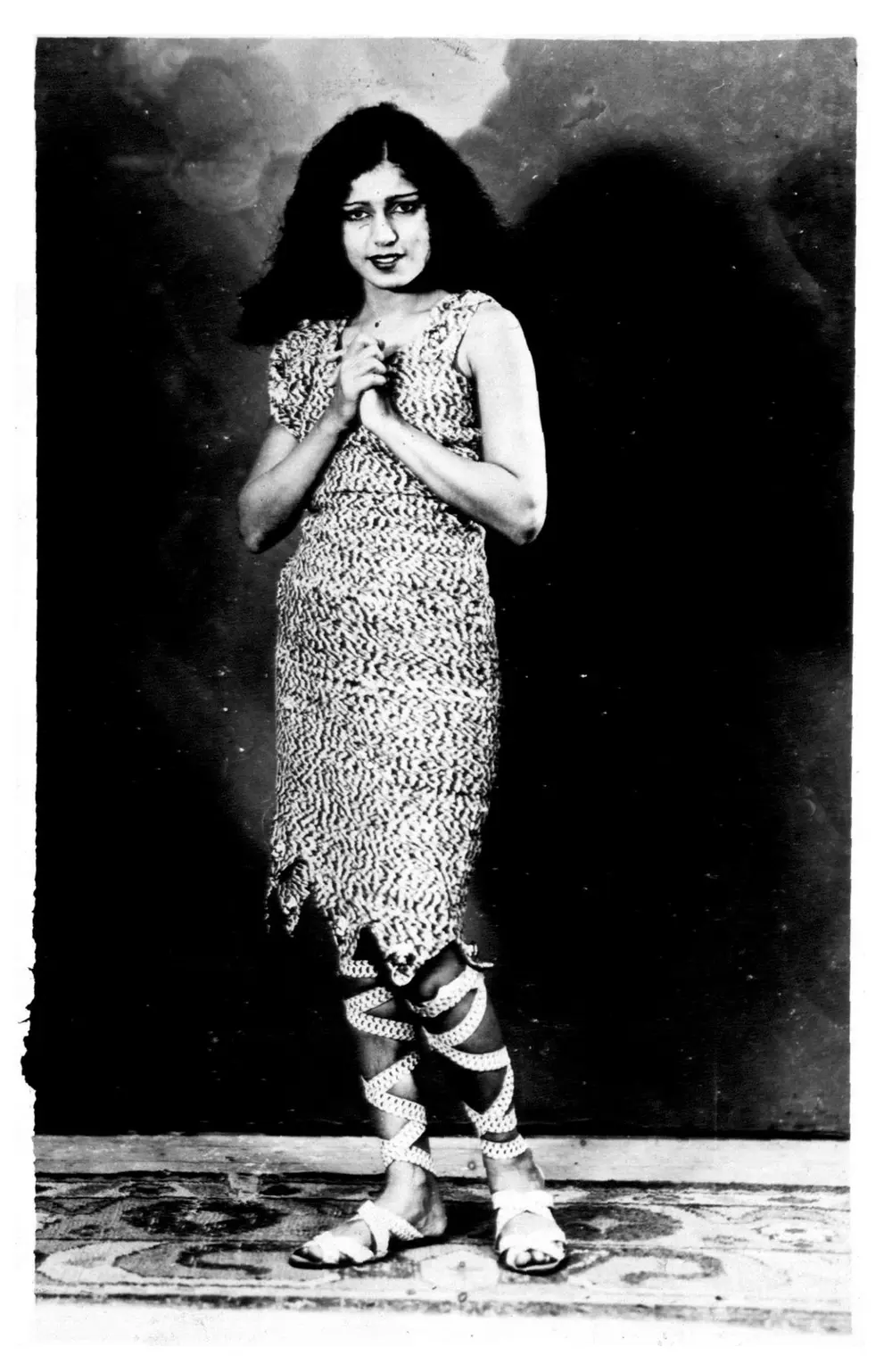
A black and white publicity photograph of the actress Zubeida as Alam Ara, standing barefoot in a sequinned costume with her hands folded.
Picture: Shruti Swamy from India. CC BY 2.0.

Alam Ara

When
Released on 14 March 1931
Who
Made by Ardeshir Irani; starring Zubeida and Prithviraj Kapoor

The first Indian talkie, a film with recorded speech and songs. It was a fantasy about a king, his two wives and a lost princess, and its songs made it a hit. The studio was near a railway line, so much of it was shot at night to avoid train noise. No complete copy is known to survive.

Remember

Alam Ara, 1931: India learns to talk on screen.
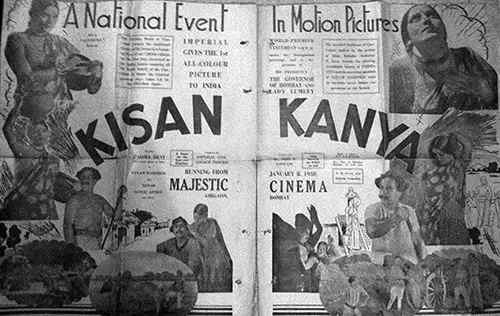
An old newspaper advertisement for Kisan Kanya with the title in large letters, describing it as the first all-colour picture made in India, with drawings of the film's characters.
Picture: Ardeshir Irani. Public domain.

Kisan Kanya

When
1937
Who
Produced by Ardeshir Irani; directed by Moti Gidwani

The first colour feature film made entirely in India, shot with an American process called Cinecolor. Its story, by the writer Saadat Hasan Manto, is about poor farmers. V. Shantaram's Sairandhri (1933) had some colour scenes earlier, but its prints were processed in Germany.

Remember

Irani gave India both its first sound film (1931) and its first Indian-made colour film (1937).
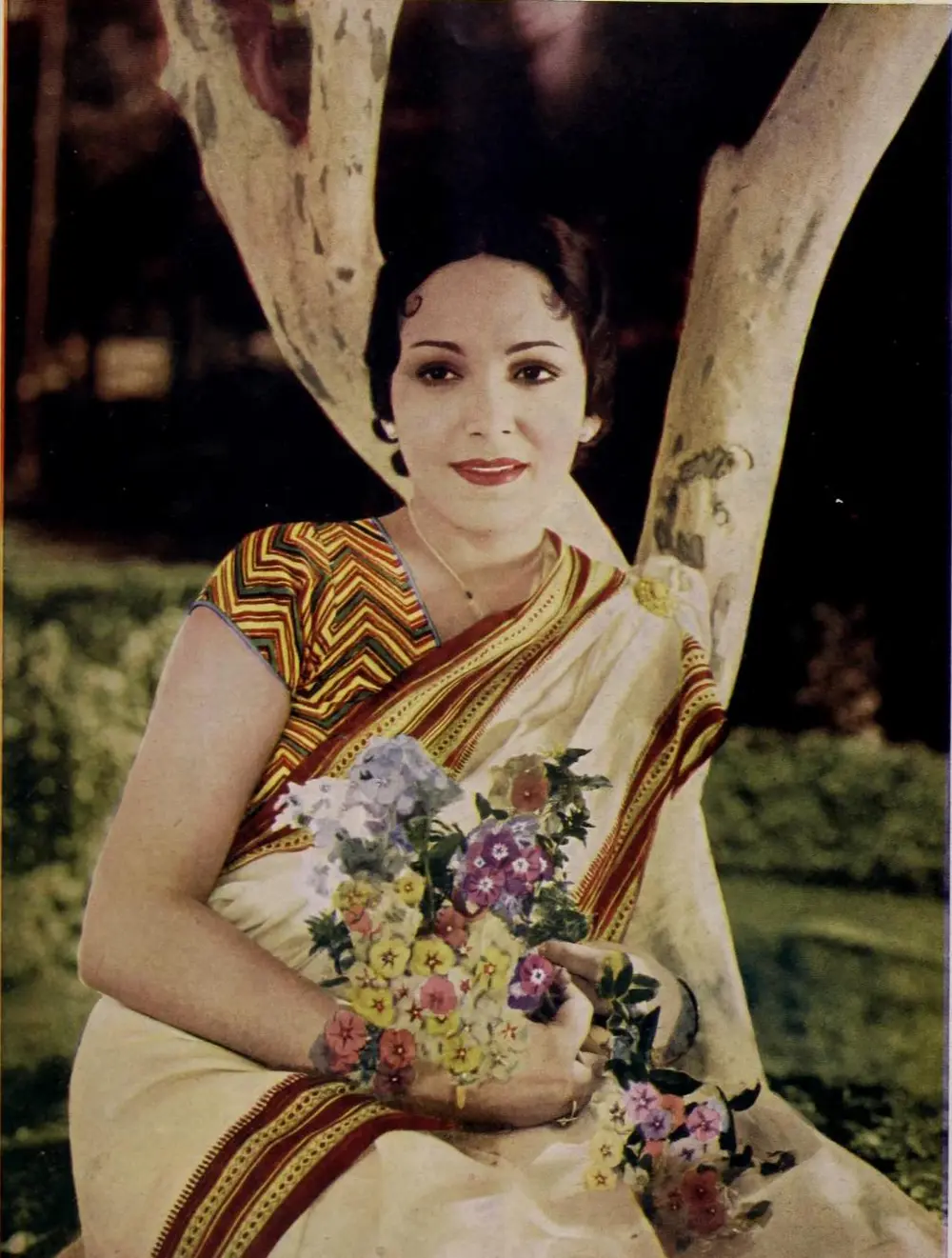
A hand-coloured 1938 publicity photograph of Devika Rani in a cream sari, seated against a tree trunk and holding a bunch of flowers.
Picture: Unknown author. Public domain.

Devika Rani

When
1908 to 1994
Who
Actor; co-founder of Bombay Talkies with Himanshu Rai

Called the first lady of Indian cinema, she trained in filmmaking in Berlin and, with her husband Himanshu Rai, ran the Bombay Talkies studio from 1934. She starred in films such as Achhut Kanya (1936). In 1969 she became the first person to receive the Dadasaheb Phalke Award.

Remember

The first Phalke Award went to the first lady of Indian cinema.

Satyajit Ray

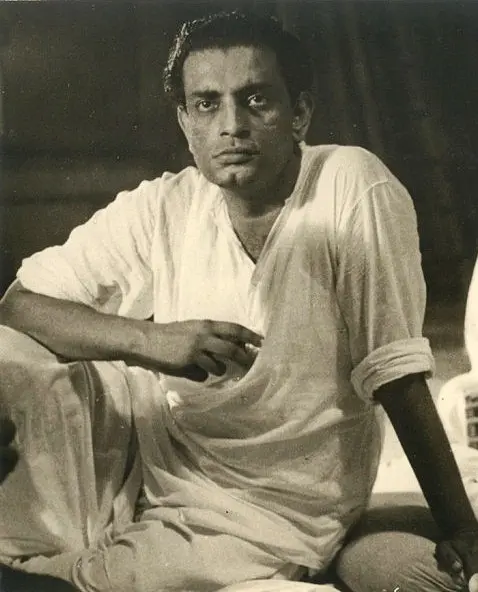
A black and white photograph of a young Satyajit Ray in a white kurta, sitting on the floor with one arm resting on his knee, during the recording of music for Pather Panchali.
Picture: Unknown author. Public domain.

Satyajit Ray

Where
Calcutta (now Kolkata)
When
1921 to 1992
Key works
Pather Panchali (1955), Aparajito, Apur Sansar, Charulata, Goopy Gyne Bagha Byne

India's most famous film director. His first film, Pather Panchali (1955), about a poor village boy called Apu, won the National Film Award for Best Feature Film and the Best Human Document prize at Cannes in 1956; with two sequels it forms the Apu Trilogy. On 30 March 1992, too ill to travel, he accepted an honorary Oscar by video from a hospital bed in Calcutta, and India gave him the Bharat Ratna the same year. He died weeks later.

Remember

Ray is the only Indian filmmaker with an honorary Oscar (1992).

Don't confuse

Ray's Oscar was honorary, for his whole career. Bhanu Athaiya's 1983 Oscar was the first won by an Indian in a competitive category.

Ray the designer

When
Advertising work from 1943
Who
Satyajit Ray as illustrator, book designer and type designer

Before films, Ray worked as a junior visualiser (someone who plans how an advertisement will look) at the British agency D.J. Keymer in Calcutta, and he designed book covers for Signet Press. In 1944 he illustrated a children's edition of Pather Panchali for Signet, which is how he came to the story he later filmed. He designed his own film posters and title cards, drew Bengali lettering, edited and illustrated the children's magazine Sandesh, and designed English typefaces such as Ray Roman and Ray Bizarre.

Remember

Ray drew before he directed: adman, book designer, type designer, then filmmaker.

Indian films and the Oscars

The Oscars are the Academy Awards, given each year in Los Angeles by the Academy of Motion Picture Arts and Sciences.

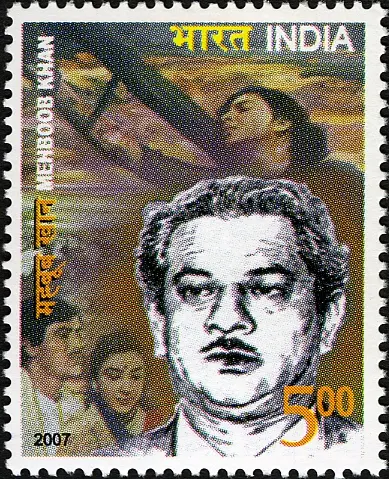
A 2007 Indian postage stamp showing a drawn portrait of Mehboob Khan in black and white, with scenes from his films in faded colour behind him.
Picture: India Post, Government of India. GODL-India.

Mother India

When
1957; Oscar nomination in 1958
Who
Directed by Mehboob Khan; starring Nargis

The story of Radha, a poor village woman who raises her sons alone and stands up to a cruel moneylender. It was India's first entry for the Oscar for best foreign-language film and the first to be nominated, at the ceremony of March 1958; it lost to Italy's Nights of Cabiria. As of October 2026, only two other Indian films have been nominated in that category: Salaam Bombay! (1988) and Lagaan (2001).

Remember

Three Indian nominations, no win: Mother India, Salaam Bombay!, Lagaan.
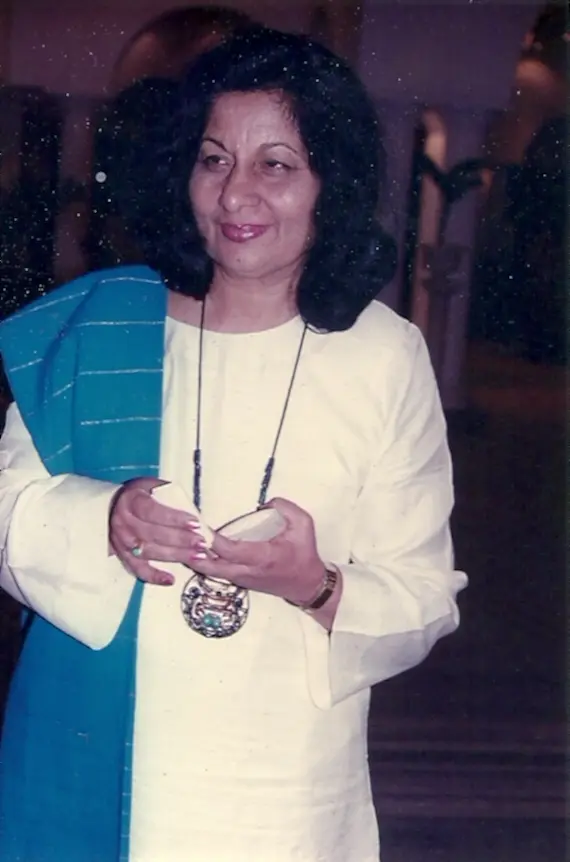
A photograph of Bhanu Athaiya with dark curly hair, in a white outfit with a blue scarf and a large round pendant, holding a small object in her hands.
Picture: Aniruddha Gupta. CC BY-SA 3.0.

Bhanu Athaiya

When
Won the Oscar on 11 April 1983
Who
Costume designer, 1929 to 2020

The first Indian to win an Oscar. She shared the award for Best Costume Design with John Mollo for Richard Attenborough's film Gandhi (1982). Before that she had designed costumes for Hindi films for nearly 30 years, from Guru Dutt's films to Lagaan, in more than 100 films in all.

Remember

First Indian Oscar: Bhanu, for Gandhi's clothes, 1983.
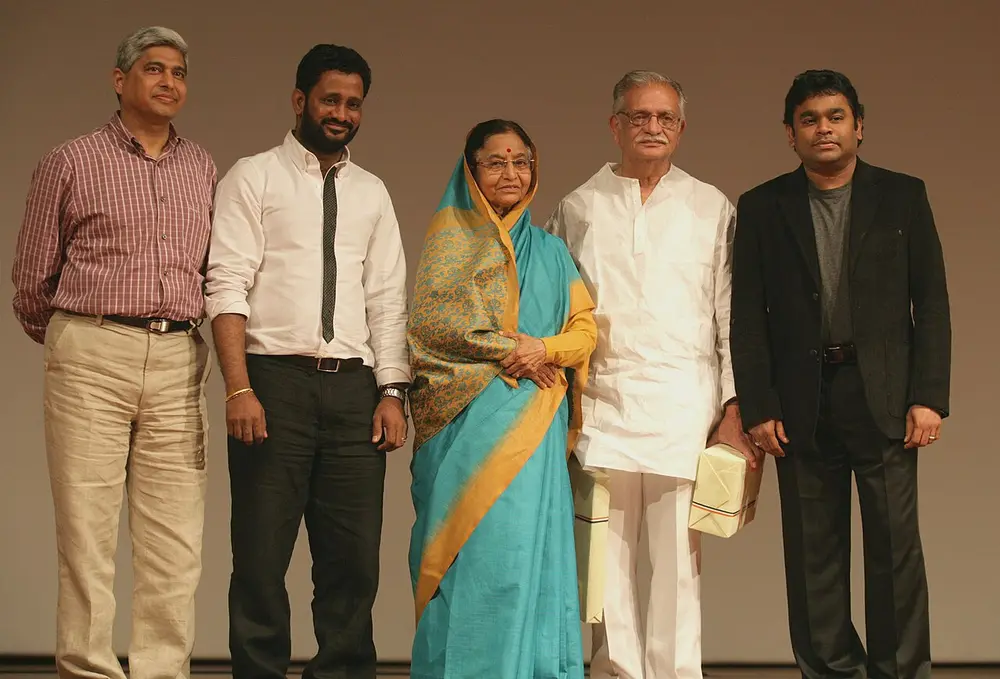
Five people standing in a row on a stage: from the left, Vikas Swarup, Resul Pookutty, President Pratibha Patil in a sari, Gulzar in white, and A.R. Rahman in a black suit.
Picture: President's Secretariat. GODL-India.

Slumdog Millionaire's Indian winners

When
22 February 2009
Who
Resul Pookutty, A.R. Rahman and Gulzar

Slumdog Millionaire, a British film by Danny Boyle set in Mumbai, won eight Oscars, and Indians won in three of those categories: Resul Pookutty for Sound Mixing (with Ian Tapp and Richard Pryke), A.R. Rahman for Original Score, and Rahman with the lyricist Gulzar for Original Song, "Jai Ho". The film was based on the novel Q and A by Vikas Swarup, seen here on the left.

Remember

2009: Rahman won two, Gulzar and Pookutty one each.
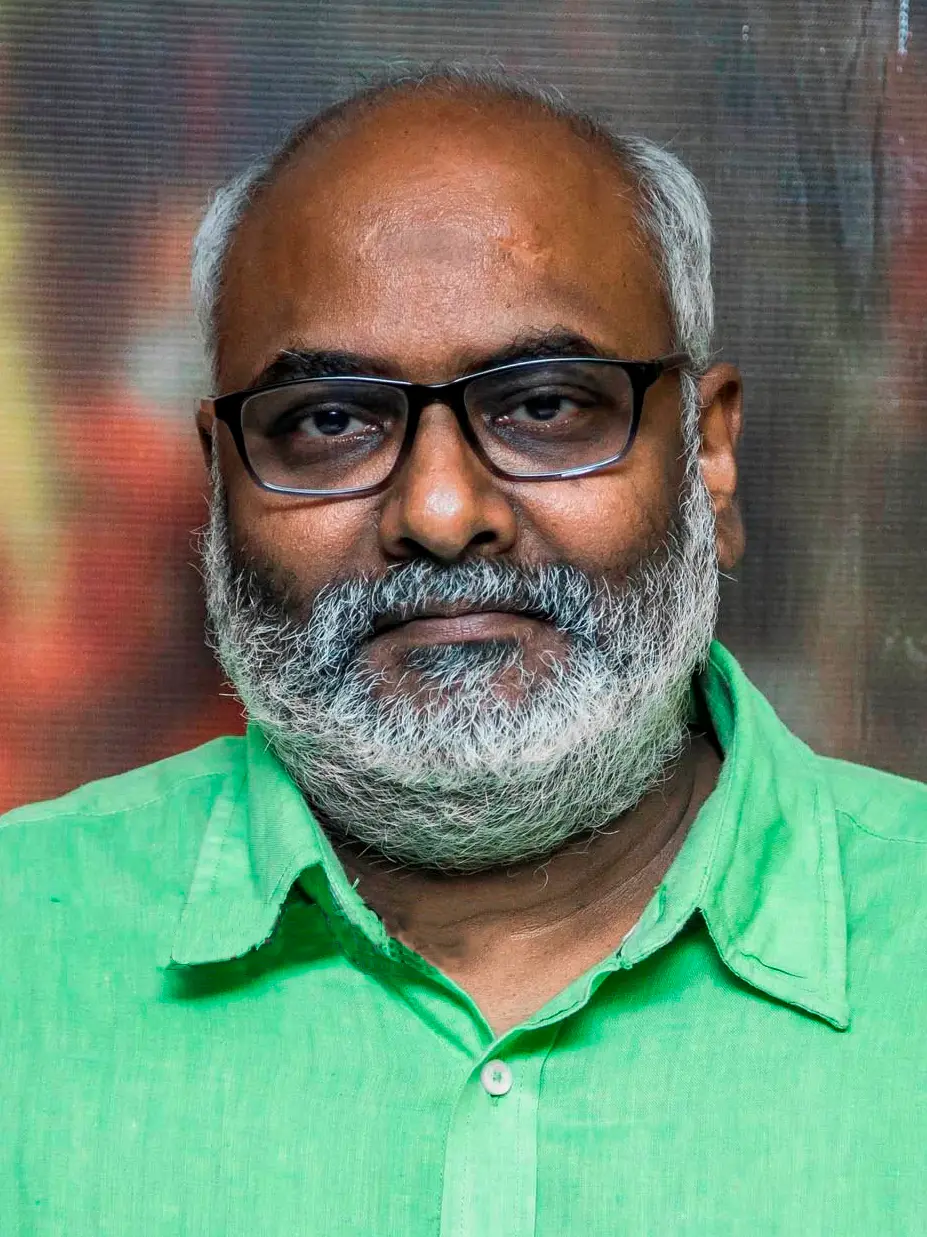
A portrait of the composer M.M. Keeravani with grey hair, a grey beard and glasses, in a green shirt.
Picture: Silverscreen Media Inc. (https://silverscreen.in). CC BY-SA 3.0.

Naatu Naatu

When
12 March 2023
Who
Music by M.M. Keeravani; lyrics by Chandrabose

A fast Telugu dance song from S.S. Rajamouli's film RRR (2022). It won the Oscar for Best Original Song, the first song from an Indian film to do so, after also winning a Golden Globe. Its hook step, danced in step by the two heroes, went around the world.

Remember

Naatu Naatu, 2023: the first Oscar for a song from an Indian film.

Don't confuse

"Jai Ho" (2009) also won Best Original Song, but it was from a British film, Slumdog Millionaire.
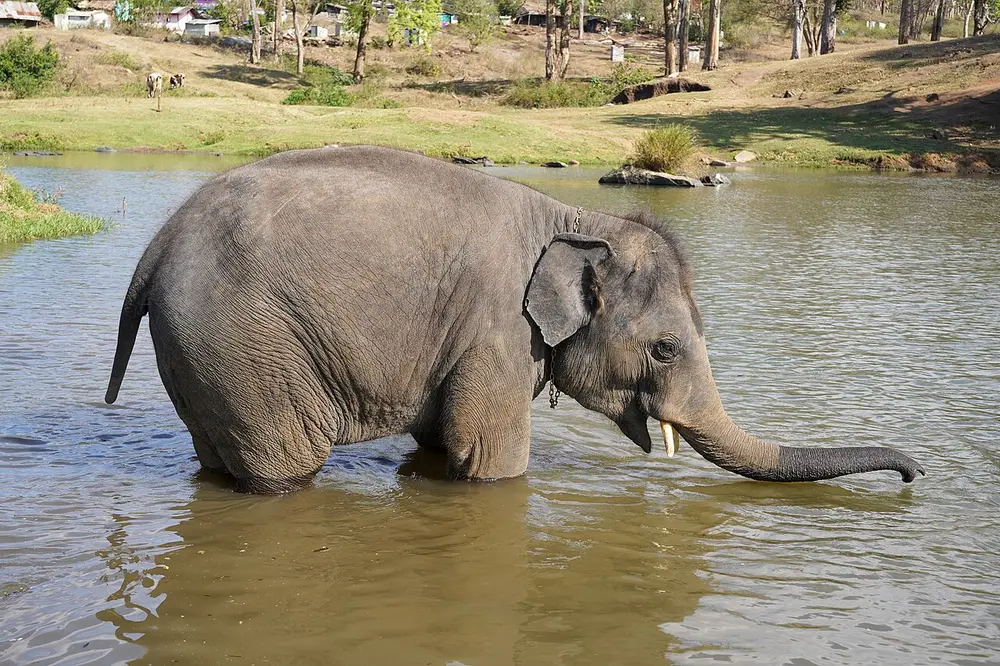
Raghu, a young elephant, standing knee-deep in a river and dipping his trunk into the water, with grassland and trees behind.
Picture: Timothy A. Gonsalves. CC BY-SA 4.0.

The Elephant Whisperers

Where
Mudumalai National Park, Tamil Nadu
When
12 March 2023
Who
Directed by Kartiki Gonsalves; produced by Guneet Monga

A short documentary about Bomman and Bellie, a couple from the Kattunayakan tribe, who raise an orphaned baby elephant called Raghu (seen here) at an elephant camp. It won the Oscar for Best Documentary Short Film, the first Indian film to win in that category, on the same night as Naatu Naatu.

Remember

Two Indian Oscars in one night in 2023: a song and an elephant.
Year Winner Oscar Film
1983 Bhanu Athaiya (with John Mollo) Costume Design Gandhi
1992 Satyajit Ray Honorary Award His whole career
2009 Resul Pookutty (with two others) Sound Mixing Slumdog Millionaire
2009 A.R. Rahman Original Score Slumdog Millionaire
2009 A.R. Rahman and Gulzar Original Song, "Jai Ho" Slumdog Millionaire
2023 M.M. Keeravani and Chandrabose Original Song, "Naatu Naatu" RRR
2023 Kartiki Gonsalves and Guneet Monga Documentary Short Film The Elephant Whisperers

Awards at home

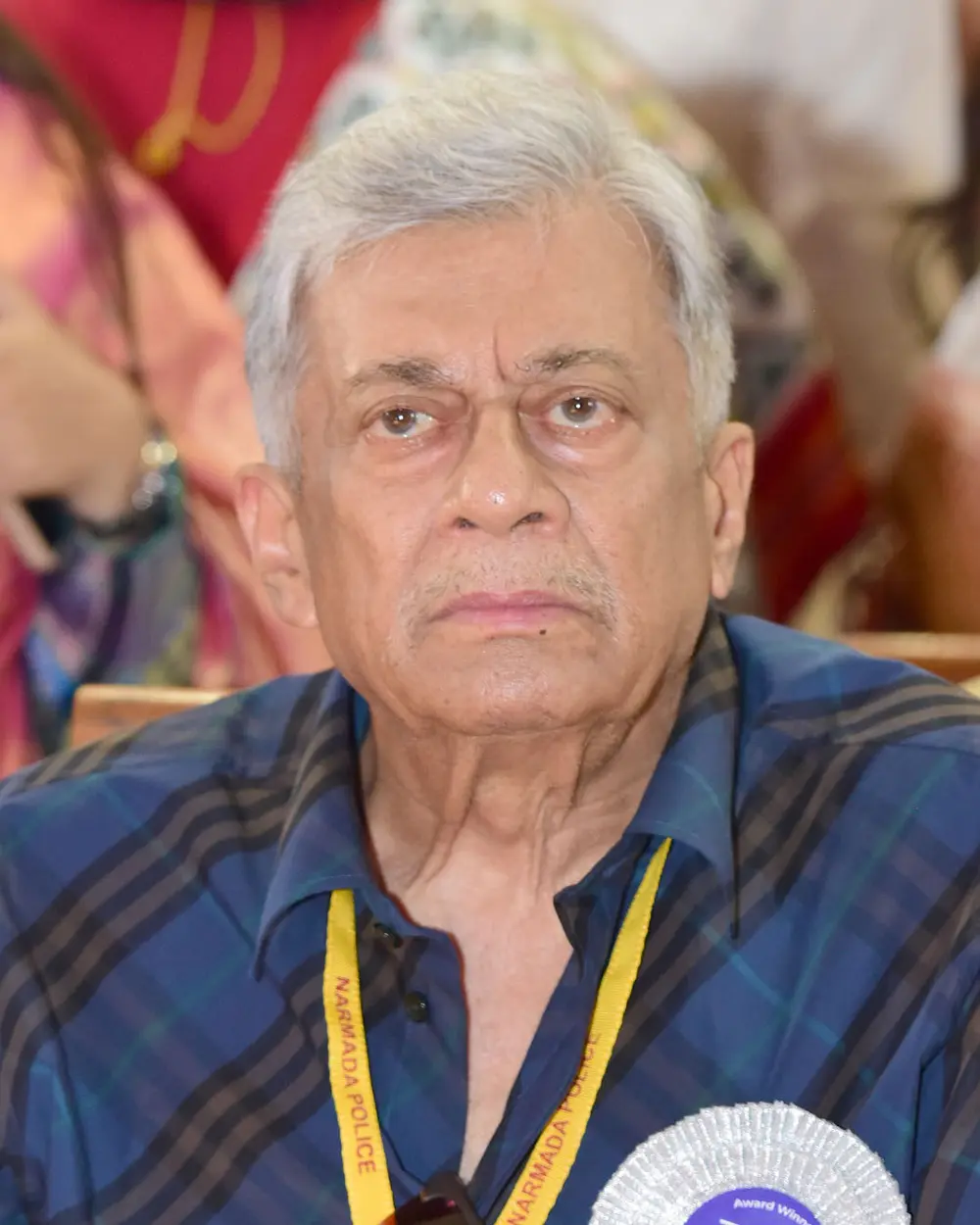
The actor Anant Nag, an older man with white hair, in a checked shirt and a lanyard, at the National Film Awards ceremony in 2026.
Picture: President's Secretariat. GODL-India.

Dadasaheb Phalke Award

When
Given since 1969
Who
The Government of India, presented by the President at the National Film Awards

India's highest award in cinema, given for a lifetime's contribution and named after Dadasaheb Phalke. The winner receives a Swarna Kamal (golden lotus), a cash prize and a shawl. The first went to Devika Rani in 1969. As of October 2026 the latest is the Kannada actor Anant Nag (shown here), given the award for 2024 at a ceremony in Kevadia, Gujarat, on 22 September 2026; before him came Mohanlal (2023) and Mithun Chakraborty (2022).

Remember

First: Devika Rani (1969). Latest, as of October 2026: Anant Nag.

Don't confuse

The "Dadasaheb Phalke International Film Festival Awards" are a private event, not this government award.

National Film Awards

When
Since 1954
Who
Government of India; presented by the President

India's main state awards for films, given every year for films of the year before, in every Indian language. The top prizes are the Swarna Kamal (golden lotus) and the Rajat Kamal (silver lotus). The Dadasaheb Phalke Award is presented at the same ceremony. The 72nd awards, for films of 2024, were presented on 22 September 2026.

Remember

Golden lotus for the best, silver lotus for the next.

Cannes

The Cannes Film Festival in France is the most famous film festival in the world. Its top prize is the Palme d'Or (golden palm) and the second is the Grand Prix.

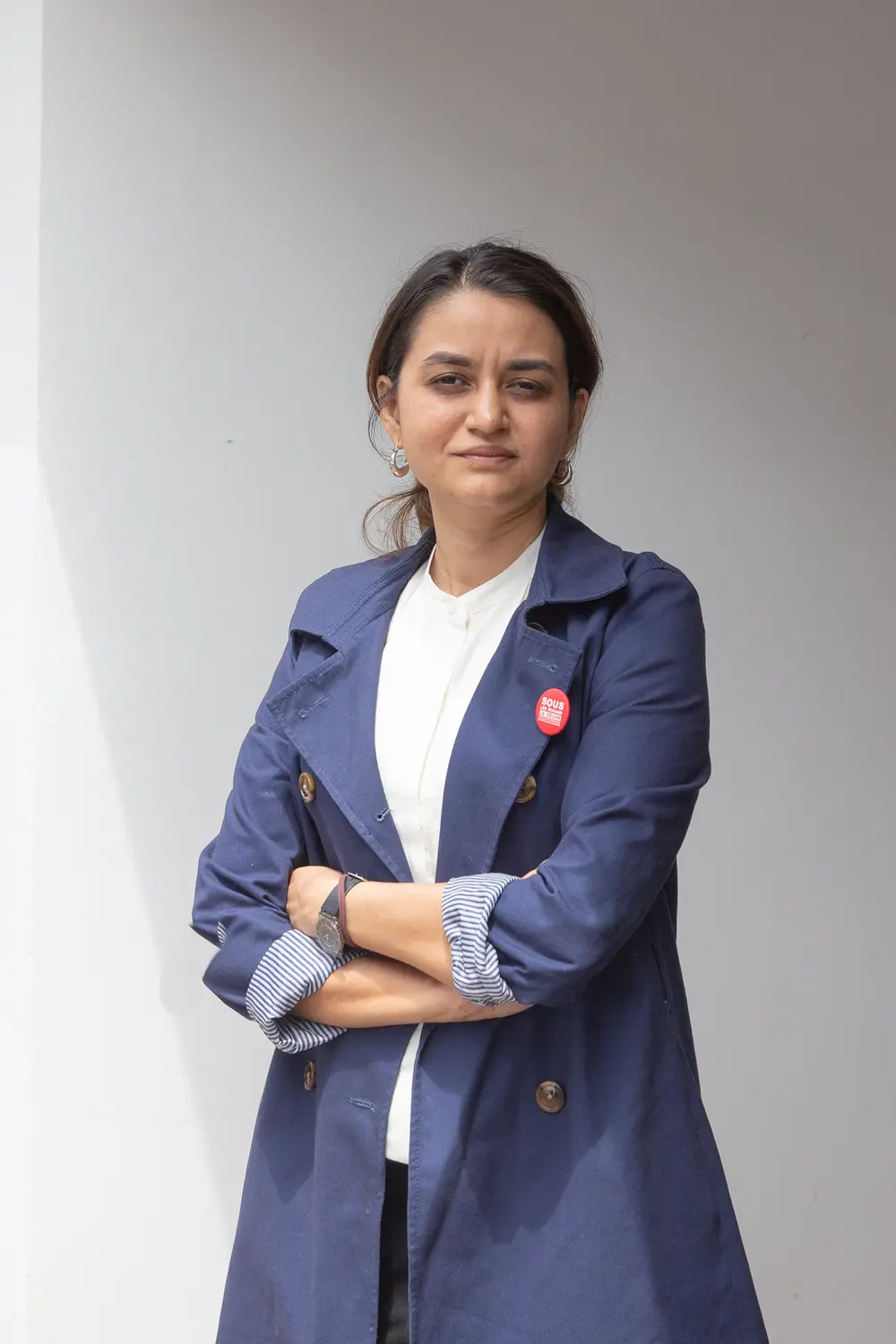
The director Payal Kapadia standing with her arms folded in a navy blue coat over a white top, in front of a plain white wall at Cannes in 2024.
Picture: John Sears. CC BY-SA 4.0.

Payal Kapadia

When
Grand Prix at Cannes, 25 May 2024
Who
Director; studied at the Film and Television Institute of India (FTII), Pune
Key works
All We Imagine as Light (2024), A Night of Knowing Nothing (2021)

Her film All We Imagine as Light, about two nurses in Mumbai, was the first Indian film in the main competition at Cannes in 30 years, and it won the Grand Prix. At the same festival Anasuya Sengupta became the first Indian to win best actress in the Un Certain Regard section, and FTII student Chidananda S. Naik won the first prize for film-school shorts (La Cinef). As of October 2026 these were the latest Indian wins at Cannes.

Remember

Cannes 2024 gave India a Grand Prix, a best actress prize and a student-film prize.
Year Film or person Prize at Cannes
1946 Neecha Nagar (Chetan Anand) Shared the Grand Prix, then the top prize
1956 Pather Panchali (Satyajit Ray) Best Human Document
1988 Salaam Bombay! (Mira Nair) Camera d'Or, for a first film
2024 All We Imagine as Light (Payal Kapadia) Grand Prix
2024 Anasuya Sengupta, The Shameless Best actress, Un Certain Regard
2024 Sunflowers Were the First Ones to Know (Chidananda S. Naik) La Cinef first prize

Animation and posters

A black and white photograph of an older Ram Mohan with grey hair and glasses, in a white shirt.
Picture: Suhas Bahulkar and Deepak Ghare. CC BY-SA 4.0.

Ram Mohan

When
1931 to 2019
Who
Animator, often called the father of Indian animation

He began in 1956 at the new cartoon unit of the government's Films Division, trained by Clair Weeks, an animator from Disney. In 1972 he started his own studio, Ram Mohan Biographics, which made advertisements and title sequences. He co-directed the Indian and Japanese animated feature Ramayana: The Legend of Prince Rama (1992) with Yugo Sako, and created Meena, a UNICEF cartoon girl for South Asian children.

Remember

Ram Mohan: from Films Division (1956) to the animated Ramayana (1992).

Before digital printing, Hindi film posters and giant cinema hoardings were painted by hand. They are covered in Print, posters, comics and advertising.

Timeline

  1. 1913

    Dadasaheb Phalke releases Raja Harishchandra, India's first feature film (3 May)

  2. 1931

    Ardeshir Irani's Alam Ara, the first Indian talkie, opens (14 March)

  3. 1937

    Kisan Kanya, the first colour film made fully in India

  4. 1946

    Neecha Nagar shares the top prize at the first Cannes festival

  5. 1954

    The National Film Awards begin

  6. 1955

    Satyajit Ray's Pather Panchali is released

  7. 1956

    Pather Panchali wins Best Human Document at Cannes; the Films Division cartoon unit opens

  8. 1958

    Mother India becomes the first Indian film nominated for an Oscar

  9. 1969

    Devika Rani receives the first Dadasaheb Phalke Award

  10. 1983

    Bhanu Athaiya wins India's first Oscar, for Gandhi

  11. 1988

    Salaam Bombay! wins the Camera d'Or at Cannes

  12. 1992

    Satyajit Ray receives an honorary Oscar and the Bharat Ratna

  13. 2009

    Resul Pookutty, A.R. Rahman and Gulzar win Oscars for Slumdog Millionaire

  14. 2023

    Naatu Naatu and The Elephant Whisperers win Oscars

  15. 2024

    Payal Kapadia wins the Grand Prix at Cannes

  16. 2026

    Anant Nag receives the Dadasaheb Phalke Award for 2024 (22 September)

Test yourself

Question 1 of 8

Who was the first Indian to receive an Academy Award (Oscar)?

Question 2 of 8

This still is from India's first full-length feature film, released in 1913. Which film is it?

Question 3 of 8

Alam Ara (1931), starring the actress in this picture, is remembered as India's first

Question 4 of 8

Which of these people received the first Dadasaheb Phalke Award, in 1969?

Question 5 of 8

This elephant, Raghu, is the star of which Oscar-winning film?

Question 6 of 8

For which film did this director win the Grand Prix at Cannes in 2024?

Question 7 of 8

Before he made films, Satyajit Ray worked as

Question 8 of 8

As of October 2026, who is the most recent winner of the Dadasaheb Phalke Award?

From past papers

Real exam questions on this topic, each with a full solution.

Finished this note?

Mark it as studied to track your progress through the course.

Was this note useful?

Each picture is credited underneath it. Pictures of works still in copyright are shown small, for teaching only. If you hold the rights to a picture and want it removed, tell us through the contact page and we will take it down.